Bailibo discusses with you the thermally stimulated depolarization current test (TSDC) of piezoelectric ceramics
Technical News
Thermal-induced depolarization current test (TSDC) is a high-precision electrical testing technology that characterizes the microscopic polarization behavior, charge transport and thermal stability of piezoelectric ceramics. It is widely used in material research and development, process optimization and failure analysis, and can provide key data support for evaluating the high-temperature service limit, polarization stability and defect status of materials.
As a typical ferroelectric material, piezoelectric ceramics will retain macroscopic residual polarization after polarization by an external electric field, and the internal electric dipoles are oriented and arranged. At the same time, there are secondary polarization effects such as space charge and interface polarization. The core principle of the TSDC test is "polarization - freezing - heating - current measurement": first apply a DC electric field at a specific temperature to fully polarize the sample; maintain the electric field to quickly cool down to low temperature, freezing the polarization state; after removing the electric field, the temperature is raised at a constant rate, and thermal activation gradually releases the frozen polarization charges and dipoles, forming a weak depolarization current. The current-temperature curve (TSDC spectrum) is recorded by a high-sensitivity galvanometer to analyze the microscopic electrical properties of the material.
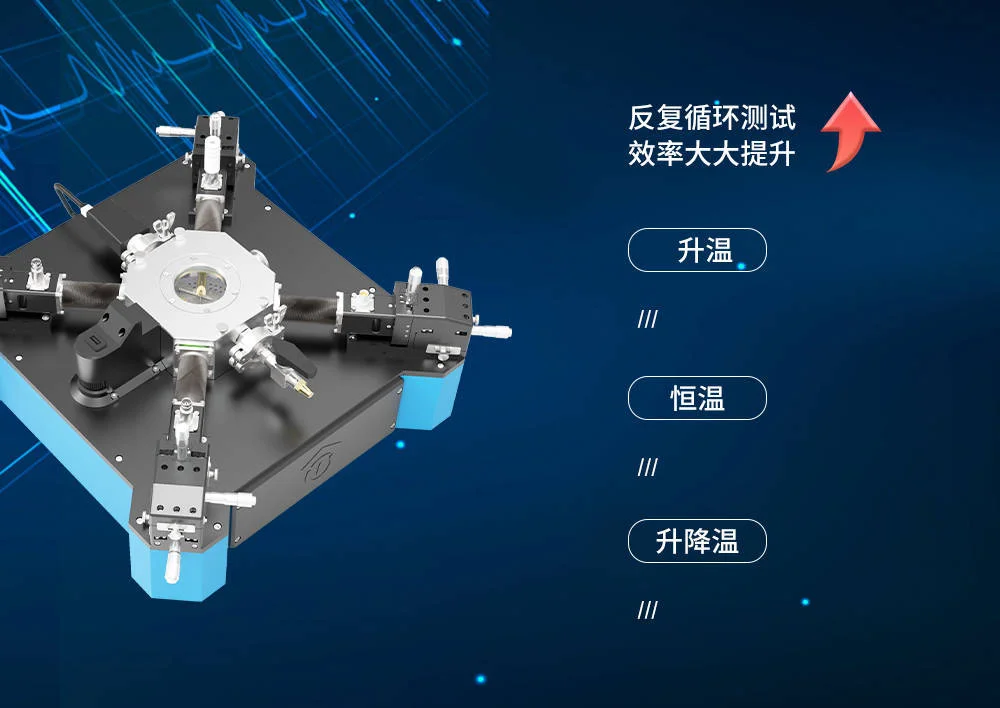
The standard test process contains four key stages. The first is sample preparation. The ceramics are processed into regular thin sheets, and uniform gold and silver electrodes are prepared on both sides to reduce the contact resistance and ensure that the current signal truly reflects the internal polarization behavior. The second is the polarization stage. Under conditions below the Curie temperature (such as 80-150°C), a DC electric field of 100-300V/mm is applied for 10-30 minutes to make the polarization saturated. The third is the freezing stage, which maintains the polarization electric field and rapidly cools to about -50°C to fix the polarization charge distribution and avoid polarization relaxation caused by thermal disturbance. The fourth is temperature rise measurement. After the electric field is removed, the temperature is raised at a rate of 2-5°C/min, and the picoamp level depolarization current is simultaneously recorded. The temperature range covers - 150°C to 400°C, completely capturing the polarization release process.
TSDC spectrum is the core basis for analyzing material properties. The temperature corresponding to the current peak is the depolarization temperature (Td), which is close to the Curie temperature and is a key indicator of the high-temperature working limit of the material; the peak height reflects the total amount of polarization charge, which is related to the polarization field strength and material defect density; the peak width corresponds to the distribution characteristics of polarization relaxation, which can distinguish different mechanisms such as dipole polarization and space charge polarization. Through data fitting, parameters such as activation energy and relaxation time can also be calculated to quantify charge trap depth and stability, providing directions for material modification.
Key variables need to be strictly controlled during the testing process to ensure data reliability. The heating rate that is too fast will cause the peak position to shift to high temperature. The rate needs to be unified (commonly 3℃/min) when comparing different samples. If the polarization field strength is too high, it will easily cause local breakdown, while if it is too low, the polarization will be insufficient. It needs to be optimized based on the material characteristics. In addition, the sample surface cleanliness, electrode uniformity and instrument noise floor (recommended <0.5pA) will all affect the test accuracy, and the test environment and equipment status need to be strictly controlled.
As a non-destructive and highly sensitive characterization method, TSDC testing plays an irreplaceable role in the field of piezoelectric ceramics. It can not only accurately evaluate the polarization stability and thermal reliability of materials, but also reveal the internal defects, interface effects and aging mechanisms of materials, provide important technical support for the formula design, process optimization and application reliability assessment of high-performance piezoelectric ceramics, and promote the safe application of piezoelectric materials in electronic devices, sensing, actuation and other fields.
Request High-Precision Testing Solutions
Get expert guidance and customized instruments for your functional materials project.