Bailibo piezoelectric ceramic volume resistivity test: a key link to ensure the reliability of functional materials
Technical News
As an important functional material, piezoelectric ceramics are widely used in electronic components such as sensors, transducers, filters, etc. Its volume resistivity is a core parameter for measuring the insulation performance of materials and judging product quality. Accurate testing of volume resistivity can not only evaluate the electrical properties of the material itself, but also provide scientific basis for its safe application under different working conditions. It is an indispensable key link in the entire process of production, research and development, and application of piezoelectric ceramics.
The volume resistivity of piezoelectric ceramics refers to the resistance of the unit volume of the material to the passage of current, represented by the symbol ρᵥ, and the unit is Ω·m. Its core testing principle is based on the extended formula of Ohm's law ρᵥ=Rᵥ×S/t, where Rᵥ is the volume resistance of the sample, S is the sample electrode area, and t is the sample thickness. This parameter is closely related to material composition, temperature, and electric field strength. The resistivity will decrease significantly in high temperature environments. Excessive electric field strength will also cause the resistivity to decrease. Therefore, the relevant conditions need to be strictly controlled during the test process.
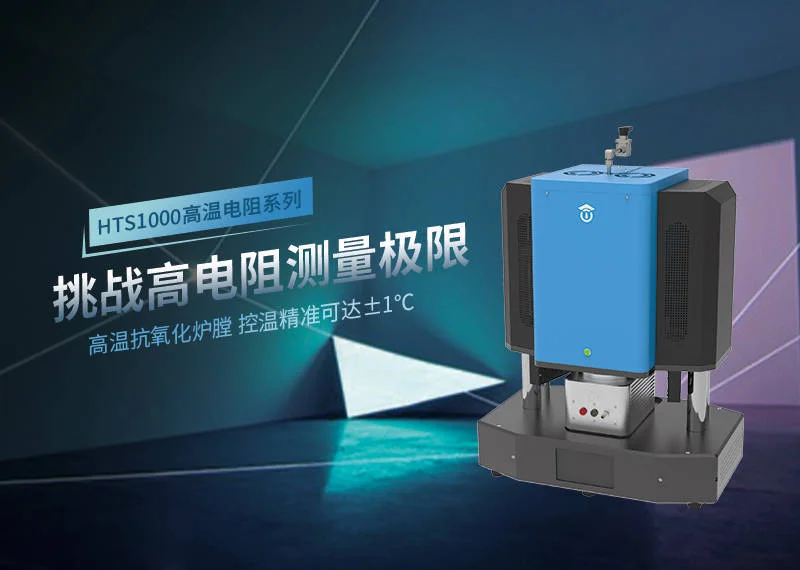
The standardized test process is the prerequisite to ensure data accuracy. According to industry standards such as CB/Z 166-79, the test needs to preprocess the sample first, and select an unpolarized sample with a size of φ (15~20) × (5~10) mm, a clean and dry surface, and full electrode coverage. The test adopts the two-electrode DC method, and the electric field strength is not greater than 100V/mm. The main equipment includes a high resistance meter with a measuring range of 10⁶~10¹⁶Ω, an oven with a temperature range of 0~300℃, a thermometer with an accuracy of 1℃, and electrodes and base plates with excellent insulation properties.
During the test process, the sample needs to be placed between the upper and lower electrodes, and the oven naturally heats up to 300°C and then gradually cools down. At least 10 measurement points are selected, and each temperature point is kept warm for no less than 30 minutes. After applying the voltage for 1 minute, the resistance value is read, and the volume resistivity is calculated using the formula. Finally, a logρᵥ-1/T curve is drawn to facilitate the determination of resistivity values at different temperatures. At the same time, it is necessary to pay attention to the insulation resistance of the electrode lead not less than 1×10¹⁴Ω to avoid external interference affecting the test results.
The value of volume resistivity testing is reflected in many aspects. It can not only directly evaluate the insulation ability of piezoelectric ceramics. The larger the value, the stronger the material’s resistance to leakage and penetration. It is also an important means to judge the consistency of material quality and can detect process defects such as uneven sintering and impurities. In addition, test data can provide a basis for material selection and device reliability prediction, meet the requirements of standards such as GB/T 3389, and support high-quality applications in aerospace, automotive electronics, medical equipment and other fields.
With the expansion of piezoelectric ceramic application scenarios, testing technology is also constantly upgraded. From the conventional DC method to the four-probe method combined with lock-in amplification technology, the testing accuracy continues to improve. Accurately controlling the volume resistivity testing process can not only promote the optimization of piezoelectric ceramic material processes, but also build a solid line of defense for the safe and stable operation of various electronic devices, helping the high-quality development of the functional materials industry.
Request High-Precision Testing Solutions
Get expert guidance and customized instruments for your functional materials project.