Normal-temperature longitudinal piezoelectric coefficient d33 test of piezoelectric films (laboratory environment)
Technical News
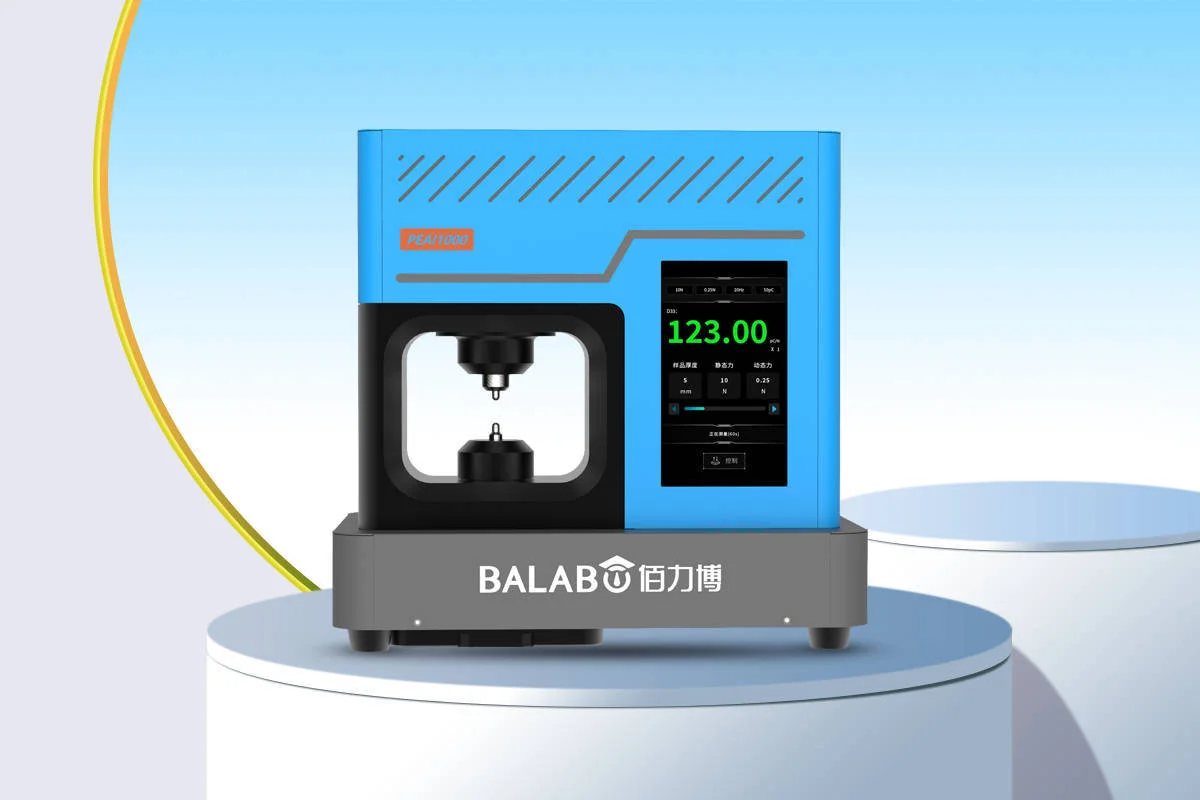
The longitudinal piezoelectric coefficient d33 of the piezoelectric film is the core parameter that characterizes the mechanical energy and electrical energy conversion efficiency of the material. The unit is pC/N. Its value directly determines the performance upper limit of core components such as piezoelectric sensors, flexible transducers, and energy harvesting devices. The d33 test under normal temperature (25℃±1℃) laboratory environment is the basic link in the research and development, performance calibration and quality control of piezoelectric film materials. The accuracy and repeatability of the test results are crucial to the evaluation of material application suitability.
1. Core principles of testing
d33 test is based onpositive piezoelectric effect: When mechanical pressure is applied along the polarization direction of the piezoelectric film, the positive and negative charge centers inside the material are relatively displaced, and equal amounts of induced charges with different signs are generated on the upper and lower surfaces. The charge density is linearly related to the applied stress, following the formula D₃=d33・T₃ (D₃ is the electric displacement, T₃ is the longitudinal stress). The normal temperature test adopts the quasi-static method, which simulates the static stress state by applying low-frequency alternating force (10Hz-100Hz) to avoid dynamic high-frequency interference. At the same time, it matches the lock-in amplification technology to extract the weak charge signal and accurately calculate the d33 value.
2. Environmental conditions
The standard laboratory environment needs to be strictly controlled: temperature 25℃±1℃, relative humidity 40%-60%, away from strong electromagnetic fields (such as high-frequency equipment, motors) and vibration sources, to reduce the interference of environmental noise on weak charge signals. The equipment needs to be warmed up for 30 minutes before testing to ensure that core components such as force sensors and charge amplifiers work stably.
2. Contact status: The electrode and the surface of the film must be in close contact without bubbles or gaps; check the flatness of the probe regularly to avoid signal attenuation caused by poor contact.
3. Substrate deformation: The film substrate must be rigid enough to reduce stress interference caused by substrate bending during the test; use rigid fixtures to fix the edge of the substrate if necessary.
4. Environmental interference: Strictly control temperature and humidity, avoid personnel movement and equipment vibration during the test; shield the test area to reduce the impact of electromagnetic noise on weak charge signals.
4. Test significance and application value of d33 test at room temperature of piezoelectric film
Normal temperature d33 test is the basic method for performance evaluation of piezoelectric film, which can provide key data support for material formula optimization, polarization process adjustment, and device structure design. The d33 values of different types of piezoelectric films at room temperature vary significantly: PZT film is about 20-80pC/N, PVDF film is about 5-20pC/N, and AlN film is about 1-5pC/N. The test results can directly guide material selection and adapt to different application scenarios such as sensors, wearable devices, and energy collection.
Bailibo Testing strictly follows national standards such as GB/T 11309-1989, and uses quasi-static methods and high-precision testing equipment to provide accurate and reliable room-temperature d33 testing services for piezoelectric films. The test data can be used for scientific research paper publication, product quality certification and technology research and development iterations, assisting the application of piezoelectric film materials in the field of advanced electronic devices.
Request High-Precision Testing Solutions
Get expert guidance and customized instruments for your functional materials project.