Analysis of dielectric loss, dielectric temperature spectrum and impedance temperature spectrum testing technology of ceramic substrates
Technical News
Ceramic substrate is the core material of power electronics, radio frequency communications and semiconductor packaging. Its dielectric properties and impedance characteristics directly determine the signal transmission efficiency, thermal stability and long-term reliability of the device. Dielectric loss, dielectric temperature spectrum and impedance temperature spectrum are key indicators for evaluating the electrical performance of ceramic substrates. The standardization and accuracy of testing technology are crucial to material research and development, process optimization and quality control.
Dielectric loss (tanδ) represents the degree of loss of ceramic substrates when energy is converted into heat energy in an alternating electric field. It is the core parameter for measuring the low-loss performance of materials. The test is based on GB/T 5594.4-2015, IEC 60250 and other standards, and the parallel plate electrode method and resonance method are commonly used. During the test, the prepared ceramic substrate sample (smooth surface, no cracks, uniform thickness) is placed between the electrodes, an alternating electric field of a specific frequency (1kHz~1MHz) is applied, the capacitance value and loss value are measured through an LCR meter or impedance analyzer, and the dielectric loss angle tangent value is obtained after conversion. In high-frequency scenarios (such as 5G radio frequency devices), the stripline resonance method is used to test the resonant frequency and quality factor through a network analyzer to accurately calculate the dielectric loss in the microwave frequency band.
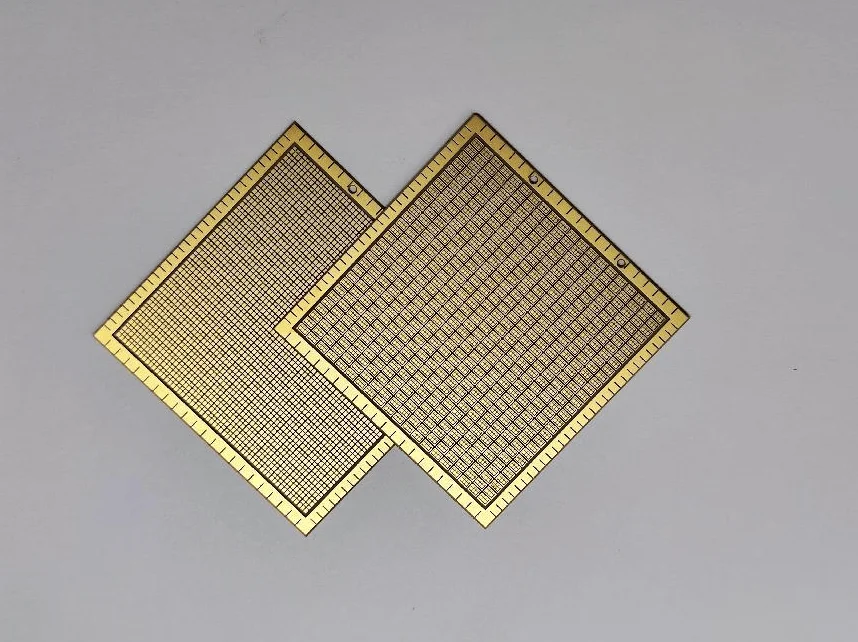
The dielectric temperature spectrum reflects the changes in dielectric constant and dielectric loss with temperature and is a core test item for evaluating the temperature stability of ceramic substrates. The test system consists of a high and low temperature temperature control unit, a dielectric test module and a data acquisition system. The test process is: sample pretreatment (cleaning, drying, eliminating moisture and impurity interference), electrode preparation (vacuum evaporation of silver electrodes or coating of conductive paste), temperature calibration (calibrating the sensor with a standard sample), and then fixing the frequency (such as 10kHz, 100kHz), heating/cooling at a constant speed within the set temperature range, simultaneously collecting dielectric constant and dielectric loss data, and drawing a temperature spectrum curve. This test can accurately capture the material phase transition point, relaxation behavior and high-temperature loss mutation, providing data support for the application of substrates under wide temperature range conditions.
Impedance thermospectroscopy analyzes the conductive mechanism, interface characteristics and defect distribution of ceramic substrates by testing the changes in impedance mode value and phase with temperature and frequency. Based on impedance spectrum technology, a sinusoidal AC signal is applied, scanned within a specified frequency range and a set temperature interval, the complex impedance of the sample (Z=Z'+iZ'') is measured, and a three-dimensional impedance-temperature-frequency spectrum is drawn. Through equivalent circuit fitting, the impedance contributions of grains, grain boundaries and electrode interfaces can be distinguished, and the effect of temperature on carrier migration and defect activation energy can be analyzed. It is especially suitable for evaluating the insulation reliability and aging characteristics of ceramic substrates at high temperatures.
During the testing process, sample status, environmental conditions and equipment calibration are the keys to ensuring data accuracy. The sample must ensure that the surface roughness is ≤ Ra0.8μm and the thickness uniformity error is <1%; the test environment is controlled at a temperature of (23±2)°C and a humidity of 50%±5% to avoid water vapor adsorption affecting the dielectric performance; the equipment needs to be regularly calibrated with standard capacitance and standard resistance to eliminate system errors.
In summary, dielectric loss, dielectric temperature spectrum and impedance temperature spectrum tests can comprehensively characterize the electrical properties of ceramic substrates from normal temperature loss, wide temperature stability to microscopic conductive mechanisms. Standardized testing procedures and precise equipment support provide scientific basis for ceramic substrate material selection, formula optimization and process improvement, supporting the development of electronic devices in the direction of high frequency, miniaturization and high reliability.
Request High-Precision Testing Solutions
Get expert guidance and customized instruments for your functional materials project.