Ceramic substrate breakdown test: the core difference between DC and AC technology
Technical News
Ceramic substrate is a key insulating material in power electronic modules, and its electrical insulation reliability is directly related to the overall life and safety of the device. Breakdown testing is the basic method for evaluating the voltage resistance of ceramic substrates, and mainly includes two test modes: direct current breakdown (DC) and alternating current breakdown (AC).
1. Basic principles of testing
Breakdown testing is based on the dielectric breakdown mechanism: under the action of a gradually increasing electric field, structural defects (such as grain boundaries, pores, impurities, etc.) inside the ceramic material will cause partial discharge, eventually leading to irreversible conduction failure of the material. Breakdown voltage is defined as the voltage at which a material first irrecoverably conducts, while breakdown field strength is calculated by dividing the breakdown voltage by the sample thickness.
The electric field distribution is affected by many factors, including electrode shape, spacing and sample thickness. During the test process, "pseudo breakdown" must be strictly distinguished - that is, a situation where only partial discharge occurs but no complete conduction is formed. Such phenomena should not be included in the breakdown data.
2. The difference between DC and AC breakdown
There are significant differences in physical mechanisms between DC breakdown and AC breakdown. Experimental comparison data shows that under the same test conditions, the DC breakdown field strength of aluminum nitride ceramic materials is generally higher than the AC breakdown field strength. This shows that DC voltage has a more significant impact on the breakdown characteristics of ceramic materials, while AC electric fields are more likely to accumulate charge damage inside the material due to polarity reversal, thereby reducing the breakdown threshold.
In standard tests, AC breakdown testing is usually used to simulate the alternating electric field environment under actual working conditions, while DC testing is more suitable for evaluating the insulation performance of materials under steady-state high voltage.
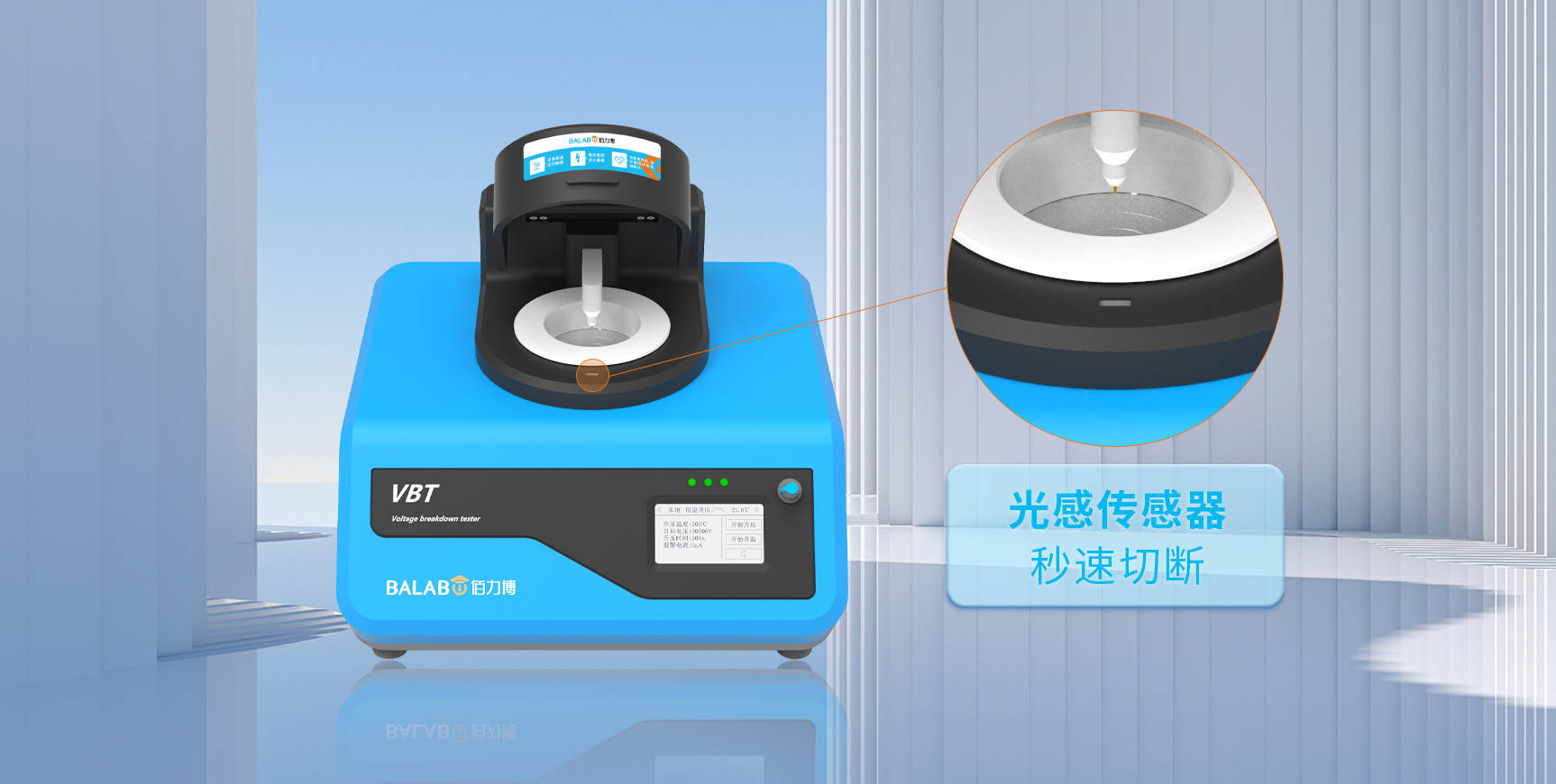
3. Testing methods and technical points
The common step-by-step breakdown test uses a stepped boost strategy. For example: start from 12 kV and hold the voltage for 5 minutes at a voltage increase rate of 3000 volts/second. If the sample does not break down, gradually increase the voltage to a higher voltage (such as 15 kV, 42 kV) until the sample breaks down. Another method uses a boost rate of 2000V/s and sets parameters according to national standards.
Electrode preparation is a key part of the test. For insulating ceramic sheets, electrodes are generally made using room-temperature silver paste and screen printing. Usually one side is a small circle with a diameter of 10mm, and the other side is a large circle with a diameter of 15mm. The electrodes are placed coaxially and the error is controlled within 2mm.
4. Factors affecting test results
Environmental conditions have a significant impact on breakdown data. Changes in temperature and humidity can cause fluctuations in results. Therefore, the test must be conducted in a controlled environment, and additional testing is required under high temperature and high humidity conditions. In terms of microstructure, the presence of pores will reduce the breakdown electric field strength because the electric field concentration effect in the bubbles will accelerate the breakdown process. Parameters such as sample thickness, porosity, grain size, and grain boundary volume fraction will significantly affect the test dispersion.
When the sample dispersion is too large, check the thickness uniformity and porosity distribution, re-grind or replace raw materials if necessary, and ensure that the instrument has been calibrated.
5. Application Scenarios
Breakdown testing is widely used in power modules, semiconductor packaging, high-voltage insulation devices and other fields to verify whether the ceramic substrate meets the insulation requirements of a specific voltage level. Test data can provide important basis for material formula optimization and process improvement.
Request High-Precision Testing Solutions
Get expert guidance and customized instruments for your functional materials project.