[Materials Science] International Team Relies on MatMeas MRVS-3002 for Precise Atmosphere-Controlled Alloy Oxidation Study
Technical News
![[Materials Science] International Team Relies on MatMeas MRVS-3002 for Precise Atmosphere-Controlled Alloy Oxidation Study](/_next/image?url=https%3A%2F%2Fmatmeas-media.us-lax-4.linodeobjects.com%2Fnews%2Ftianjin-cu-zr-alloy-oxidation-vacuum-sealer%2Ffeatured.webp&w=3840&q=75)
Recently, an international joint research team comprising scientists from Tianjin University, the Max Planck Institute for Intelligent Systems (Germany), and the Swiss Federal Laboratories for Materials Science and Technology (EMPA) published a breakthrough study in the premier journal Journal of Materials Science & Technology (JMST). The research provides profound insights into the effect of atomic structure on the preferential oxidation of amorphous versus crystalline Cu-Zr alloys.
📖 Literature Reference:
Title: Effect of atomic structure on preferential oxidation of alloys: amorphous versus crystalline Cu-Zr
Journal: Journal of Materials Science & Technology
Research Team: Prof. Zumin Wang's Group, Tianjin University & International Collaborators
DOI Link: 10.1016/j.jmst.2019.10.001
Understanding how metallic alloys oxidize is crucial for surface engineering, corrosion resistance, and the development of functional metal-oxide coatings. To isolate the variables in this complex thermal oxidation process, the international team needed to create a perfectly controlled oxygen environment for their high-temperature treatments.
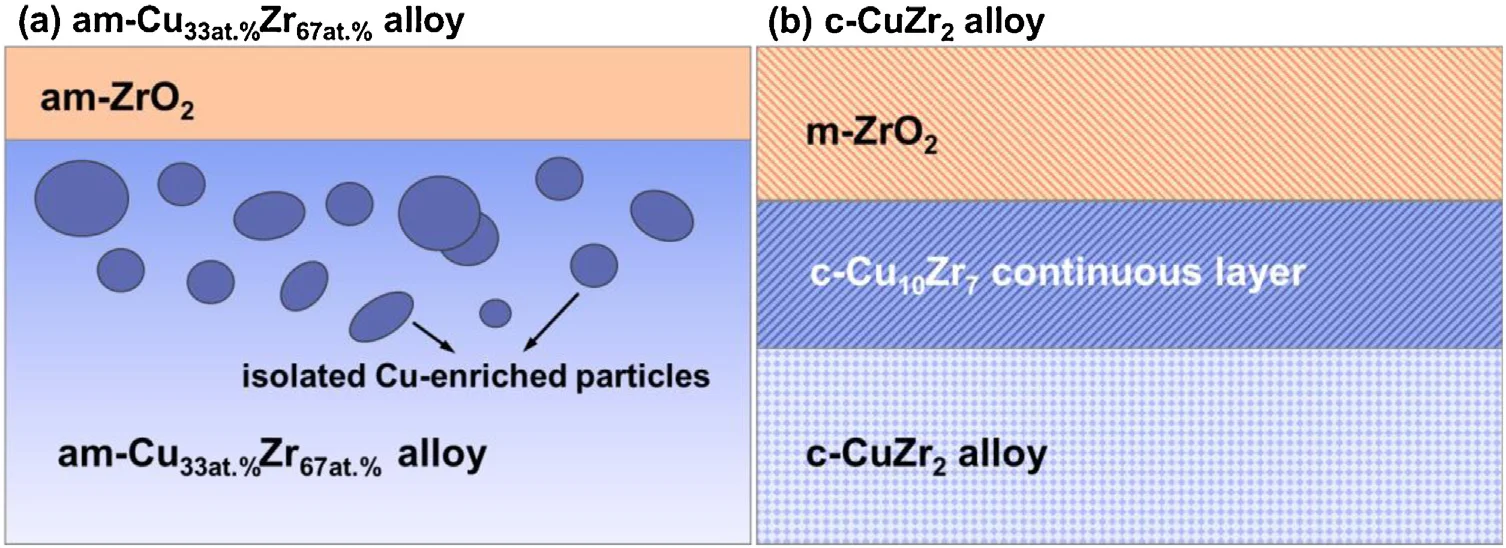
🔬 The Challenge: Exacting Atmosphere Control at Extreme Temperatures
The researchers needed to thermally oxidize both amorphous and crystalline Cu-Zr alloy specimens in the temperature range of 200–250 °C. However, this could not be done in a standard atmospheric environment. The experiment required the specimens to be sealed in quartz tubes with a highly specific, controlled oxygen partial pressure of exactly 1 bar at the targeted high temperatures. This meant the sealing equipment had to not only achieve a high vacuum but also precisely backfill ultra-pure O2 gas before the final flame seal.
🌟 The Solution: MatMeas MRVS-3002 Vacuum Sealing System
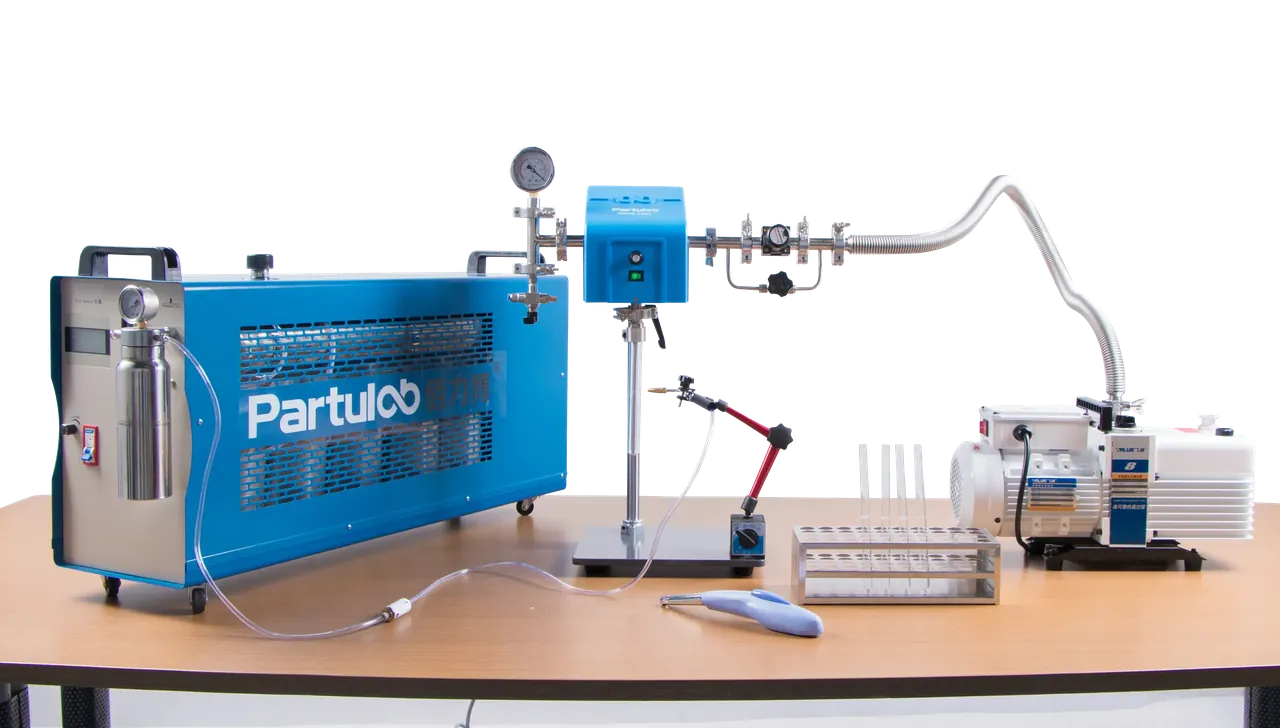
To achieve this exacting level of atmosphere control, the international research team relied on the MatMeas MRVS-3002 Vacuum Sealing System (formerly BaLab / Partulab).
As explicitly detailed in the paper's Experimental Section (2.1):
"The as-deposited am-Cu33at.%Zr67at.% and as-polished c-CuZr2 pieces were then sealed in quartz tubes for thermal oxidation in a vacuum sealing system (MRVS-3002, Partulab Technology Co. Ltd). Before sealing, O2 gas (purity 99.999 vol. %) was introduced into the quartz tubes..."
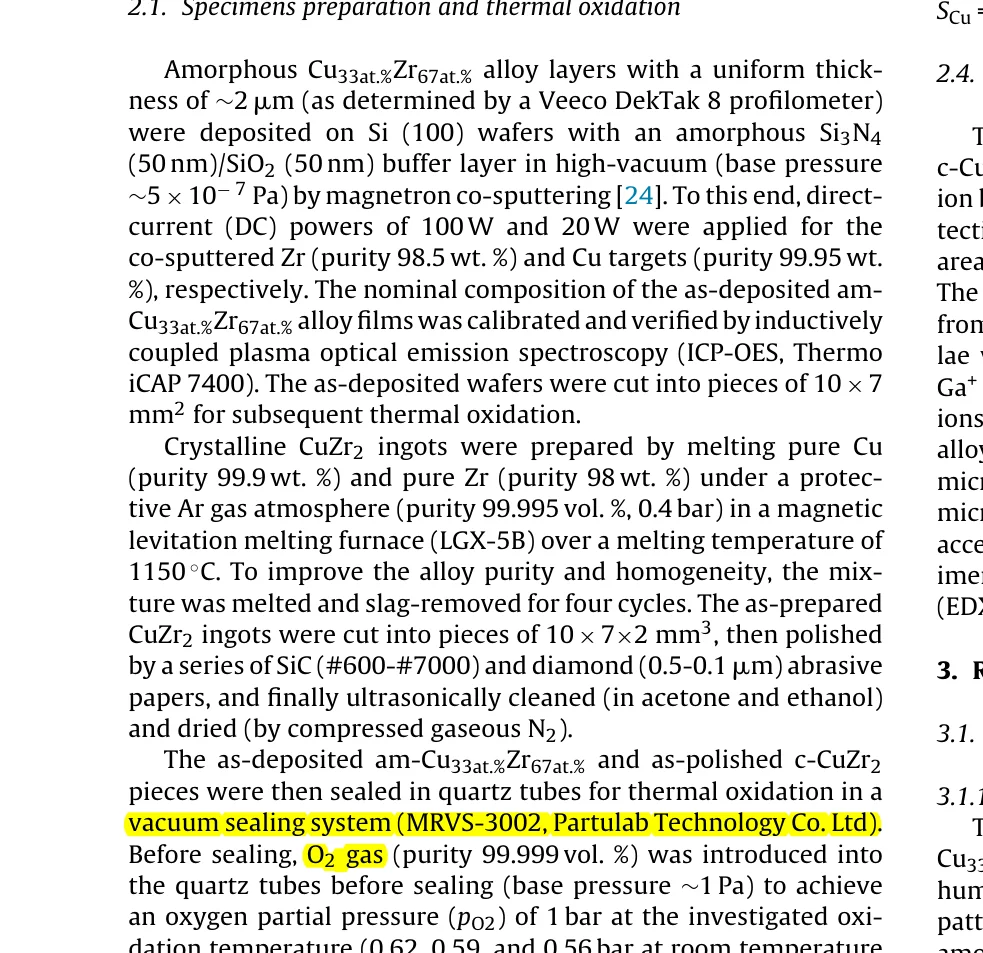
The experimental section of the publication directly highlighting the use of the MatMeas MRVS-3002 Vacuum Sealing System for precise O2 gas backfilling.
The MRVS-3002 system perfectly handled the complex workflow of evacuating the quartz tubes to a high vacuum and subsequently introducing ultra-pure oxygen gas. This flawless, atmosphere-controlled encapsulation ensured the precise thermal oxidation kinetics required for the study.
📈 Advanced Compositional and Microstructural Analysis
With the oxidation environments perfectly controlled, the researchers successfully performed Auger electron spectroscopy (AES) and High-Resolution Transmission Electron Microscopy (HRTEM) to observe the strikingly different atomic mobilities of Cu, Zr, and dissolved O.
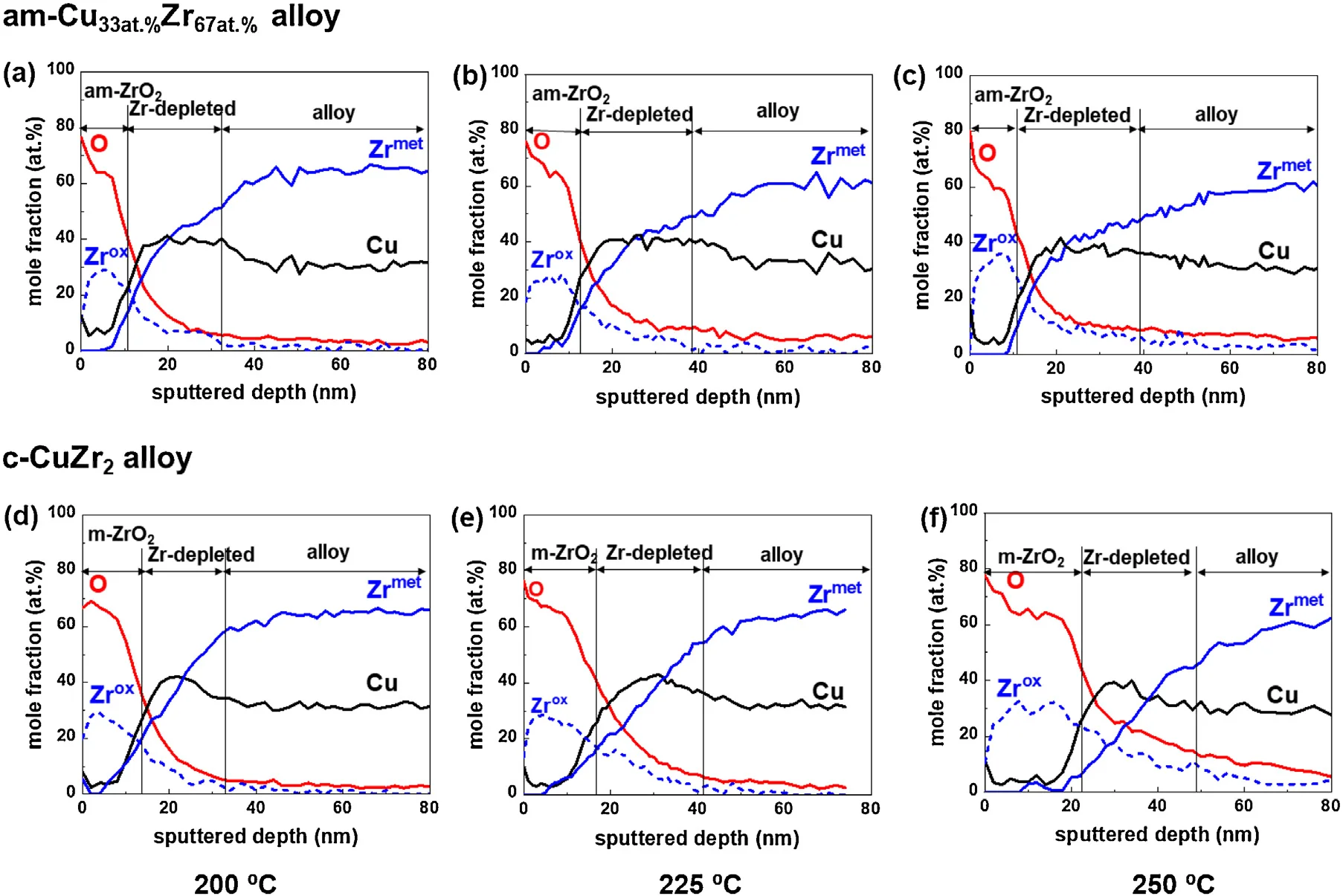
Figure 2 illustrates the compositional depth distribution of the oxidized alloys, showing the formation of a pure ZrO2 overlayer and a Zr-depletion zone.
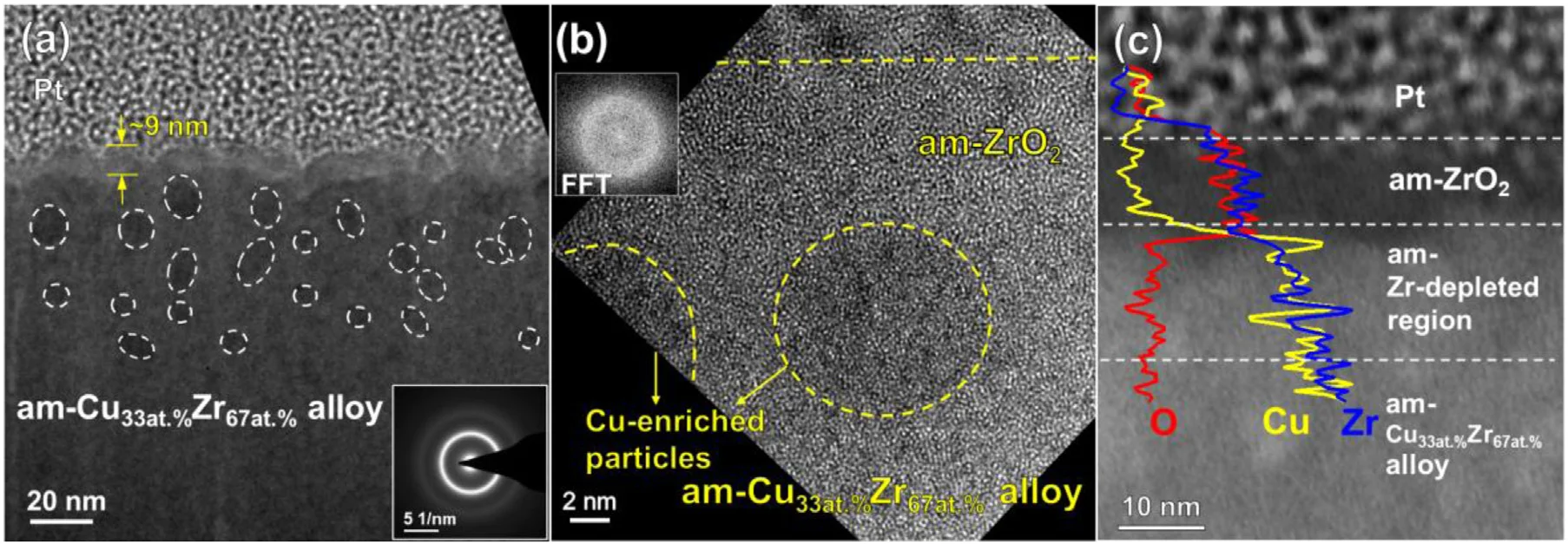
Figure 3 reveals the nanoscale microstructural differences, heavily dependent on the highly controlled thermal oxidation environment enabled by our precise gas backfilling equipment.
Empowering Global Laboratories
World-class materials science demands equipment that goes beyond basic functions. The successful application of the MRVS-3002 system by an elite international team is a powerful endorsement of its advanced gas-flushing, precise pressure control, and reliable vacuum sealing capabilities.
If your research involves controlled-atmosphere thermal treatments, chemical vapor transport (CVT), or oxidation studies, explore our latest generation MatMeas MRVS-1003 High-Vacuum Rotary Sealing System. It is engineered to eliminate variables and guarantee reproducible environments. Visit our official website or contact our technical sales team for a customized quotation today!
📥 Literature PDF Download:
Request High-Precision Testing Solutions
Get expert guidance and customized instruments for your functional materials project.