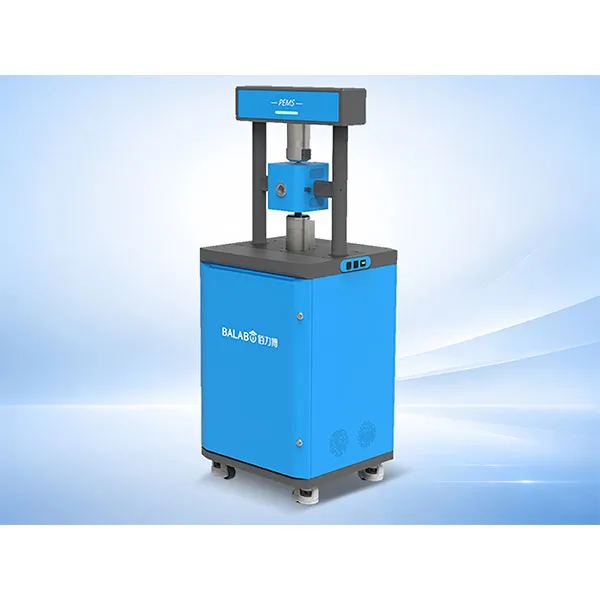
Overview
The MatMeas PEMS precision in‑situ d33 measurement system is designed for advanced characterization of piezoelectric materials. The system integrates dynamic direct traceability technology and AC resonance vibration evaluation to measure piezoelectric parameters with higher accuracy and reliability than traditional quasi‑static d33 meters. It supports measurement of multiple sample shapes such as discs, rings, tubes, blocks and strips, making it suitable for research institutes, material laboratories and industrial piezoelectric component production.
Specifications
| Force Frequency | 30 Hz – 300 Hz |
| Default Frequency | 110 Hz |
| Frequency Accuracy | 0.1 Hz |
| FAST Mode | 2 s to 1% of final reading |
| MEDIUM Mode | 5 s to 1% of final reading |
| SLOW Mode | 10 s to 1% of final reading |
| Communication Interface | RS232, USB |
| Power Supply | 220–240V AC 50–60Hz 0.5A |
| Alternative Power | 100–120V AC 50–60Hz 1A |
| Storage Temperature | 0°C – 50°C |
| Operating Temperature | 10°C – 40°C |
| Calibration Temperature | 25°C |
| Instrument Size | 600 × 540 × 1530 mm |
| Measurement Unit Size | 350 × 250 × 100 mm |
| Force Unit Size | 145 × 150 × 175 mm |
Applications
- Piezoelectric ceramic research
- sensor and actuator development
- aerospace and high-reliability materials testing
- semiconductor laboratories
- advanced materials research institutes
- industrial quality inspection of piezoelectric components.
More Details
- PEMS Piezoelectric Analyzer Features
Supports measurement of d33, d31 and d15 coefficients. Measures equivalent circuit parameters including C1, L1, R1 and C0 and resonance frequencies fs, fp, fm, fn, fa and fr. Dynamic force measurement enables analysis of d33 variation under different preload conditions - PEMS Piezoelectric Analyzer Specifications
measurement frequency 30–300 Hz, default 110 Hz, communication interfaces RS232 and USB, measurement accuracy high precision with repeatable results for laboratory and industrial environments.
FAQ
Why do standard Berlincourt meters fail to predict real-world piezoelectric sensor performance?
Standard d33 meters only measure the piezoelectric coefficient at room temperature under static conditions, completely ignoring the fact that real-world sensors operate under thermal and mechanical stress. The MatMeas PEMS-1000 is a high-precision in-situ measurement system that characterizes the dynamic d33 response under varying temperatures and applied forces, providing true operational data.How does the PEMS-1000 isolate pure piezoelectric signals from massive thermal noise?
When heating piezoelectric materials, massive pyroelectric currents and thermal noise often drown out the minute d33 signal. The PEMS-1000 utilizes a proprietary lock-in amplification architecture and heavily shielded fixtures to mathematically extract the pure piezoelectric charge, ensuring pristine data integrity even under extreme environmental conditions.What is the primary measurement principle of the PEMS-1000?
The PEMS-1000 uses dynamic force direct traceability technology and AC resonance vibration evaluation to measure the d33 piezoelectric coefficient in-situ. Unlike traditional quasi-static d33 meters, the PEMS-1000 provides higher accuracy and stability by avoiding static force drift and offering dynamic frequency sweep capabilities from 30 Hz to 300 Hz.Which sample shapes and geometries can be measured with the PEMS-1000?
The system is highly adaptable and supports a wide variety of sample shapes including discs, rings, tubes, blocks, and thin strips. It comes with specialized clamping fixtures to ensure reliable contact and uniform force application without damaging fragile samples.What other piezoelectric parameters can the PEMS-1000 characterize besides the d33 coefficient?
In addition to the d33 coefficient, the system can characterize other coefficients such as d31 and d15. It also measures equivalent circuit parameters (C1, L1, R1, C0) and key resonance frequencies (fs, fp, fm, fn, fa, fr) to provide a comprehensive piezoelectric performance profile.
Related Products
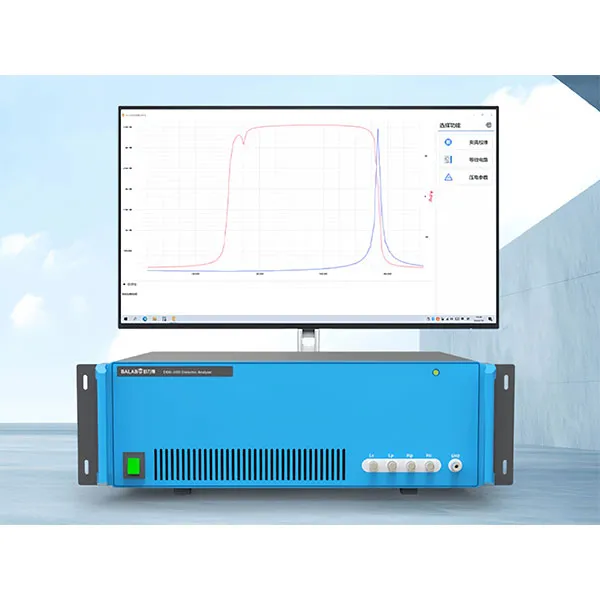
MatMeas High Precision Piezoelectric Ceramic Parameter Analyzer PCA1000
The MatMeas PCA1000 is a domestic-first, cutting-edge Piezoelectric Ceramic Integrated Analyzer engineered to comprehensively evaluate the performance of piezoelectric materials using the advanced AC resonance method. Operating across a wide frequency range from 20Hz to 10MHz with a high measurement accuracy of ±0.05%, it eliminates complex manual calculations by instantly extracting critical data, including electromechanical coupling coefficients (Kp, Kt), mechanical quality factors (Qm), piezoelectric constants (d33, d31, d15), and equivalent circuit models. With intelligent frequency sweeping and visualized data interfaces, the PCA1000 is the ultimate one-stop solution for both rigorous academic research and high-throughput quality screening in industrial mass production.
View details →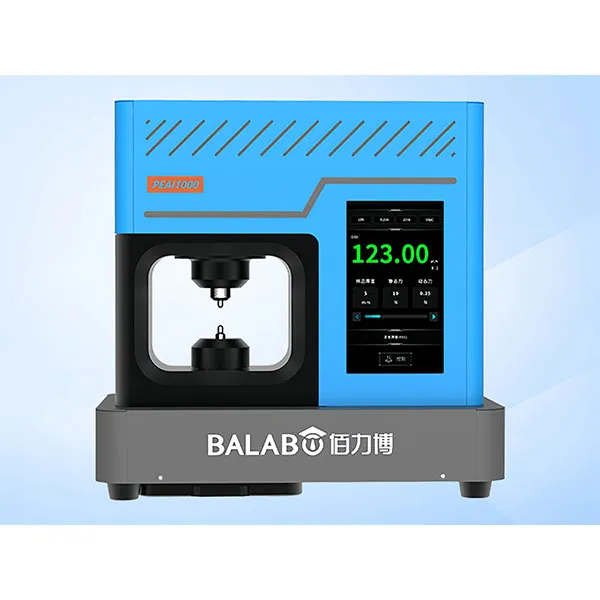
MatMeas PEAI1000 High-Precision Piezoelectric Analyzer
The MatMeas PEAI1000 is a next-generation High-Precision Piezoelectric Analyzer engineered to evaluate the piezoelectric coefficient (d33) of advanced functional materials. Surpassing the limitations of traditional d33 measuring instruments, it employs an advanced dynamic measurement method integrated with cutting-edge lock-in amplification technology. This architecture strictly suppresses environmental noise, significantly improving the signal-to-noise ratio. Capable of applying variable static clamping forces (1~10N) and precise dynamic test forces (0.1~0.5N), it guarantees an ultra-wide measurement range (0 to 2000 pC/N) with an exceptional accuracy of ±2%. It is an essential, highly reliable tool for the research, application, and mass production of piezoelectric blocks, plates, and delicate thin films.
View details →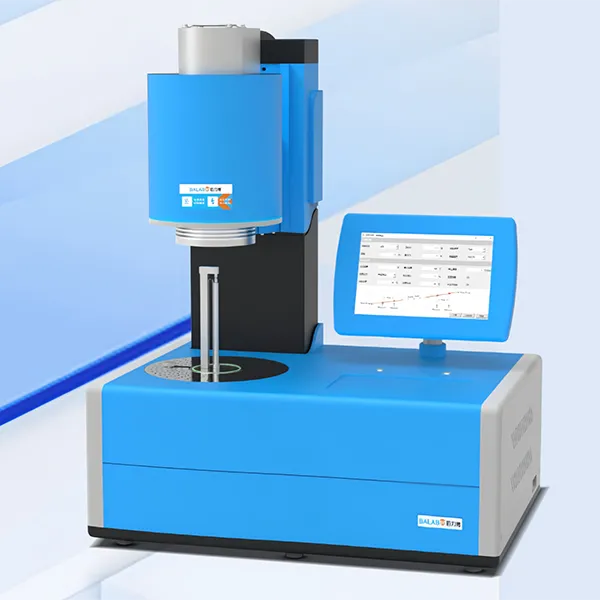
MatMeas PMS-1000 Piezoelectric Temperature Spectrum Measurement System
High-precision piezoelectric temperature spectrum measurement system for analyzing piezoelectric properties under varying temperatures.
View details →