Thin-Film Dielectric Constant Testing: High-Frequency Metrology and Substrate De-Embedding
Technical News
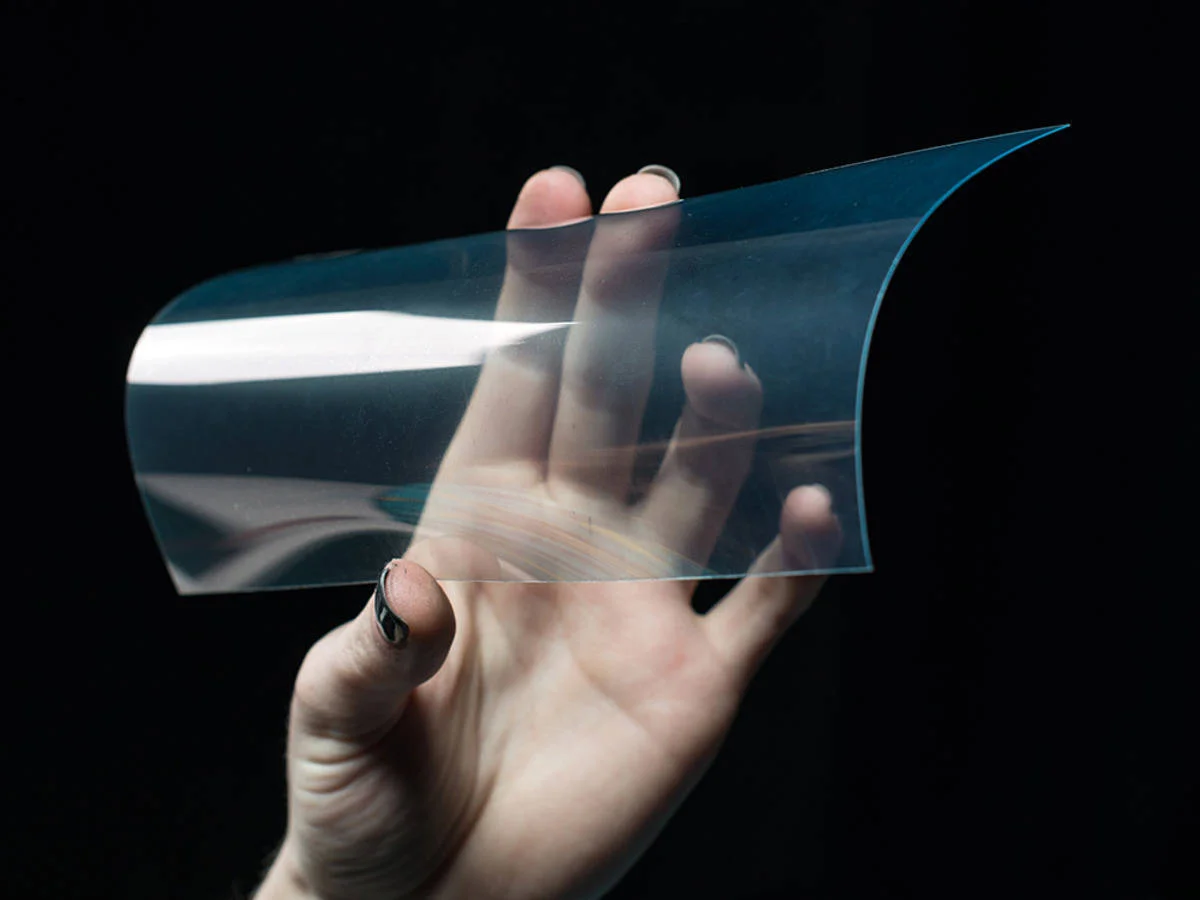
High-performance dielectric polymer thin films—including biaxially oriented polypropylene (BOPP), polyimide (PI / Kapton), polyvinylidene fluoride (PVDF) and its copolymers, polytetrafluoroethylene (PTFE), and polyetheretherketone (PEEK)—are essential materials in electrostatic pulse-power capacitors, electric vehicle (EV) DC-link inverters, high-temperature aerospace wiring, and flexible printed electronics. In capacitive energy storage architectures, the electrostatic energy density Ue scales quadratically with applied electric field and linearly with relative dielectric permittivity (εr):
Ue = 1/2 · ε0 · εr · Ebreakdown²
Accurately measuring the relative dielectric permittivity and dissipation factor (tan δ) of ultra-thin films (thicknesses ranging from 2 μm to 50 μm) presents severe experimental difficulties, explored in our companion guides on piezoelectric thin-film impedance spectroscopy and piezoelectric thin film electrical testing. Microscopic surface roughness and non-contact air gaps introduce series parasitic capacitances that severely underestimate true dielectric constants; fringing electric field lines at electrode edges distort geometric capacitance calculations; and atmospheric moisture adsorption skews low-frequency dielectric loss. Achieving reliable, high-accuracy dielectric metrology requires guarded electrode geometries and strict adherence to international standards.
Parasitic Series Air-Gap Capacitance Physics and Fringing Field Corrections
When testing dielectric thin films with rigid, dry contact electrodes, microscopic surface roughness on the film surface prevents perfect atomic contact. This physical boundary creates an unavoidable microscopic air gap layer of average thickness δair in series with the polymer film of thickness tfilm.
In an equivalent two-layer dielectric model, the total measured capacitance Cmeas across electrode area A is the series combination of the true film capacitance Cfilm and the parasitic air-gap capacitance Cair:
1 / Cmeas = 1 / Cfilm + 1 / Cair = [tfilm / (ε0 · εr · A)] + [δair / (ε0 · εair · A)]
Because air has a relative permittivity εair ≈ 1, setting εair = 1 and solving for the apparent measured relative permittivity εapp yields:
εapp = Cmeas · tfilm / (ε0 · A) = εr / [1 + (δair / tfilm) · εr]
This analytical relation demonstrates the extreme sensitivity of thin-film metrology to interfacial air gaps:
-
For a thick substrate (tfilm = 1000 μm), an air gap δair = 0.5 μm produces an error of less than 0.2%.
-
For an ultra-thin capacitor film (tfilm = 5 μm) with εr = 10, an identical 0.5 μm air gap results in:
εapp = 10 / [1 + (0.5 / 5) · 10] = 10 / [1 + 1] = 5.0
The measured permittivity is underestimated by 50%, purely as an artifact of the microscopic air interface.
To eliminate this air gap error, samples must either receive directly sputtered, evaporated, or screen-printed metal electrodes (e.g., 50–100 nm sputtered gold), or be evaluated in specialized fluid-displacement fixtures conforming to ASTM D150.
Furthermore, electric field lines bow outward at electrode perimeters. To prevent fringing field capacitance (Cfringing) from distorting measurements, a three-terminal guarded electrode geometry is mandatory under ASTM D150 and ASTM D257. The effective electrode diameter Deff is calculated by accounting for the annular guard gap g:
Deff = D1 + g − 2 · δguard
where D1 is the central guarded electrode diameter and δguard is an empirical fringing field correction factor:
δguard = (2 · tfilm / π) · ln[cosh(π · g / (4 · tfilm))]
High-Performance Dielectric Polymer Film Property Matrix
Different polymer dielectric formulations serve distinct temperature and energy density regimes. While BOPP remains the benchmark for low loss in DC-link capacitors, high-temperature polymers (PI, PEEK, PTFE) are essential for harsh automotive and aerospace environments.
The benchmark matrix below details properties across the primary engineering dielectric thin films:
| Dielectric Polymer Film | Chemical Composition | Relative Permittivity εr (1 kHz, 25°C) | Dissipation Factor tan δ (1 kHz, 25°C) | Dielectric Breakdown Strength Eb (MV/m) | Maximum Operating Temperature (°C) | Theoretical Energy Density Ue (J/cm³) | Primary Industrial Application |
|---|---|---|---|---|---|---|---|
| BOPP (Polypropylene) | Biaxially oriented isotactic PP | 2.2–2.3 | < 2.0 × 10⁻⁴ | 650–750 | 85–105 | 4.0–6.0 | EV inverter DC-link capacitors, grid pulse power |
| Polyimide (PI / Kapton) | Aromatic polyimide | 3.4–3.5 | 1.5–2.5 × 10⁻³ | 400–500 | 250–300 | 3.0–4.5 | High-temperature aerospace insulation, flexible PCBs |
| PVDF-TrFE Copolymer | Poly(VDF-co-TrFE) (70/30) | 10.0–12.0 | 2.0–4.0 × 10⁻² | 350–450 | 120–135 | 8.0–12.0 | High-energy-density pulsed capacitors, electrocaloric cooling |
| PTFE (Teflon) | Polytetrafluoroethylene | 2.0–2.1 | < 1.0 × 10⁻⁴ | 450–550 | 200–260 | 2.0–3.0 | High-frequency RF substrates, low-loss coaxial cables |
| PEEK | Polyetheretherketone | 3.1–3.3 | 2.0–3.5 × 10⁻³ | 450–520 | 200–240 | 3.5–5.0 | Traction motor slot insulation, high-voltage downhole |
Metrology Fixture Trade-Offs and ASTM Standards Compliance
Selecting the appropriate test fixture is critical to balance sample throughput with measurement precision.
The comparative table below evaluates the three primary electrode contact topologies for thin-film dielectric testing:
| Electrode Configuration | Fabrication Protocol | Air-Gap Error Sensitivity | Destructive to Sample? | Frequency Operating Window | Applicable Standards |
|---|---|---|---|---|---|
| Rigid Dry Metal Electrodes | Polished brass/steel plates clamped with spring pressure | Extremely high (unusable for t < 20 μm without error) | Non-destructive (sample reusable) | 100 Hz to 1 MHz | ASTM D150 (Thick films only) |
| Direct Sputtered / Evaporated Thin Film | Vacuum sputter 50–100 nm Au or Al through shadow mask | Zero air gap (direct atomic bonding) | Destructive (permanent metallization) | 10 μHz to 30 MHz | ASTM D150, IEC 60250 |
| Liquid Displacement Cell | Film immersed in calibrated dielectric fluid (silicone/benzene) | Zero air gap (fluid fills surface micro-roughness) | Non-destructive (requires post-cleaning) | 1 kHz to 100 kHz | ASTM D150 (Fluid displacement) |
When testing dielectric thin films under ASTM D150 and IEC 60250, the following procedural controls are mandatory:
- Precision Thickness Metrology: Because calculated dielectric constant scales inversely with thickness (εr ∝ t), a 5% error in thickness measurement directly induces a 5% error in εr. Film thickness must be measured using non-contact optical spectral reflectometry, white-light interferometry, or contact profilometry with an accuracy within ±0.05 μm across at least 9 grid points.
- Moisture Conditioning: Polar polymers such as polyimides absorb up to 1.5% to 3.0% atmospheric water by weight. Because water has a high dielectric constant (εwater ≈ 80) and high dipolar loss, absorbed water artificially inflates both εr and tan δ. Samples must undergo vacuum baking at 100°C for 2 hours followed by testing in a dry nitrogen purge chamber.
Precision Thin Film Metrology with the MatMeas DMS-2000 System
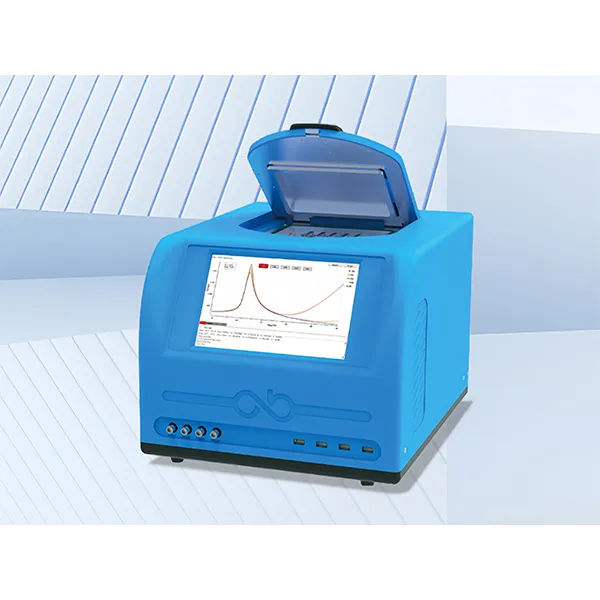
To eliminate experimental air-gap errors and temperature-dependent artifacts on delicate polymer membranes, the MatMeas DMS-2000 Low-Temperature Dielectric Spectrometer integrates micro-probe fixtures within a sealed, environmentally controlled thermal chamber.
Operating across a temperature span from −160°C up to 300°C with automated liquid nitrogen cooling, the DMS-2000 accommodates both sputtered circular micro-electrodes and compliant spring-loaded gold contact pins. Triaxial shielding eliminates stray cable capacitance, enabling resolution of minute capacitance changes down to 10 fF and dissipation factors down to 1 × 10⁻⁵. The system's automated vacuum purge and dry nitrogen environment prevent moisture condensation at sub-zero temperatures, providing an ideal testbed for evaluating dielectric energy storage films alongside polymer film voltage breakdown testing and substrate-clamped piezoelectric thin-film d33 testing.
Frequently Asked Questions
Why does a microscopic air gap cause a drastic underestimation of the dielectric constant of thin films?
When dry electrodes are clamped against a rough film, the microscopic air pockets act as an electrical capacitor connected in series with the polymer film. In a series combination of two capacitors, the smaller capacitance dominates the total equivalent capacitance. Because air has a relative permittivity of 1.0 (substantially lower than that of polymer dielectrics, εr ≈ 2–12), the air layer impedes electric displacement, causing the instrument to calculate an apparent permittivity that can be 30% to 60% lower than the true material property. Direct thin-film metallization (sputtered gold or aluminum) completely eliminates this air interface.
How does absorbed moisture affect the dielectric loss of polyimide (Kapton) films?
Polyimide contains polar imide rings and hydrophilic functional groups that readily absorb ambient atmospheric moisture (up to 2% to 3% water by weight at 50% relative humidity). Because liquid water has an exceptionally high relative permittivity (εr ≈ 80) and strong dipole relaxation at audio and radio frequencies, absorbed water molecules form mobile dipoles that oscillate under the alternating electric field. This significantly increases dielectric permittivity and increases dielectric loss tangent tan δ by an order of magnitude (from ~0.002 up to >0.02) at frequencies below 10 kHz. Vacuum baking is mandatory before testing.
What is the purpose of the guard ring electrode in ASTM D150 thin film testing?
In parallel-plate capacitor geometry, electric field lines at the outer edges of the electrodes curve outward into the surrounding air rather than passing straight through the specimen (the fringing field effect). Furthermore, surface moisture or contamination creates a parallel surface leakage path around the film edge. A three-terminal guard ring electrode surrounds the central measurement electrode with a narrow annular gap and is held at the identical electrical potential as the measurement electrode without passing current through the sensing meter. This forces all measured electric field lines to pass perpendicularly through the specimen volume while shunting fringing fields and surface leakage currents directly to instrument ground.
Request High-Precision Testing Solutions
Get expert guidance and customized instruments for your functional materials project.