Berlincourt d33 Meter: Working Principle, Calibration & Metrology
Technical News
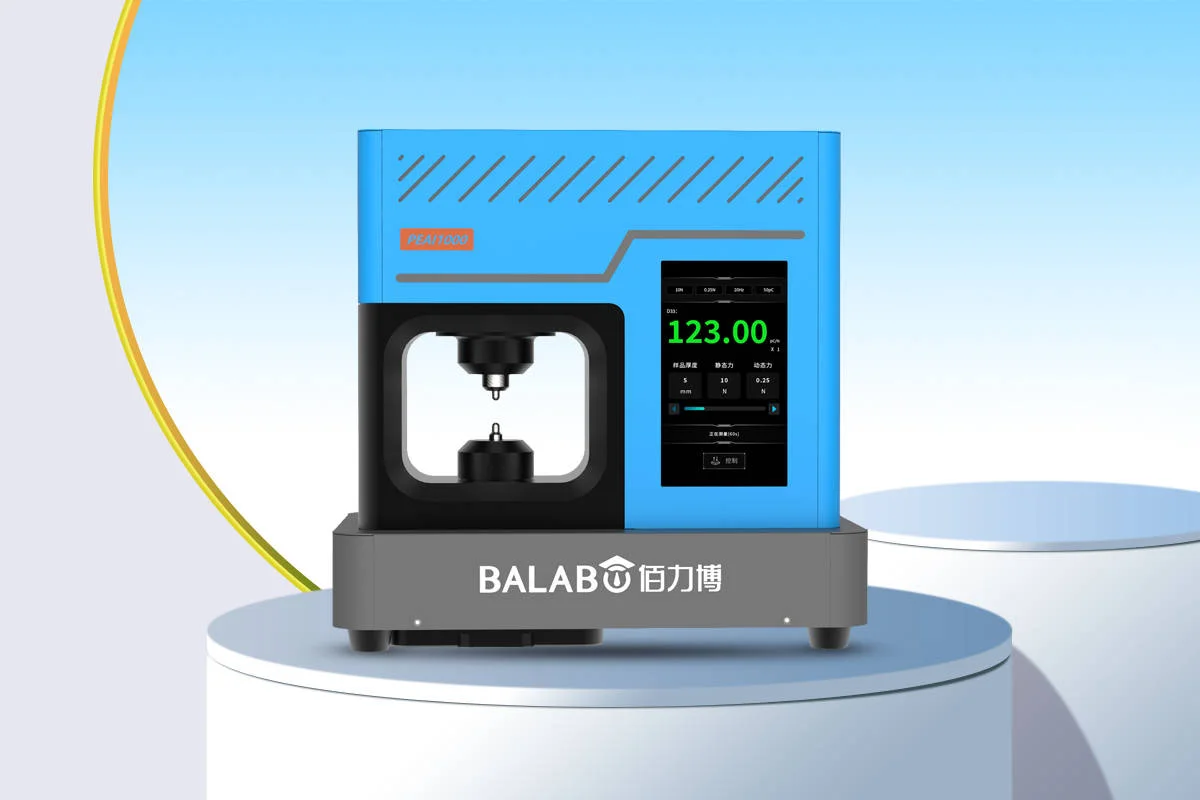
A Berlincourt d33 meter (operating via the quasi-static method standardized by IEEE Std 176) is the definitive laboratory instrument used worldwide to measure the longitudinal piezoelectric charge coefficient (d33) of functional ceramics, single crystals, and polymer films. Whether qualifying bulk PZT discs for medical ultrasound transducers, optimizing lead-free KNN formulations, or benchmarking flexible PVDF sensors, accurate piezoelectric d33 measurement provides the fundamental empirical figure of merit for electromechanical conversion efficiency.
Unlike complex resonance–antiresonance impedance methods that require destructive machining into high-aspect-ratio rods or plates, a Berlincourt d33 meter allows rapid, non-destructive characterization. By clamping a sample under a calibrated static preload and applying a low-frequency dynamic force, the instrument extracts the induced piezoelectric charge directly, displaying both d33 magnitude and poling polarity (+/-) within seconds.
Executive Summary: Core Principles of the Berlincourt d33 Meter
- Governing Standard: IEEE Std 176 Standard on Piezoelectricity (Quasi-Static Method).
- Direct vs. Converse Equivalence: Measures direct charge generation (
d33 = Q / Fin pC/N), thermodynamically equivalent to converse strain displacement (d33 = S / Ein pm/V).- Instrumentation Architecture: Dynamic electromagnetic force excitation (110 Hz, 0.25 N) superimposed on a calibrated static preload (1–10 N) with built-in reference crystal comparison.
- Noise Elimination: High-precision lock-in amplification phase-synchronizes signal extraction to 110 Hz, rejecting 50/60 Hz power-line interference and ambient structural vibrations.
Physical Principles and Constitutive Tensor Relations
The longitudinal piezoelectric charge coefficient d33 characterizes electromechanical coupling along the material's poling axis (direction 3). In linear piezoelectric constitutive theory, the direct and converse responses are governed by coupled thermodynamic equations, which correlate directly with the broader piezoelectric tensor matrix relationships across d33, d31, and shear d15 established under IEEE Std 176:
-
Direct Piezoelectric Effect (Sensors & Energy Harvesting):
D_3 = d_33 · T_3 + ε_33^T · E_3Expressed in picocoulombs per newton (pC/N), d33 defines the electric charge generated per unit applied uniaxial mechanical force. Elevated d33 values enable acoustic transducers and hydrophones to capture micro-stress variations with high signal-to-noise ratios. Achieving high d33 in polycrystalline ceramics relies on effective domain orientation via high-voltage piezoelectric polarization mechanisms and methods. -
Converse Piezoelectric Effect (Actuators & Nanopositioning):
S_3 = s_33^E · T_3 + d_33 · E_3Expressed in picometers per volt (pm/V), d33 quantifies mechanical dimensional strain induced per unit electric field. In multilayer piezoelectric stacks and micro-actuators, higher d33 enables larger displacement strokes at lower operating voltages. -
Piezoelectric Voltage Coefficient (g33):
g_33 = d_33 / (ε_0 · ε_r)For open-circuit voltage-mode sensors, g33 dictates voltage generated per unit stress. While relaxor single crystals exhibit immense d33, low-permittivity polymer films (like PVDF) yield superior g33 voltage sensitivity.
Operating Architecture of the Berlincourt d33 Meter
To execute a precise piezoelectric d33 measurement, modern instrumentation must deliver stable mechanical force calibration while isolating sub-picocoulomb charge signals from hostile laboratory electrical noise.

The 4 Pillars of Quasi-Static Metrology
- Static Preload Clamping (1 N – 10 N): The specimen is positioned between two opposing beryllium-copper or gold-plated contact probes. A calibrated static clamping preload establishes intimate electrical and acoustic contact, eliminating probe bounce during dynamic oscillation.
- Dynamic Force Excitation (110 Hz, 0.1 N – 0.5 N): An electromagnetic shaker superimposes a low-frequency sinusoidal dynamic force along the poling axis:
F(t) = F_static + F_dyn · sin(ω · t)The 110 Hz frequency is selected internationally because it is well above typical mechanical building vibrations (< 30 Hz) and safely decouples from 50 Hz and 60 Hz mains harmonics. - Comparative Reference Channel: Rather than relying on open-loop force estimation, the Berlincourt d33 meter incorporates a factory-calibrated reference piezoelectric sensor (traceable quartz or hard PZT) mechanically in series with the sample under test:
d_33(sample) = d_33(ref) · [ V_sample / V_ref ]Because both sample and reference experience identical instantaneous dynamic force, source amplitude drift is canceled algebraically. - Lock-In Amplification & Phase-Sensitive Demodulation: Minute alternating charge signals traversing high-impedance cables are converted by transimpedance electrometers and filtered through phase-sensitive lock-in amplifiers locked to 110 Hz, rejecting out-of-band laboratory noise and delivering ±2% measurement repeatability.
Benchmark of Piezoelectric d33 Across Materials Classes
Piezoelectric materials span diverse crystalline, ceramic, and polymeric families, exhibiting d33 coefficients across three orders of magnitude:
| Material Family | Formulation / Scale | Longitudinal d33 (pC/N) | Voltage g33 (10⁻³ V·m/N) | Primary Engineering Role |
|---|---|---|---|---|
| Piezoelectric Single Crystal | Alpha-Quartz (SiO2) | 2.3 | 57.8 | Ultra-stable frequency standards, pressure sensors |
| Ferroelectric Relaxor Crystal | PMN-PT [001]-Cut | 1500 to 2500 | 25.0 to 38.0 | Medical ultrasound phased arrays, sonar projectors |
| Hard PZT Ceramic | PZT-4 / PZT-8 | 220 to 300 | 22.0 to 26.0 | High-power ultrasonic welders, industrial transducers |
| Soft PZT Ceramic | PZT-5A / PZT-5H | 400 to 650 | 19.0 to 25.0 | Acoustic emission sensors, micro-positioners, hydrophones |
| Lead-Free Perovskite | KNN-modified Bulk Ceramic | 200 to 320 | 20.0 to 28.0 | Eco-compliant consumer electronics, industrial flow meters |
| Piezoelectric Polymer | Poled PVDF Film (25–100 μm) | 25 to 35 | 230.0 to 280.0 | Flexible tactile sensors, impact switches, wearable electronics |
Error Sources and Engineering Mitigation in Berlincourt Metrology
Extracting reproducible d33 values requires diagnosing systematic errors arising from contact mechanics, geometry non-parallelism, and clamping stress, which can be quantitatively mapped via piezoelectric d33 dynamic force testing across swept mechanical loads:
| Error Source | Physical Mechanism | Impact on Measured d33 | Engineering Mitigation Strategy |
|---|---|---|---|
| Excessive Static Preload | Compressive stress clamps non-180° ferroelastic domain walls | Artificially depresses d33 by 5% to 20% in soft ceramics | Program light, calibrated preload (1 to 2 N); extrapolate readings to zero clamping force. |
| Face Non-Parallelism | Tilted faces cause point-contact loading and bending stresses | Induces parasitic d31 flexural charges, distorting reading | Precision double-sided surface lapping to maintain face parallelism within ±2 μm. |
| Electrode Edge Fringing | Electrodes extending to perimeter edge create field leakage | Charge loss and localized spark discharge during poling | Enforce an un-electroded edge margin equal to specimen thickness d. |
| Electromagnetic Interference (EMI) | 50/60 Hz power-line radiation couples into cabling | Baseline drift and false charge integration | Deploy driven-guard triaxial cabling and phase-sensitive lock-in detection at 110 Hz. |
Standardized Step-by-Step SOP for Berlincourt d33 Testing
To obtain publication-grade data complying with IEEE Std 176, follow this standardized 4-step testing procedure:

- Step 1: Specimen Preparation & Geometry Inspection: Lap top and bottom specimen surfaces to ensure face parallelism within ±2 μm. Ensure clean electrode margins without edge burrs. Clean in an ultrasonic isopropanol bath and bake at 80 °C to eliminate surface moisture.
- Step 2: Controlled Clamping & Alignment: Mount specimen centered between the hemispherical probe tips. Set calibrated static clamping force (recommended: 1 N to 2 N for bulk ceramics; 0.5 N to 1 N for thin wafers and polymer films) to ensure electrical contact without ferroelastic domain wall clamping.
- Step 3: 110 Hz Dynamic Force Excitation: Engage the electromagnetic exciter with dynamic test force (F_dyn = 0.25 N at 110 Hz). The system phase-locks the measurement channel to the 110 Hz drive signal, filtering out building vibrations.
- Step 4: Traceable Calibration & Polarity Readout: The instrument executes comparative charge integration against its internal reference crystal. Instantly extract the numerical d33 value and determine poling polarity (+ for top positive pole, - for top negative pole). Verify calibration against the certified factory standard test block.
Dedicated Hardware Instrumentation: PEAI-1000 & PEMS-1000
Precision research and industrial quality control require dedicated instrumentation that combines wide dynamic measurement range, calibrated force stability, and robust noise rejection.
1. Room-Temperature Standard: MatMeas PEAI-1000
The PEAI-1000 High-Precision Piezoelectric Analyzer provides an advanced Berlincourt d33 meter engineered for functional ceramics, single crystals, and polymer films:
- Wide Measurement Dynamic Range (0 to 2000 pC/N): Accurately resolves low responses in quartz while measuring ultra-high coefficients in PMN-PT single crystals with 0.1 pC/N resolution.
- Dual Independent Force Regulation: Features independent electronic adjustment of static clamping force (1 N to 10 N) and dynamic excitation force (0.1 N to 0.5 N), safeguarding fragile thin films and wafers from mechanical crushing.
- Integrated Lock-In Demodulation: Eliminates ambient acoustic and 50/60 Hz EMI interference, delivering certified ±2% calibration accuracy traceable to national standards.
2. High-Temperature In-Situ Spectroscopy: MatMeas PEMS-1000
While conventional Berlincourt meters operate exclusively at room temperature (25 °C), mission-critical aerospace, automotive, and nuclear sensors operate in extreme environments. The PEMS-1000 Piezoelectric Temperature Spectrum Measurement System (detailed in our temperature-dependent d33 testing guide) extends quasi-static and dynamic d33 characterization from -160 °C up to +600 °C, enabling researchers to map in-situ thermal depoling, phase transitions, and exact Curie temperatures (T_c).
Frequently Asked Questions (FAQ)
Why does measured d33 depend on static clamping force in a Berlincourt d33 meter?
In quasi-static testing, static clamping force establishes reliable acoustic and electrical contact. However, excessive static pressure mechanically clamps ferroelastic non-180° domain walls, preventing them from contributing to electromechanical displacement and depressing apparent d33 by 5% to 20%. The PEAI-1000 incorporates calibrated force regulation (1 N to 10 N) to establish optimal contact without domain clamping.
How does lock-in amplification improve piezoelectric d33 measurement reliability?
Quasi-static excitation generates minute alternating charges (pico-coulombs) that are vulnerable to ambient machinery noise and 50/60 Hz power-line interference. Lock-in amplifiers synchronize signal acquisition strictly to the 110 Hz mechanical exciter, rejecting all broadband and out-of-phase noise to achieve ±2% measurement repeatability.
What is the difference between Berlincourt quasi-static testing and resonance impedance methods?
The Berlincourt method applies low-frequency dynamic stress (110 Hz) well below specimen acoustic resonances, yielding direct d33 readouts in seconds regardless of sample shape. Resonance methods (IEEE Std 176) require precision-machined bars with strict aspect ratios (> 5:1) tested across MHz frequencies to extract d33 indirectly via resonant and anti-resonant frequency equations.
Can the PEAI-1000 Berlincourt meter test delicate polymer films and fragile crystals?
Yes. The PEAI-1000 supports bulk ceramic blocks, multi-layer stack actuators, delicate single crystals, and flexible polymer films up to 40 mm in diameter and 20 mm in thickness. Its fine static force control prevents fracture in fragile thin specimens.
Technical Evaluation & Testing Services Dual-Funnel Path
Accurate determination of piezoelectric coefficients and electromechanical coupling factors requires matching experimental requirements with the appropriate characterization route:
- Turnkey Capital Equipment Inquiry: For universities, national research institutes, and sensor manufacturing facilities establishing permanent in-house characterization capabilities:
- Standard room-temperature Berlincourt d33 characterization: PEAI-1000 High-Precision Piezoelectric Analyzer
- Cryogenic to high-temperature in-situ d33 spectroscopy (-160 °C to +600 °C): PEMS-1000 Piezoelectric Temperature Spectrum Measurement System
- Authorized Contract Testing Services: For unbudgeted research projects, urgent peer-review revisions, or pre-purchase validation of novel lead-free or high-temperature piezoceramics, submit specimens to our ISO-compliant facility via our Authorized Sample Testing Services for traceable d33, d31, dielectric loss, and temperature spectrum reports.
Related Instruments & Equipment
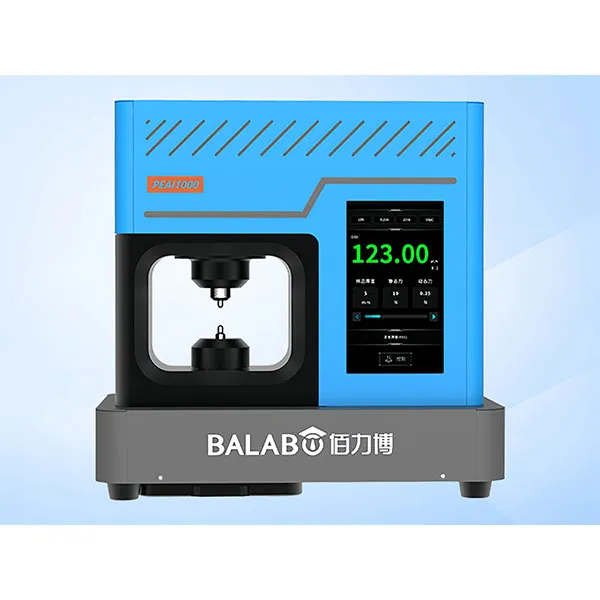
MatMeas PEAI1000 High-Precision Piezoelectric Analyzer
The MatMeas PEAI1000 is a next-generation High-Precision Piezoelectric Analyzer engineered to evaluate the piezoelectric coefficient (d33) of advanced functional materials. Surpassing the limitations of traditional d33 measuring instruments, it employs an advanced dynamic measurement method integrated with cutting-edge lock-in amplification technology. This architecture strictly suppresses environmental noise, significantly improving the signal-to-noise ratio. Capable of applying variable static clamping forces (1~10N) and precise dynamic test forces (0.1~0.5N), it guarantees an ultra-wide measurement range (0 to 2000 pC/N) with an exceptional accuracy of ±2%. It is an essential, highly reliable tool for the research, application, and mass production of piezoelectric blocks, plates, and delicate thin films.
View details →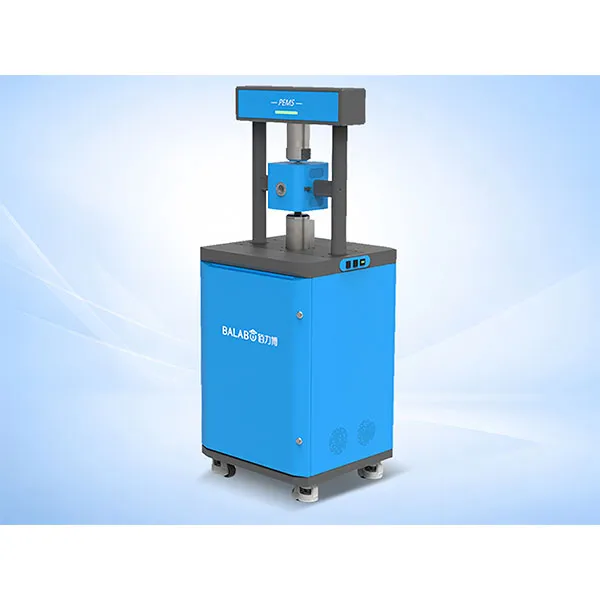
MatMeas High Precision In‑situ d33 Piezoelectric Measurement System – PEMS Analyzer
MatMeas PEMS is a high‑precision in‑situ d33 piezoelectric measurement system for advanced material characterization.
View details →Request High-Precision Testing Solutions
Get expert guidance and customized instruments for your functional materials project.