Overview
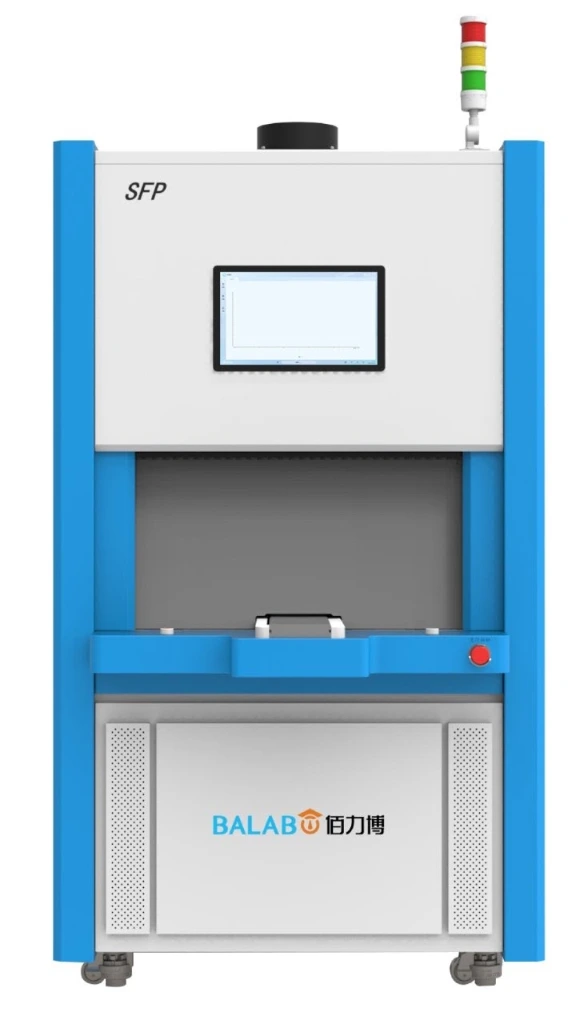
The MatMeas SFP Smart Thin Film Corona Polarizer (Model: SFP30KVNEG) represents a generational leap in corona poling technology for piezoelectric and electret thin films. Unlike static or single-wire corona systems, the SFP employs a full-array corona wire layout driven by multi-axis synchronized linear scanning—delivering precise, high-density charge injection across an industry-leading 300 mm × 300 mm active area.
At its core, the SFP is built on the MatEC-IoT Industrial Edge Platform, which provides seamless cross-platform software compatibility, web-based remote monitoring, detailed recipe logging, and real-time data storage. This makes the SFP a natural fit for modern smart labs pursuing Industry 4.0 data traceability. The system operates under fully closed-loop control—monitoring and regulating both grid and corona voltages in real time to eliminate manual intervention and ensure exceptional process repeatability.
A dedicated Intelligent Dynamic Field Compensation algorithm continuously calculates and corrects spatial non-uniformities in the electric field during each scan pass. This proprietary approach resolves the two most common failure modes in large-area corona poling: the edge effect (stronger field at film boundaries) and grid-shading (field shadowing beneath wire supports). The outcome is unmatched uniformity across the full film substrate.
Multi-stage active safety interlocks, rapid arc/spark detection circuitry, and automatic overcurrent shutdown at 1 mA protect both the operator and ultra-thin film specimens from catastrophic dielectric breakdown—meeting the EHS standards demanded by academic and industrial high-voltage laboratories worldwide.
Specifications
| Model | SFP30KVNEG |
| Poling Method | Negative Corona Poling |
| Poling Temperature | Room Temperature / Ambient |
| Max Sample Size | 300 mm × 300 mm (up to A4 size) |
| Grid Voltage Range | 0 to −20 kV (negative polarity) |
| Corona Voltage Range | 0 to −20 kV (negative polarity) |
| Voltage Tuning Precision | ±0.1 kV (closed-loop regulation) |
| Output Voltage Accuracy | ±5% |
| Protection Current Limit | 1 mA |
| XY Scanning Speed | 0 to 10 mm/s |
| Power Supply | AC 220 V ±10%, 50 / 60 Hz |
| System Dimensions | 1525 mm × 1100 mm × 2055 mm (L × W × H) |
| System Weight | Approx. 800 kg |
| Warranty Period | 1 Year |
Applications
- Piezoelectric Polymers & Copolymers (PVDF, PVDF-TrFE)
- Electret Air-Filtration Membranes
- Flexible Electronics & Smart Skins
- Electrostatic Acoustic Transducers
- Energy Harvesters & Wearable Devices
- Advanced Functional Thin-Film R&D
FAQ
How does the SFP achieve uniform charge injection across a 300 mm × 300 mm film?
The SFP combines two complementary technologies. First, a proprietary array-style corona wire layout distributes discharge points across the full width of the film, eliminating the sparse coverage of single-needle systems. Second, multi-axis synchronized linear scanning motion carries the wire array and grid assembly in a coordinated pattern at micron-level positioning accuracy. Overlying both is the Intelligent Dynamic Field Compensation algorithm, which continuously measures and corrects spatial electric field deviations during every scan pass—neutralizing edge effects and grid-shading artifacts to deliver verified uniformity across the entire substrate.What safety mechanisms protect operators and specimens in a high-voltage corona environment?
The SFP is equipped with multi-layered, industrial-grade active safety interlocks that physically prevent high-voltage generation during sample loading and unloading. Dedicated arc and spark detection circuitry monitors discharge characteristics in real time; any anomalous event triggers an automatic overcurrent shutdown at the 1 mA protection threshold before dielectric breakdown can propagate. This layered approach meets the EHS requirements of both university and industrial high-voltage laboratories, making the SFP safe for routine, unattended operation.How does the MatEC-IoT platform benefit our laboratory data management workflow?
The MatEC-IoT Industrial Edge Architecture integrates the SFP into your lab network via standard Ethernet or Wi-Fi. The bundled software interface provides web-based remote monitoring of live process parameters—corona voltage, grid voltage, scanning position, and discharge current—from any browser on your network. Every poling recipe, including voltage ramp profiles, scan speed, and duration, is automatically logged with a timestamp and stored in the on-board database, giving you a complete, traceable process record for each batch of films.Can the SFP process PVDF-TrFE copolymer films for sensor fabrication without thermal annealing?
Yes. The SFP is specifically designed for room-temperature negative corona poling, making it ideal for thermally sensitive copolymers such as PVDF-TrFE that may partially depolarize or degrade if heated. The combination of dual independent negative polarity power supplies (grid: 0 to −20 kV; corona: 0 to −20 kV) and ±0.1 kV tuning precision gives researchers the fine control needed to optimize charge injection without exceeding the Curie temperature of these materials.What is the throughput advantage over a traditional single-needle static corona setup?
Traditional single-needle or static corona systems require lengthy dwell times to accumulate sufficient charge across large film areas, often taking 30 minutes or more for a single A4-sized sample. The SFP's array wire layout combined with optimized electric field distribution enables complete, uniform polarization of an A4-sized film in under 10 minutes—a 300% throughput improvement that directly translates into faster iteration cycles in both R&D and pilot production environments.
Related Products
MatMeas FCP Thin Film Corona Polarizer
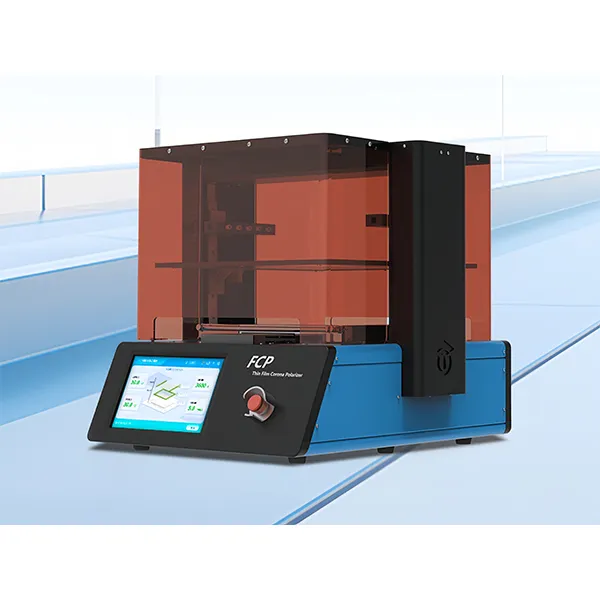
The MatMeas FCP Thin Film Corona Polarizer is an advanced laboratory platform specifically engineered for high-efficiency polarization of piezoelectric polymer films (e.g., PVDF, P(VDF-TrFE)). Delivering 0 to −30 kV / 2 mA negative corona discharge across a spacious 200 mm × 200 mm active poling area, it features dual independent power modules to eliminate electrical cross-talk and utilizes an innovative non-contact single-wire electrode fixture. With optional FCPHT150 high-temperature heating stage (≤ 150°C, precision ≤ ±3°C) and FCPOP01 smart suite supporting remote OTA updates and API integration, the FCP uniformly polarizes ultra-thin films (5 μm to 200 μm, ideally 10–50 μm) from custom coupons (e.g., 50 mm × 50 mm) up to 200 mm × 200 mm sheets without dielectric breakdown.
View details →
MatMeas MPD Series Four‑Channel High Voltage Polarization System
The MatMeas MPD Series is an advanced four-channel high-voltage polarization system specifically engineered for the precise oil-bath poling of piezoelectric ceramics. Capable of polarizing up to four samples simultaneously, it provides versatile high-voltage options (up to 30kV) and PID precision temperature control up to 200°C. Engineered with unparalleled safety features—including isolation shielding technology, safety interlocks, and independent breakdown protection for each channel—the MPD Series guarantees highly efficient, interference-free sample preparation for aerospace, semiconductor integration, and biomedical engineering applications.
View details →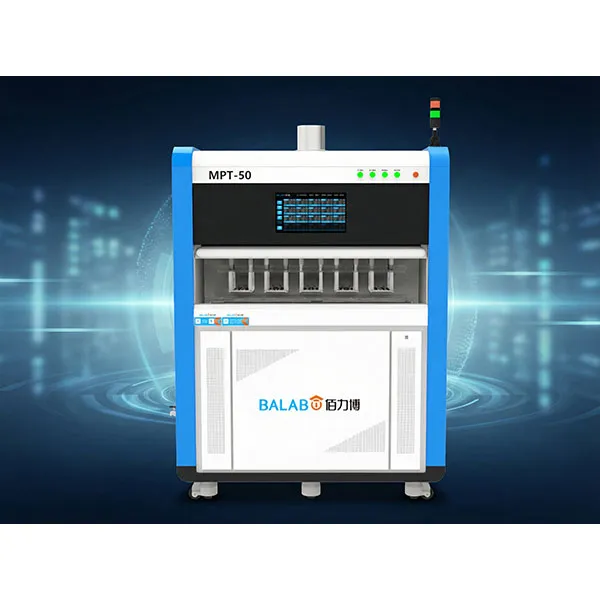
MatMeas Automatic High Voltage Polarization System for Piezoelectric Ceramics – MPT Series
The MatMeas MPT Series is an intelligent, fully automated high-voltage polarizer designed for the high-yield mass production and advanced research of piezoelectric ceramics. Capable of simultaneously polarizing up to 100 samples in an oil-bath environment, each independent channel delivers up to 30kV and 1mA without mutual interference. Featuring an intelligent self-diagnostic safety check, comprehensive data traceability, and precision PID temperature control up to 180°C, the MPT Series guarantees consistent, high-yield poling results without manual supervision. It is the trusted polarization infrastructure for industry leaders like Huawei Technologies and the China Institute of Atomic Energy (CIAE).
View details →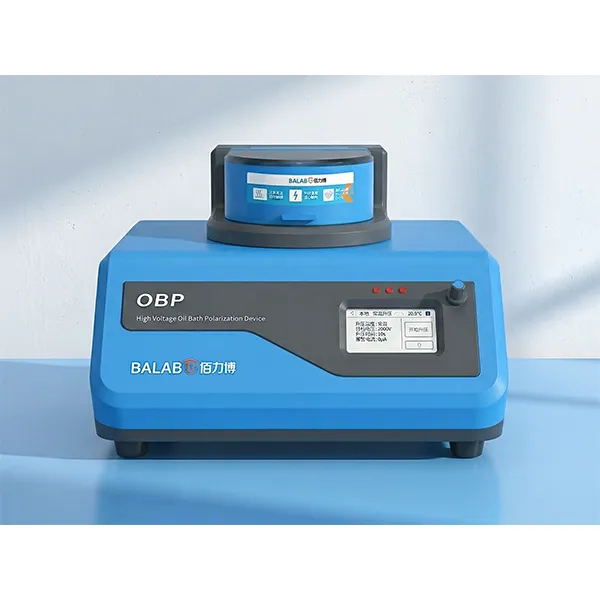
MatMeas OBP Series High Voltage Piezoelectric Ceramic Polarization
MatMeas OBP Series High Voltage Piezoelectric Ceramic Polarization Instrument is a compact, precise lab device designed for bulk and thin-film materials. It helps achieve optimal polarization effects through process optimization.
View details →
MatMeas SPD20KVPOS Air Corona High Voltage Polarization Device
The MatMeas SPD20KVPOS is an intelligent, highly compact Air High-Voltage Polarization Device engineered specifically for the efficient corona poling of piezoelectric ceramic thin films and bulk materials. Delivering up to 20kV of polarization voltage and offering PID precision temperature control up to 180°C, this desktop system is perfectly optimized for both laboratory R&D and educational environments. It features a proprietary visual monitoring interface for real-time tracking of polarization states, combined with one-click operation. Designed with uncompromising safety, it integrates isolation shielding technology, mechanical safety interlocks, and an independent breakdown alarm system, making it the ultimate tool for safely mastering advanced piezoelectric polarization techniques.
View details →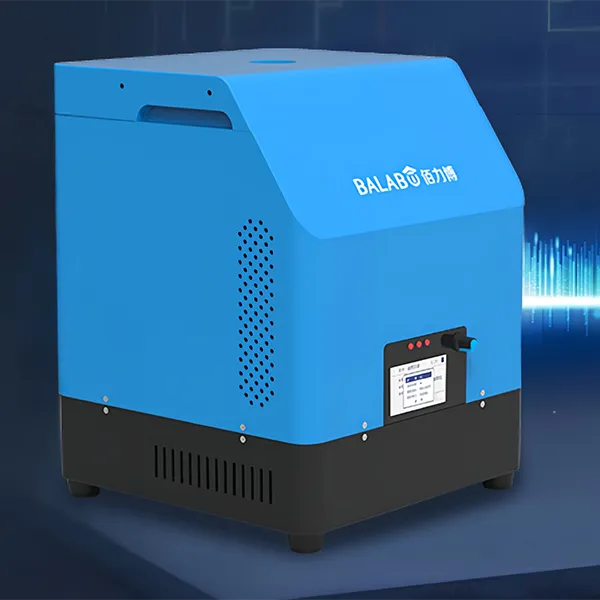
MatMeas TPD Series Single-Channel High-Temp Polarization System
The MatMeas TPD Series is a highly integrated, single-channel high-temperature and high-voltage polarization system specifically engineered for the unique requirements of piezoelectric ceramic fiber materials. Utilizing air as the insulating medium, it safely achieves exceptional high-temperature air poling up to 600°C. Capable of delivering a polarization voltage up to 10kV with a high-precision minimum detectable current of 100nA, it is equipped with a multi-segment intelligent PID temperature control system. Featuring a compact desktop footprint and built-in high voltage breakdown protection, the TPD system is the ultimate, reliable one-click solution for universities, research institutions, and manufacturing units advancing ceramic fiber technologies.
View details →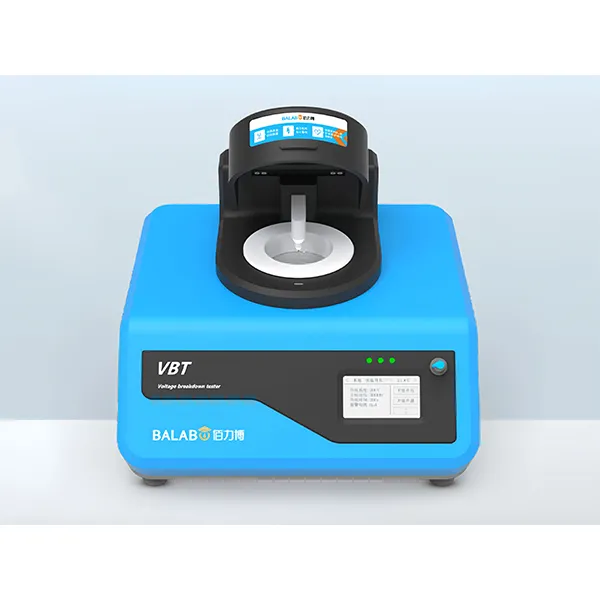
VBT-30KV Voltage Breakdown Tester
The MatMeas VBT-30KV (VBT30KVPOS) is a highly specialized Voltage Breakdown Tester engineered to rigorously evaluate the dielectric strength of piezoelectric ceramics. Powered by a highly accurate, compact 30kV digital high-voltage generator, it accurately determines both the maximum breakdown failure voltage and the maximum safe operating voltage. To ensure unparalleled operator safety and prevent surface flashover, the system conducts measurements within a temperature-controlled silicone oil environment (RT to 180°C) and integrates proprietary high-voltage interlock breakdown isolation technology. With versatile step-up modes including uniform speed breakdown and withstand voltage modes, it is an indispensable reliability verification tool for research institutes and advanced manufacturing enterprises.
View details →