Overview
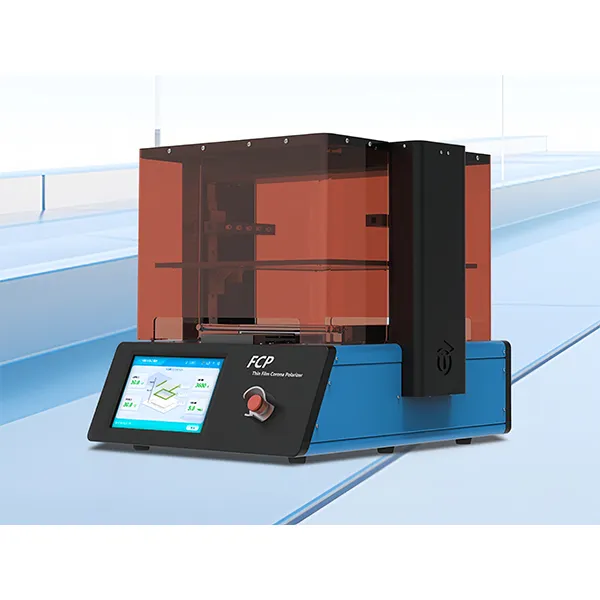
The MatMeas FCP Thin Film Corona Polarizer is specifically engineered for laboratory research and pilot-scale production of piezoelectric polymer films. Designed to overcome dielectric breakdown and electrode arcing in ultra-thin membranes, the base system delivers 0 to −30 kV / 2 mA negative corona discharge with ±5% voltage accuracy across an expansive 200 mm × 200 mm active poling area. Powered by AC 220–240 V (50 Hz), it features two independent power modules to eliminate mutual interference between corona ionization and triode grid potential regulation.
For thermal poling schedules, the system seamlessly integrates the FCPHT150 High-Temperature Heating Stage (supporting ambient up to 150℃ with PID precision ≤ ±3℃ and multi-rate heating ramps), enabling complete thermal dipole alignment and field-cooling lock-in for beta-phase PVDF. For automated laboratories and Industry 4.0 workflows, the optional FCPOP01 Smart Upgrade Suite equips the platform with remote over-the-air (OTA) firmware updates and programmatic API calls, allowing direct integration into centralized data acquisition and automated testing systems.
Specifications
| Polarization Mode | Negative Corona Poling (Base System: 0 to −30 kV / 2 mA) |
| Polarization Voltage Range | 0 to −30 kV (negative polarity) |
| Maximum Output Current | 2 mA |
| Voltage Output Accuracy | ±5% |
| Active Poling Area | 200 mm × 200 mm (supports custom coupons e.g. 50 mm × 50 mm up to 200 mm × 200 mm sheets) |
| Power Architecture | 2 built-in independent power modules (corona discharge & grid stabilization) |
| Compatible Film Thickness | 5 μm to 200 μm (optimized for ultra-thin 10–50 μm membranes) |
| Compatible Materials | PVDF, P(VDF-TrFE), electret films, and flexible ferroelectric polymers |
| High-Temp Stage (Option: FCPHT150) | Ambient to ≤ 150℃ (PID control, precision ≤ ±3℃) |
| Heating Rate | 3℃/min, 6℃/min, 9℃/min selectable |
| Smart Suite (Option: FCPOP01) | Remote OTA firmware updates & external API call integration |
| Electrode Mechanism | Proprietary single-wire non-contact electrode fixture |
| Power Supply | AC 220–240 V, 50 Hz |
Applications
- Sensors & Actuators
- Energy Harvesting & Storage
- Acoustic Technology
- Aerospace
- Medical Devices
FAQ
How does the FCP system eliminate physical puncturing and mechanical stress on ultra-thin polymer films?
Conventional contact poling fixtures rely on rigid mechanical clamps or spring-loaded pins that frequently puncture, scratch, or wrinkle delicate sub-50 μm polymer membranes. The MatMeas FCP resolves this by utilizing non-contact corona discharge. High-voltage air ionization deposits charges uniformly across the upper surface without mechanical pressure, while the precision-machined heated substrate provides flat bottom grounding and uniform thermal contact, maintaining pristine film integrity throughout the process.Why is negative corona poling specifically recommended for PVDF and P(VDF-TrFE) films?
Negative corona discharge operates through highly stable, self-quenching Trichel pulses, avoiding the localized streamer breakdown and spark-overs common in positive corona discharges. For electronegative fluoropolymers like PVDF and P(VDF-TrFE), negative surface charge deposition produces a more uniform electrostatic potential across the film. The FCP system integrates dual independent power modules (0 to -30 kV corona source and precision grid voltage bias) to precisely clamp surface potential and align C-F dipoles into the polar beta-phase.What sample formats, thicknesses, and sizes can be accommodated on the FCP platform?
The FCP platform accommodates film thicknesses from 5 μm up to 200 μm (optimized for ultra-thin 10–50 μm membranes). Its 200 mm × 200 mm heated ground stage supports specimen geometries ranging from small diced coupons (e.g., 20 mm × 20 mm, 50 mm × 50 mm) up to 200 mm × 200 mm sheets. For larger industrial substrates up to 300 mm × 300 mm with multi-axis synchronized scanning, researchers can step up to the MatMeas SFP Smart Corona Polarizer.How does the FCP system control temperature during thermal poling and field-cooling schedules?
Dipole alignment in semicrystalline PVDF requires thermal soaking (typically 80°C to 110°C) to overcome alpha-phase crystalline constraints, followed by cooling under sustained electric fields to lock in beta-phase orientation. Equipped with the optional FCPHT150 high-temperature heating stage, the FCP provides precise PID-controlled heating from ambient up to 150°C (precision ≤ ±3°C) with selectable heating ramps (3°C/min, 6°C/min, 9°C/min), allowing exact execution of standardized thermal poling and field-cooling recipes.Should I choose corona poling or contact oil-bath poling for my custom 50 mm × 50 mm PVDF films?
The decision depends primarily on your film's metallization state. For bare (un-electroded) PVDF films or ultra-thin coupons (10 to 50 μm), corona poling with the FCP is standard practice because it eliminates edge flashover, tolerates microscopic pinholes through self-limiting charge dissipation, and requires no post-poling solvent washing. Conversely, contact oil-bath poling (e.g., the MatMeas OBP series) is suited for samples already manufactured with double-sided patterned electrodes. Both approaches integrate seamlessly with the MatMeas PMS-1000 for post-poling d33 piezoelectric coefficient verification.
Related Products
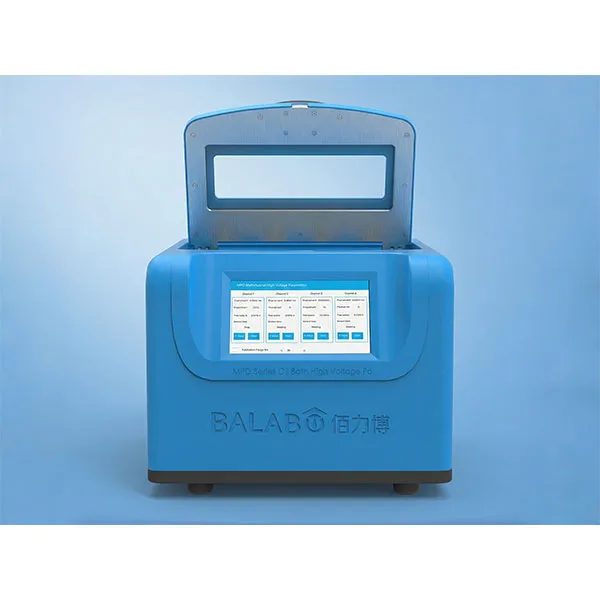
MatMeas MPD Series Four‑Channel High Voltage Polarization System
The MatMeas MPD Series is an advanced four-channel high-voltage polarization system specifically engineered for the precise oil-bath poling of piezoelectric ceramics. Capable of polarizing up to four samples simultaneously, it provides versatile high-voltage options (up to 30kV) and PID precision temperature control up to 200°C. Engineered with unparalleled safety features—including isolation shielding technology, safety interlocks, and independent breakdown protection for each channel—the MPD Series guarantees highly efficient, interference-free sample preparation for aerospace, semiconductor integration, and biomedical engineering applications.
View details →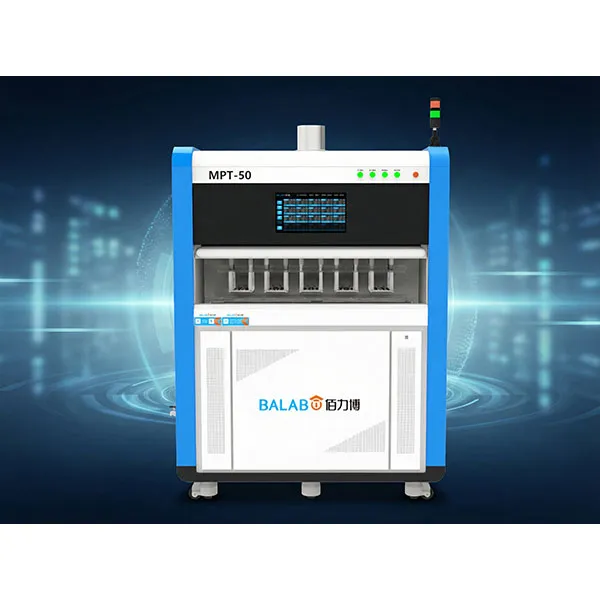
MatMeas Automatic High Voltage Polarization System for Piezoelectric Ceramics – MPT Series
The MatMeas MPT Series is an intelligent, fully automated high-voltage polarizer designed for the high-yield mass production and advanced research of piezoelectric ceramics. Capable of simultaneously polarizing up to 100 samples in an oil-bath environment, each independent channel delivers up to 30kV and 1mA without mutual interference. Featuring an intelligent self-diagnostic safety check, comprehensive data traceability, and precision PID temperature control up to 180°C, the MPT Series guarantees consistent, high-yield poling results without manual supervision. It is the trusted polarization infrastructure for industry leaders like Huawei Technologies and the China Institute of Atomic Energy (CIAE).
View details →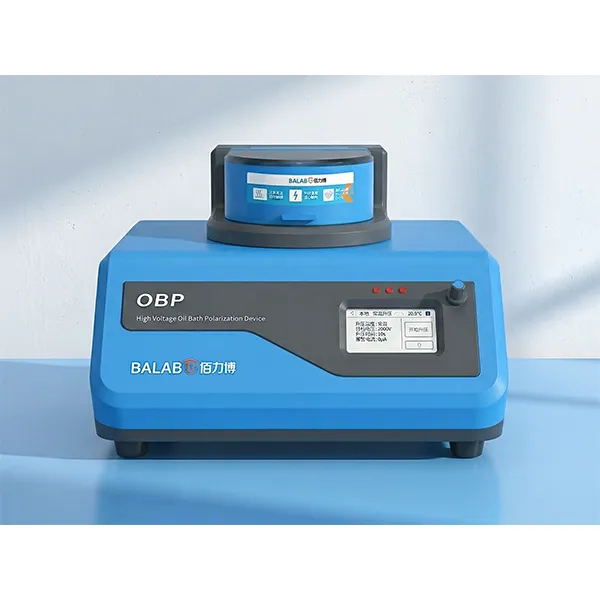
MatMeas OBP Series High Voltage Piezoelectric Ceramic Polarization
MatMeas OBP Series High Voltage Piezoelectric Ceramic Polarization Instrument is a compact, precise lab device designed for bulk and thin-film materials. It helps achieve optimal polarization effects through process optimization.
View details →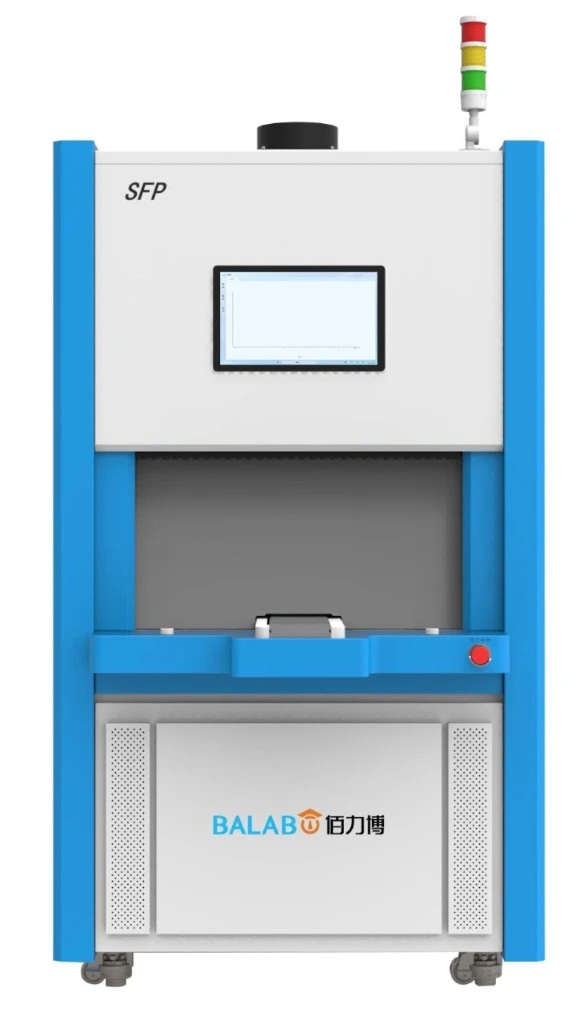
MatMeas SFP Smart Thin Film Corona Polarizer
The MatMeas SFP Smart Thin Film Corona Polarizer is an industrial-grade, fully automated poling platform built on the MatEC-IoT Materials Edge IoT Architecture. Engineered for both advanced R&D and pilot production, the SFP system delivers ±0.1 kV closed-loop voltage precision across dual independent power channels—grid voltage (0 to −20 kV) and corona discharge (0 to −20 kV)—while its proprietary array-style corona wire layout and multi-axis synchronized scanning motion stage achieve micron-level coordinated movement across a 300 mm × 300 mm active area. Intelligent dynamic field compensation algorithms continuously correct the spatial electric field profile throughout each scan cycle, eliminating edge effects and grid-shading artifacts to produce exceptional charge-injection uniformity. The result: complete, uniform polarization of A4-sized PVDF, PVDF-TrFE, and electret films in under 10 minutes—a 300% throughput gain over conventional single-needle or static corona setups.
View details →
MatMeas SPD20KVPOS Air Corona High Voltage Polarization Device
The MatMeas SPD20KVPOS is an intelligent, highly compact Air High-Voltage Polarization Device engineered specifically for the efficient corona poling of piezoelectric ceramic thin films and bulk materials. Delivering up to 20kV of polarization voltage and offering PID precision temperature control up to 180°C, this desktop system is perfectly optimized for both laboratory R&D and educational environments. It features a proprietary visual monitoring interface for real-time tracking of polarization states, combined with one-click operation. Designed with uncompromising safety, it integrates isolation shielding technology, mechanical safety interlocks, and an independent breakdown alarm system, making it the ultimate tool for safely mastering advanced piezoelectric polarization techniques.
View details →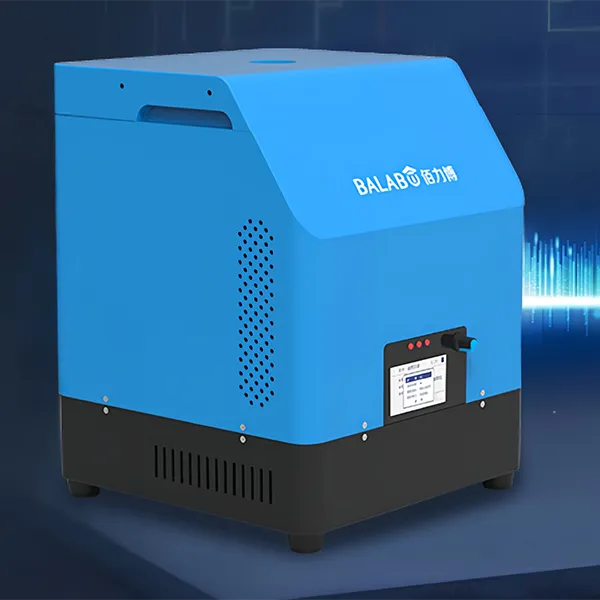
MatMeas TPD Series Single-Channel High-Temp Polarization System
The MatMeas TPD Series is a highly integrated, single-channel high-temperature and high-voltage polarization system specifically engineered for the unique requirements of piezoelectric ceramic fiber materials. Utilizing air as the insulating medium, it safely achieves exceptional high-temperature air poling up to 600°C. Capable of delivering a polarization voltage up to 10kV with a high-precision minimum detectable current of 100nA, it is equipped with a multi-segment intelligent PID temperature control system. Featuring a compact desktop footprint and built-in high voltage breakdown protection, the TPD system is the ultimate, reliable one-click solution for universities, research institutions, and manufacturing units advancing ceramic fiber technologies.
View details →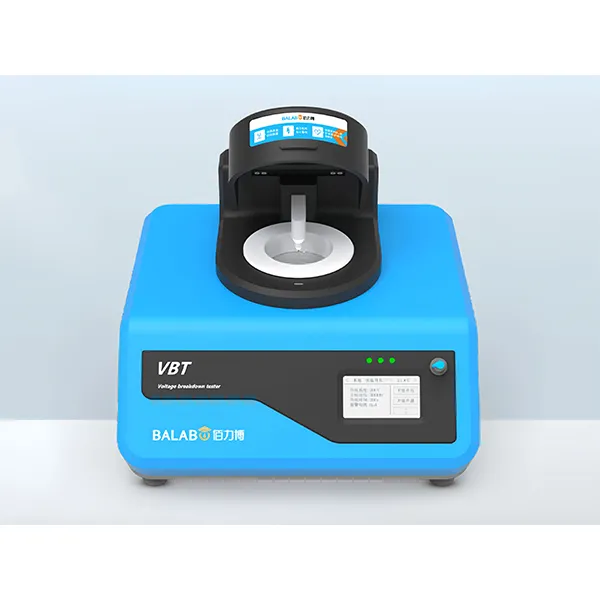
VBT-30KV Voltage Breakdown Tester
The MatMeas VBT-30KV (VBT30KVPOS) is a highly specialized Voltage Breakdown Tester engineered to rigorously evaluate the dielectric strength of piezoelectric ceramics. Powered by a highly accurate, compact 30kV digital high-voltage generator, it accurately determines both the maximum breakdown failure voltage and the maximum safe operating voltage. To ensure unparalleled operator safety and prevent surface flashover, the system conducts measurements within a temperature-controlled silicone oil environment (RT to 180°C) and integrates proprietary high-voltage interlock breakdown isolation technology. With versatile step-up modes including uniform speed breakdown and withstand voltage modes, it is an indispensable reliability verification tool for research institutes and advanced manufacturing enterprises.
View details →