PVDF Piezoelectric Film Corona Poling Guide
Technical News
Polyvinylidene fluoride (PVDF) and its ferroelectric copolymer poly(vinylidene fluoride-trifluoroethylene) [P(VDF-TrFE)] represent premier organic functional materials for flexible tactile sensors, acoustic hydrophones, wearable health monitors, and biomechanical energy harvesters. Unlike rigid piezoceramics, fluoropolymer films combine mechanical flexibility, low acoustic impedance closely matched to biological tissue, and broad frequency bandwidth.
However, pristine as-cast PVDF films exist predominantly in a non-polar alpha phase, wherein antiparallel polymer chain conformations cancel dipole moments. Imparting strong piezoelectricity requires mechanical stretching to convert the polymer into the polar beta phase, followed by high-electric-field poling to align carbon-fluorine (C-F) dipoles. Among polarization techniques (benchmarked across our overview of piezoelectric thin-film poling methods and fundamental piezoelectric polarization methods), corona discharge poling offers decisive advantages over traditional contact electrode poling.
Physical Mechanisms of Corona Discharge Poling in PVDF
Conventional contact poling applies high voltages directly across metallized film electrodes. In thin polymer membranes (often 10 to 50 micrometers thick), localized sub-microscopic pinholes or thickness non-uniformities trigger catastrophic avalanche breakdown, short-circuiting the entire specimen and vaporizing electrodes.
Corona discharge poling eliminates direct electrical contact through air ionization:
-
High-Field Needle Ionization: A sharp needle or multi-needle array energized with high positive or negative DC potentials (up to 30 kV) generates a localized Townsend avalanche, ionizing surrounding ambient gas molecules.
-
Uniform Surface Charge Deposition: Ionized charges drift toward the grounded substrate, depositing an electrostatic charge layer across the bare, non-metallized upper film surface.
-
Self-Limiting Breakdown Suppression: When localized charge accumulation initiates a micro-discharge across a defect, the surface potential discharges only locally without propagating across the entire film. This self-healing attribute permits electric fields exceeding 100 MV/m without destructive flashover.
-
Controlling Electric Field with Grid Mesh: A metallic wire grid positioned between the corona needle and the film establishes a triode configuration. By fixing the grid potential, the maximum surface voltage is clamped to the grid potential, guaranteeing strict field uniformity.
Influence of Temperature on Dipole Mobility and Beta-Phase Orientation
Dipole alignment in semicrystalline fluoropolymers is intimately tied to polymer chain relaxation dynamics:
-
Glass Transition and Sub-Curie Thermal Soaking: Room-temperature polymer chains possess rigid crystalline lamellae that restrict dipole rotation. Heating the film to elevated temperatures (typically 80°C to 110°C) activates segmental chain mobility within amorphous regions and relaxes crystalline constraints.
-
Thermal Poling Schedules: Applying the corona field at elevated temperatures allows molecular C-F dipoles to orient along the applied field vector under reduced coercive fields. Cooling the film back to room temperature under the sustained electric field locks the aligned dipoles in place, stabilizing remanent polarization.
-
Thermal Degradation Thresholds: Operating temperatures must not exceed polymer melting points (approx. 170°C for alpha-PVDF) or approach thermal degradation thresholds. Precise thermal regulation is mandatory to avoid film shrinkage, wrinkling, or premature thermal depoling.
Poling Protocol & Parameter Optimization for Ultra-Thin Films (30 μm Custom Coupons)
When preparing custom coupons—such as 50 mm × 50 mm specimens diced from commercial or solvent-cast 30 μm PVDF films—process engineers must accurately calibrate field strength, grid bias, and thermal soak cycles:
-
Electric Field & Voltage Scaling: The coercive field (Ec) for beta-phase PVDF is approximately 50 MV/m, but achieving saturated remanent polarization and maximum piezoelectric coefficients requires an applied electric field (Ep) between 100 MV/m and 150 MV/m. For an ultra-thin 30 μm membrane (3 × 10⁻⁵ m), the potential difference across the film thickness is calculated as:
Film Potential Difference: Vfilm = Ep × d = 100 MV/m × 30 μm = 3.0 kV (up to 4.5 kV for 150 MV/m)
In a triode corona configuration, the control grid voltage (Vg) is biased between −3.0 kV and −5.0 kV, while the discharge corona needle or wire operates at −12 kV to −22 kV to maintain steady ionization flux.
-
Thermal Cycle and Field-Cooling Lock-In:
- Pre-heating: Ramp the heated chuck to 90°C–100°C at 5°C/min under closed-loop PID control.
- Corona Activation & Dwell: Engage high-voltage corona discharge and hold at target temperature for 15 to 30 minutes to permit full dipole orientation.
- Field-Sustained Cooling: While keeping the high-voltage corona field fully energized, cool the sample stage down to below 40°C before de-energizing the power supply. Ceasing the field while the film remains warm allows thermal relaxation to randomize dipoles, severely degrading remanent piezoelectricity.
Decision Matrix: Corona Poling vs. Contact Oil-Bath Poling
Selecting between non-contact corona discharge and immersed contact oil-bath poling depends on film thickness, metallization status, and throughput requirements (for polymer or oxide films grown on flexible or transparent conductive substrates, consult our engineering guide on thin film poling on FTO glass, ITO, and flexible substrates):
| Decision Parameter | Non-Contact Corona Poling (e.g., MatMeas FCP) | Contact Oil-Bath Poling (e.g., MatMeas OBP) |
|---|---|---|
| Compatible Film State | Bare (un-electroded) or single-side bottom-grounded | Dual-side pre-metallized (sputtered Au/Al electrodes) |
| Pinhole Failure Mode | Self-limiting: Local charge dissipates without damage | Catastrophic: Short-circuit arc vaporizes metallization |
| Film Thickness Sweet Spot | Ultra-thin (5 μm to 100 μm, ideally ~30 μm) | Thick films (>150 μm) and bulk ceramics (0.5 mm–10 mm) |
| Electric Field Limit | Can safely exceed 120–150 MV/m in ambient air | Limited by dielectric oil breakdown & edge creeping |
| Post-Poling Cleaning | None: Sample emerges clean, dry, and pristine | Requires ultrasonic degreasing & solvent residue removal |
| Throughput & Setup Time | Rapid coupon placement (50×50 mm up to 200×200 mm) | Requires oil filling, fixture immersion, and cleaning |
| Best Choice for 30 μm PVDF | Highly Recommended (highest yield, zero arcing) | Only viable if pre-metallized without any pinholes |
Post-Poling Piezoelectric Verification & d33 Characterization
Fabricating high-performance piezoelectric devices requires closing the loop between poling recipes and actual piezoelectric performance:
- Quasi-Static d33 Evaluation: A pristine, unpoled alpha-phase PVDF film exhibits d33 ≈ 0 pC/N. Following optimized corona poling on the MatMeas FCP platform, uniaxially oriented beta-PVDF typically exhibits longitudinal piezoelectric coefficients of d33 = 20 to 30 pC/N (with transverse coefficients d31 = 15 to 22 pC/N).
- Thermal Depolarization & Spectrum Analysis: For sensors deployed in demanding thermal environments, verifying thermal stability is vital. The MatMeas PMS-1000 Piezoelectric Testing System measures temperature-dependent resonance impedance spectra and tracks the depolarization threshold in-situ, ensuring the poled films maintain reliable piezoelectric response throughout operational service.
Industrial Applications and Scalability Demands
The demand for reliable, high-yield corona poling spans multiple high-growth technological sectors:
-
Medical Ultrasound and Catheter Imaging: Flexible PVDF sensors conform to catheter tips and tissue interfaces, requiring uniform piezoelectric d33 and hydrostatic gh coefficients across large production batches.
-
Acoustic Transducers and Hydrophones: Subsea acoustic monitoring relies on thick PVDF and P(VDF-TrFE) sheets capable of withstanding high hydrostatic pressure without domain reorientation.
-
Wearable Energy Harvesting and Flexible Electronics: Self-powered smart textiles and biomechanical motion sensors integrate thin corona-poled PVDF membranes that generate micro-watt power from continuous mechanical bending.
Advanced Polymer Polarization with the MatMeas FCP System
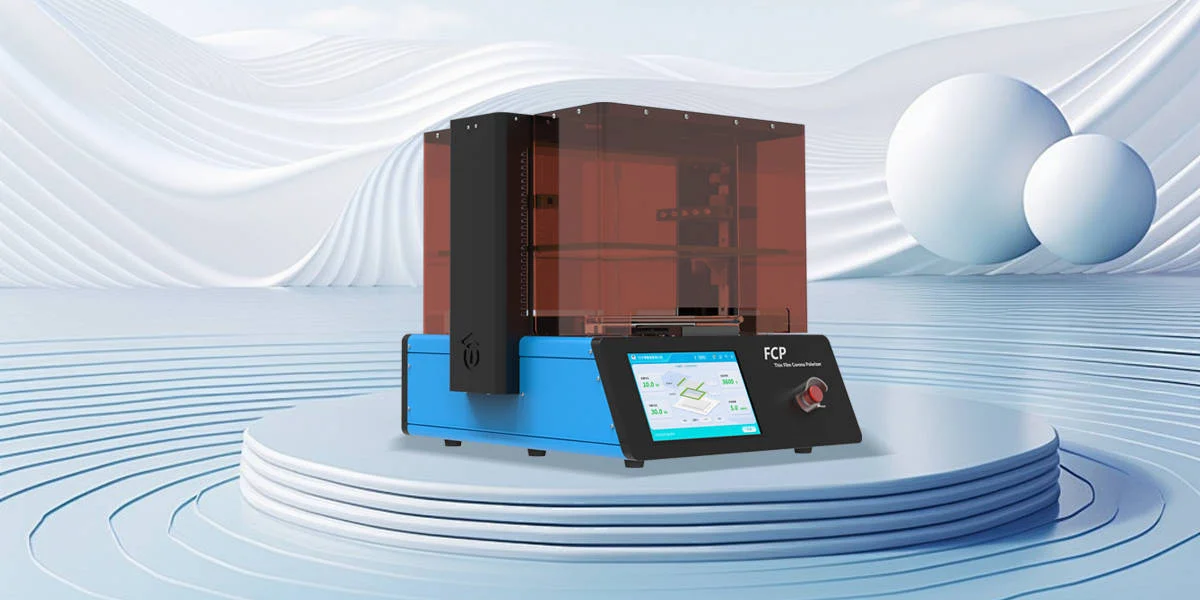
To meet stringent university research and industrial pilot-line requirements, the MatMeas FCP Thin Film Corona Polarizer provides a specialized, safe, and automated corona poling platform.
The FCP base system delivers 0 to −30 kV / 2 mA negative corona discharge across an expansive 200 mm × 200 mm active poling area with ±5% voltage output accuracy. Powered by two built-in independent power modules, it provides separate, ultra-stable control over both corona discharge generation and grid stabilization potentials, preventing mutual electrical cross-talk.
For thermal poling schedules, the system integrates the optional FCPHT150 High-Temperature Heating Stage, regulating sample temperatures up to 150°C with PID precision ≤ ±3°C and multi-rate heating ramps (3°C/min, 6°C/min, 9°C/min). For modern smart laboratories and Industry 4.0 automation, the optional FCPOP01 Smart Suite enables remote over-the-air (OTA) updates and programmatic API calls. An amber protective enclosure with automated interlocks prevents operator contact with high-voltage electrodes during discharge. For larger substrate formats requiring automated multi-axis scanning, the MatMeas SFP Smart Film Corona Polarizer scales active poling up to 300 mm × 300 mm.
Frequently Asked Questions
What equipment is recommended to polarize custom 30 μm PVDF films (50 mm × 50 mm)?
The MatMeas FCP Thin Film Corona Polarizer is specifically designed for custom coupons and thin polymer sheets ranging from 5 μm to 200 μm. It accommodates 50 mm × 50 mm custom samples easily on its 200 mm × 200 mm heated sample stage, applying 0 to −30 kV / 2 mA negative corona fields at temperatures up to 150°C (via the optional FCPHT150 stage) to achieve full beta-phase dipole orientation without risk of dielectric pinhole arcing.
Why is corona discharge poling preferred over contact electrode poling for thin PVDF films?
Contact poling requires pre-deposited metal electrodes, where any localized micro-void or dielectric defect triggers an electric arc that short-circuits the entire sheet and ruins the sample. Corona poling deposits surface ions through non-contact air ionization; if a localized breakdown occurs, only the immediate microscopic charge dissipates, preventing catastrophic sample destruction and enabling significantly higher poling fields (>100 MV/m).
What role does the control grid play in a triode corona poling setup?
The wire grid acts as a potential governor situated between the high-voltage corona needle and the polymer surface. By setting the grid to a fixed target voltage (e.g., −3 kV to −5 kV for a 30 μm film), it restricts the surface potential of the film to match the grid voltage, ensuring that the electric field across the film remains strictly homogeneous and preventing over-voltage damage.
Can bare (un-electroded) PVDF films be polarized directly?
Yes. Corona discharge poling does not require top-surface metallization. The bare film is placed directly on a conductive, grounded baseplate (or bottom electrode), and electrostatic charges deposited from ionized air form a virtual top electrode. After polarization, electrodes can be selectively patterned or sputtered for specific device architectures.
How is the polarization quality of PVDF films validated after poling?
Polarization effectiveness is verified by evaluating the longitudinal piezoelectric coefficient (d33) using a quasi-static Berlincourt-type meter or an automated characterization platform like the MatMeas PMS-1000. High-quality poled beta-PVDF typically yields d33 values between 20 and 30 pC/N.
Related Instruments & Equipment
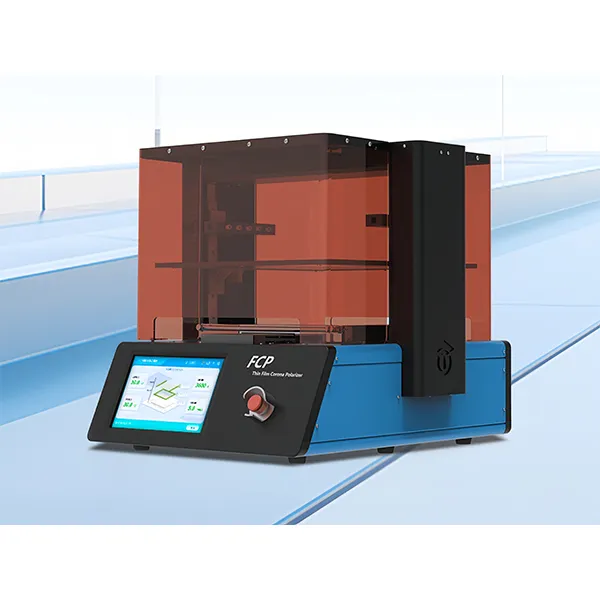
MatMeas FCP Thin Film Corona Polarizer
The MatMeas FCP Thin Film Corona Polarizer is an advanced laboratory platform specifically engineered for high-efficiency polarization of piezoelectric polymer films (e.g., PVDF, P(VDF-TrFE)). Delivering 0 to −30 kV / 2 mA negative corona discharge across a spacious 200 mm × 200 mm active poling area, it features dual independent power modules to eliminate electrical cross-talk and utilizes an innovative non-contact single-wire electrode fixture. With optional FCPHT150 high-temperature heating stage (≤ 150°C, precision ≤ ±3°C) and FCPOP01 smart suite supporting remote OTA updates and API integration, the FCP uniformly polarizes ultra-thin films (5 μm to 200 μm, ideally 10–50 μm) from custom coupons (e.g., 50 mm × 50 mm) up to 200 mm × 200 mm sheets without dielectric breakdown.
View details →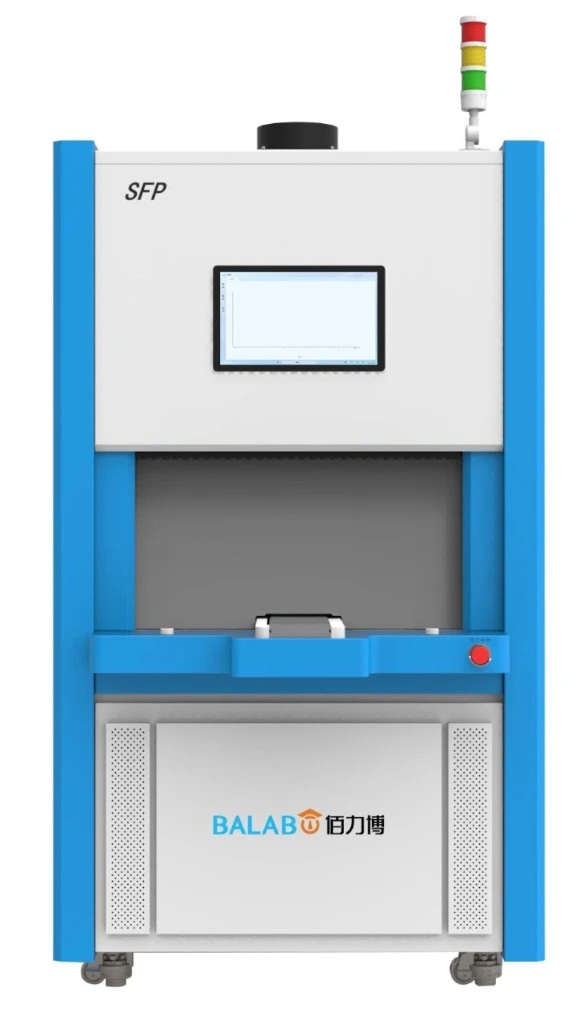
MatMeas SFP Smart Thin Film Corona Polarizer
The MatMeas SFP Smart Thin Film Corona Polarizer is an industrial-grade, fully automated poling platform built on the MatEC-IoT Materials Edge IoT Architecture. Engineered for both advanced R&D and pilot production, the SFP system delivers ±0.1 kV closed-loop voltage precision across dual independent power channels—grid voltage (0 to −20 kV) and corona discharge (0 to −20 kV)—while its proprietary array-style corona wire layout and multi-axis synchronized scanning motion stage achieve micron-level coordinated movement across a 300 mm × 300 mm active area. Intelligent dynamic field compensation algorithms continuously correct the spatial electric field profile throughout each scan cycle, eliminating edge effects and grid-shading artifacts to produce exceptional charge-injection uniformity. The result: complete, uniform polarization of A4-sized PVDF, PVDF-TrFE, and electret films in under 10 minutes—a 300% throughput gain over conventional single-needle or static corona setups.
View details →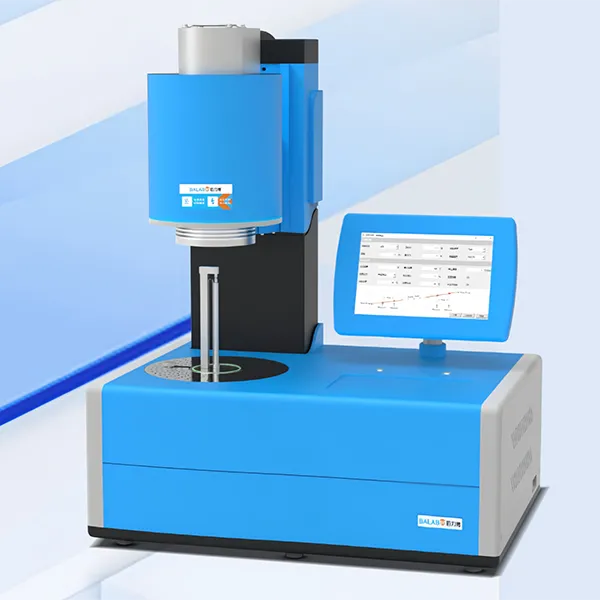
MatMeas PMS-1000 Piezoelectric Temperature Spectrum Measurement System
High-precision piezoelectric temperature spectrum measurement system for analyzing piezoelectric properties under varying temperatures.
View details →Request High-Precision Testing Solutions
Get expert guidance and customized instruments for your functional materials project.