Advanced Ceramic Substrate Electrical Testing Guide
Technical News
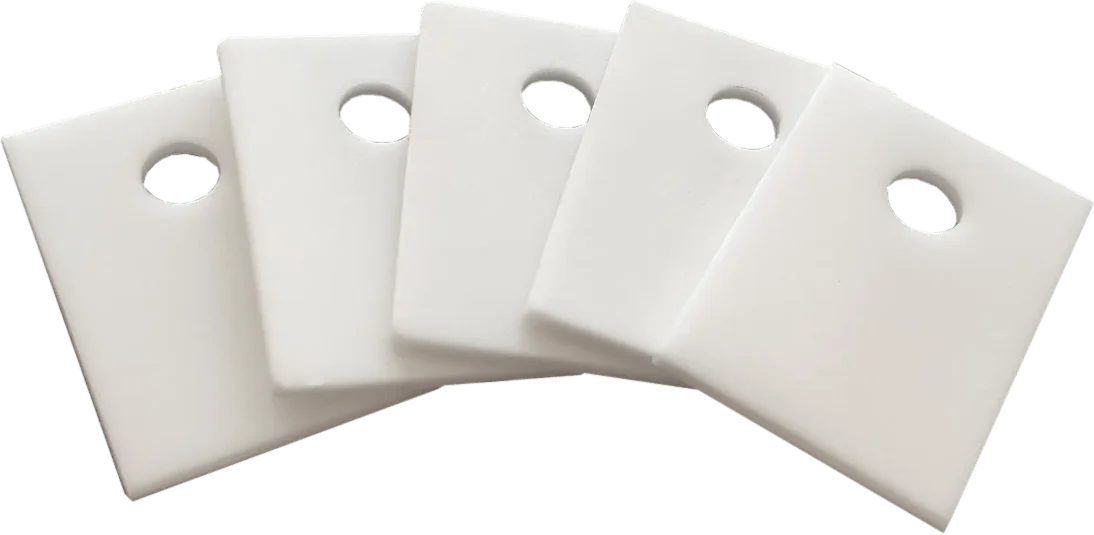
Advanced ceramic substrates—predominantly direct bonded copper (DBC) and active metal brazed (AMB) silicon nitride (Si3N4), aluminum nitride (AlN), and high-purity alumina (Al2O3)—are critical components in high-power semiconductor packaging. In modern 800 V electric vehicle (EV) silicon carbide (SiC) traction inverters, high-speed rail traction systems, and wind turbine power converters, ceramic substrates must provide robust galvanic isolation across potentials exceeding 3 kV to 10 kV while maintaining low thermal resistance to the heatsink.
Evaluating the electrical integrity of ceramic substrates requires measuring two complementary parameters: high-temperature volume resistivity (ρv) and high-voltage dielectric breakdown strength (Eb), as established in our dedicated ceramic substrate breakdown testing guide. However, executing these tests introduces severe experimental hazards. When testing high-voltage breakdown in ambient air, the low dielectric strength of air (~3 kV/mm) causes catastrophic perimeter surface flashover and corona discharge long before reaching the true bulk breakdown strength of the ceramic (>20 kV/mm). Characterizing true electrical limits requires specialized dielectric immersion fluids and testing protocols adhering to international standards.
Physical Breakdown Mechanisms and Weibull Statistical Failure Modeling
Dielectric breakdown in solid inorganic ceramic substrates is governed by three primary physical mechanisms:
- Intrinsic Electronic Breakdown: Occurs under extreme electric fields (>100 kV/mm) in defect-free single crystals, where field-accelerated electrons gain kinetic energy faster than they can dissipate it through lattice phonon scattering, triggering an electron avalanche.
- Thermal Dielectric Breakdown: Occurs under sustained high electric fields and elevated temperatures. Dielectric loss and DC leakage current generate internal heat dissipation (P = σ · E² + ω · ε″ · E²). If heat generation exceeds heat dissipation to the surroundings, local temperature rises, exponentially increasing electrical conductivity and leading to thermal punch-through.
- Defect-Mediated Electrical Breakdown: The dominant mechanism in commercial polycrystalline substrates. Sub-microscopic sintering pores, grain boundary micro-cracks, and conductive metallic inclusions concentrate electric fields locally. Partial discharge (PD) inside micro-voids erodes surrounding ceramic walls until a conductive breakdown channel spans the electrodes—a defect sensitivity benchmarked across purity grades in our alumina ceramic substrate inspection and testing guide.
Because dielectric breakdown is an extreme-value process initiated at the single most severe microscopic defect, breakdown voltage data exhibit statistical scatter described by the two-parameter Weibull distribution:
Pf(E) = 1 − exp[−(E / E0)β]
where Pf is the cumulative failure probability, E is the applied electric breakdown field, E0 is the characteristic breakdown field (corresponding to a 63.2% failure probability), and β is the Weibull modulus.
A high Weibull modulus (β > 15 to 20) indicates structural homogeneity and narrow pore size distribution, whereas a low modulus (β < 8) indicates erratic defect populations and poor sintering reliability.
According to ASTM D149, the breakdown field Eb relates to applied voltage Vb and thickness d:
Eb = Vb / d
To account for electrical aging effects, the breakdown strength exhibits an inverse power-law dependence on voltage ramp rate:
Eb(t) = Eb0 · (t / t0)−1/n
where t is the time to breakdown and n is the voltage endurance coefficient (typically 10 to 25 for technical ceramics).
International Testing Standards Comparison: ASTM D149 vs. ASTM D257 vs. IEC 60243
Accurate substrate qualification requires deploying the correct international standard for each electrical parameter, separating volume isolation from surface tracking in accordance with our ceramic substrate resistivity testing methodology.
The comparative matrix below details the scope, electrode geometries, and testing criteria across the primary international standards for ceramic electrical metrology:
| International Standard | Primary Electrical Parameter | Electrode Geometry Configuration | Recommended Voltage Waveform & Ramp Rate | Breakdown / Pass Criteria | Primary Focus Area |
|---|---|---|---|---|---|
| ASTM D149 | Dielectric breakdown voltage & dielectric strength | Opposing cylindrical brass rods (Type 1: 50 mm, or Type 2: 25 mm) | Short-time: 500 V/s ramp; Step-by-step: 20-second dwell per voltage step | Current trip limit (typically 5 to 10 mA) or hardware arc detection | Solid electrical insulation dielectric strength |
| IEC 60243-1 | AC electrical breakdown strength (50/60 Hz) | Coaxial unequal cylindrical electrodes (25 mm upper, 75 mm lower) | Continuous ramp (20 s to breakdown) or stepped 20 s schedule | Rapid current trip with irreversible conductive puncture | Power frequency electrical isolation qualification |
| ASTM D257 | Volume resistivity & surface resistivity | Concentric circular electrode with annular guard ring | 100 V to 1000 V DC steady state; 60-second electrification time | Current measurement after 60 seconds of continuous electrification | Insulation resistance and leakage current |
| IEC 60672-2 | Complete electrical qualification of ceramics | Parallel disc electrodes immersed in insulating fluid | 1 kV/s DC ramp or 500 V/s AC ramp | Pinhole puncture with current limit > 2 mA | Ceramic and glass electrical insulation |
Dielectric Fluid Immersion and Flashover Suppression
Because the dielectric strength of ambient air is only ~3 kV/mm, applying high voltages across a 0.635 mm thick ceramic substrate (which typically withstands 15 to 25 kV) causes the surrounding air to ionize. This creates corona discharge and surface tracking flashover around the substrate edges at 2 to 3 kV, long before reaching the bulk breakdown potential of the ceramic.
Testing true bulk breakdown strength requires immersing the fixture and substrate in a high-dielectric-strength liquid medium conforming to ASTM D149.
The comparison table below benchmarks dielectric immersion fluids used in high-voltage laboratory testing:
| Dielectric Immersion Fluid | Dielectric Strength Eb (kV/mm) | Relative Permittivity εr (25°C) | Kinematic Viscosity (cSt @ 25°C) | Maximum Safe Operating Temp (°C) | Post-Test Residue Cleaning Protocol |
|---|---|---|---|---|---|
| Purified Silicone Fluid (50 cSt) | 18 to 22 | 2.7 to 2.8 | 50 | 180 to 200 | Ultrasonic degreasing in isopropyl alcohol (IPA) or hydrocarbon solvent |
| High-Grade Transformer Mineral Oil | 12 to 16 | 2.2 to 2.3 | 10 to 20 | 105 to 120 | Detergent wash followed by solvent rinse; oily residue |
| Fluorinated Inert Liquid (Fluorinert) | 16 to 20 | 1.8 to 2.0 | 0.8 to 1.5 | 150 to 215 | Completely clean: Evaporates rapidly leaving zero surface residue |
| De-ionized Water (Pulse only) | 15 to 20 (pulse) | ~80 | 1.0 | 50 | Water rinse and dry; only suitable for microsecond pulse testing |
Step-by-Step Testing Protocols and Safety SOP
Executing high-voltage breakdown and volume resistivity characterization requires strict adherence to standard operating procedures:
- Specimen Cleaning and Desiccation: Substrate coupons must undergo ultrasonic cleaning in acetone and isopropyl alcohol, followed by oven drying at 120°C for 2 hours to remove surface moisture and grease.
- Fluid Immersion and De-Airing: Immerse the specimen in purified silicone oil within the high-voltage test cell. Allow the specimen to rest for at least 15 minutes to allow trapped air bubbles to detach from the electrode interfaces.
- Ramp Rate Calibration: Set the voltage generator to a constant ramp rate conforming to ASTM D149 (typically 500 V/s). Set the hardware overcurrent protection trip threshold to 5.0 mA.
- Automated Discharge and Safety Grounding: Following dielectric breakdown or completion of testing, the high-voltage power supply must automatically trigger an internal mechanical discharge solenoid, discharging residual capacitive energy to ground before opening the protective interlock enclosure.
Integrated Characterization Platforms: MatMeas HTS-1000HR and VBT-30KV
Characterizing advanced ceramic substrates across both high-resistance insulation and high-voltage dielectric breakdown regimes requires specialized, safe instrumentation.
The MatMeas HTS-1000HR High Temperature High Resistance Measurement System provides precision volume resistivity characterization up to 1000°C. Utilizing a triaxial guarded electrode fixture, it isolates bulk volume resistance from surface leakage, resolving resistances up to 10¹⁴ Ω under ASTM D257 and ASTM D1829.
For dielectric breakdown strength and voltage endurance qualification, the MatMeas VBT-30KV Voltage Breakdown Tester delivers programmable high-voltage testing up to 30 kV DC (or 30 kV AC power frequency). Equipped with an automated silicone oil immersion chamber, interchangeable ASTM D149 electrode fixtures, programmable ramp rates (100 V/s to 5000 V/s), and microsecond-speed current trip protection, the VBT-30KV safely extracts breakdown voltage, tracks voltage ramp profiles, and exports Weibull statistical distributions with zero operator risk.
Frequently Asked Questions
Why does a ceramic substrate flash over around its edges rather than breaking down through its bulk in air?
Ambient atmospheric air has a dielectric breakdown strength of approximately 3 kV/mm. Advanced ceramic substrates (such as alumina and silicon nitride) possess bulk dielectric breakdown strengths exceeding 15 to 25 kV/mm. When high voltage is applied across a thin substrate in air, the electric field in the air surrounding the substrate edge exceeds the air ionization threshold long before the ceramic bulk experiences its critical breakdown field. Ionized air forms a conductive plasma channel (corona) that bridges the electrodes around the perimeter of the substrate. Immersing the sample in high-dielectric silicone oil (Eb > 18 kV/mm) suppresses air ionization, forcing breakdown through the ceramic bulk.
What is the difference between short-time and step-by-step breakdown testing under ASTM D149?
The short-time test increases voltage continuously from zero at a uniform rate (typically 500 V/s) until breakdown occurs, typically taking 10 to 30 seconds. This test measures rapid, defect-dominated breakdown. The step-by-step test applies an initial voltage (typically 50% of the short-time breakdown value) and holds it for a specified dwell time (typically 20 or 60 seconds). If no breakdown occurs, voltage is increased in uniform increments and held for the dwell period. The step-by-step protocol tests for cumulative thermal and partial discharge degradation, yielding a lower, more conservative dielectric strength that better reflects real-world operational service.
How does the Weibull modulus reflect ceramic substrate manufacturing quality?
The Weibull modulus (β) is the shape parameter of the Weibull failure probability distribution. It quantifies the statistical scatter in dielectric breakdown voltage. Because dielectric breakdown originates at localized microstructural defects (such as closed pores, agglomerates, or micro-cracks), a wide variation in defect sizes produces high scatter in breakdown voltage, corresponding to a low Weibull modulus (β < 8). A high Weibull modulus (β > 15 to 25) indicates narrow defect size distributions, high ceramic density, and consistent sintering quality across production lots.
Related Instruments & Equipment
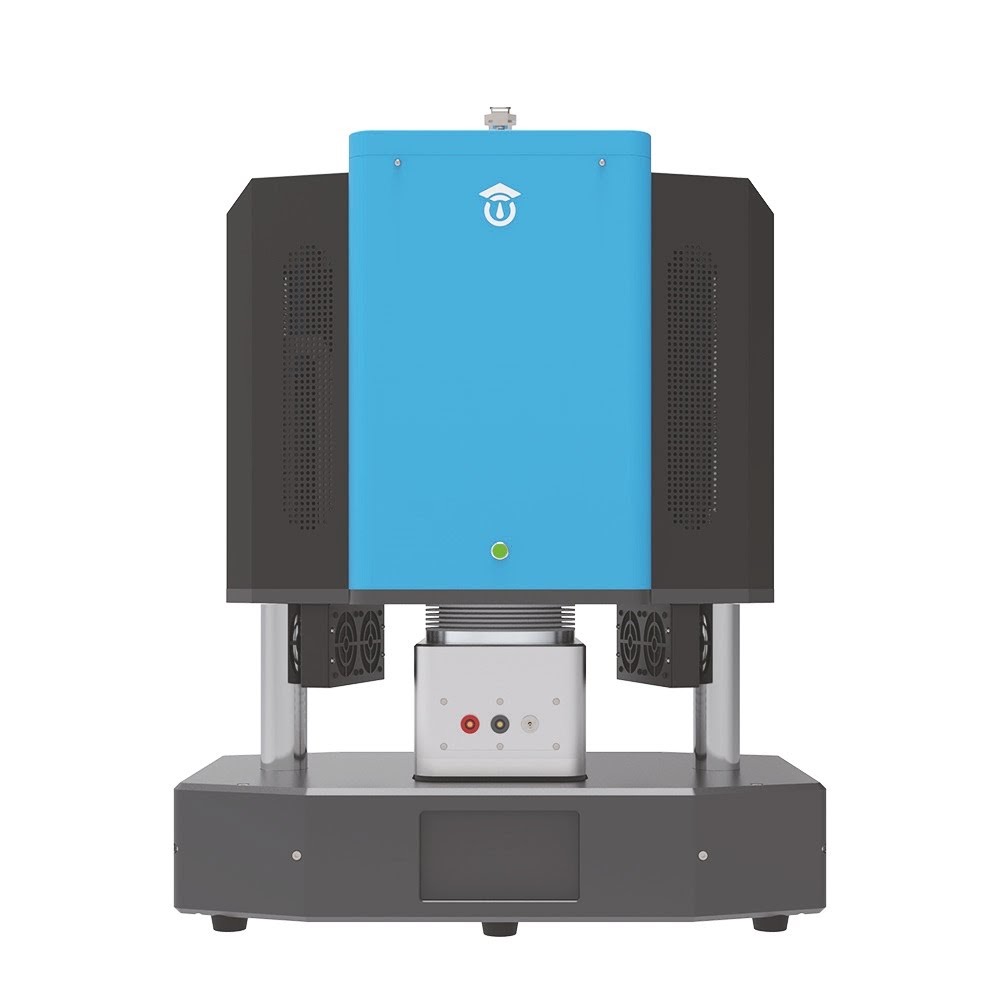
HTS1000HR High Temperature Resistivity Measurement System
The HTS1000HR is an advanced, integrated testing platform specifically engineered to precisely evaluate the electrical conductivity and insulation properties of advanced materials at extreme temperatures up to 800℃. By supporting various atmospheric conditions and offering an ultra-wide resistance measurement range, it serves as an indispensable characterization tool for material research and industrial quality control.
View details →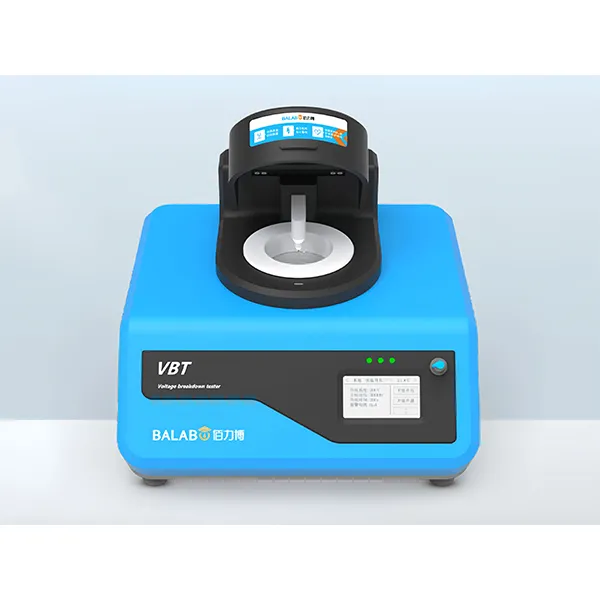
VBT-30KV Voltage Breakdown Tester
The MatMeas VBT-30KV (VBT30KVPOS) is a highly specialized Voltage Breakdown Tester engineered to rigorously evaluate the dielectric strength of piezoelectric ceramics. Powered by a highly accurate, compact 30kV digital high-voltage generator, it accurately determines both the maximum breakdown failure voltage and the maximum safe operating voltage. To ensure unparalleled operator safety and prevent surface flashover, the system conducts measurements within a temperature-controlled silicone oil environment (RT to 180°C) and integrates proprietary high-voltage interlock breakdown isolation technology. With versatile step-up modes including uniform speed breakdown and withstand voltage modes, it is an indispensable reliability verification tool for research institutes and advanced manufacturing enterprises.
View details →Request High-Precision Testing Solutions
Get expert guidance and customized instruments for your functional materials project.