Overview
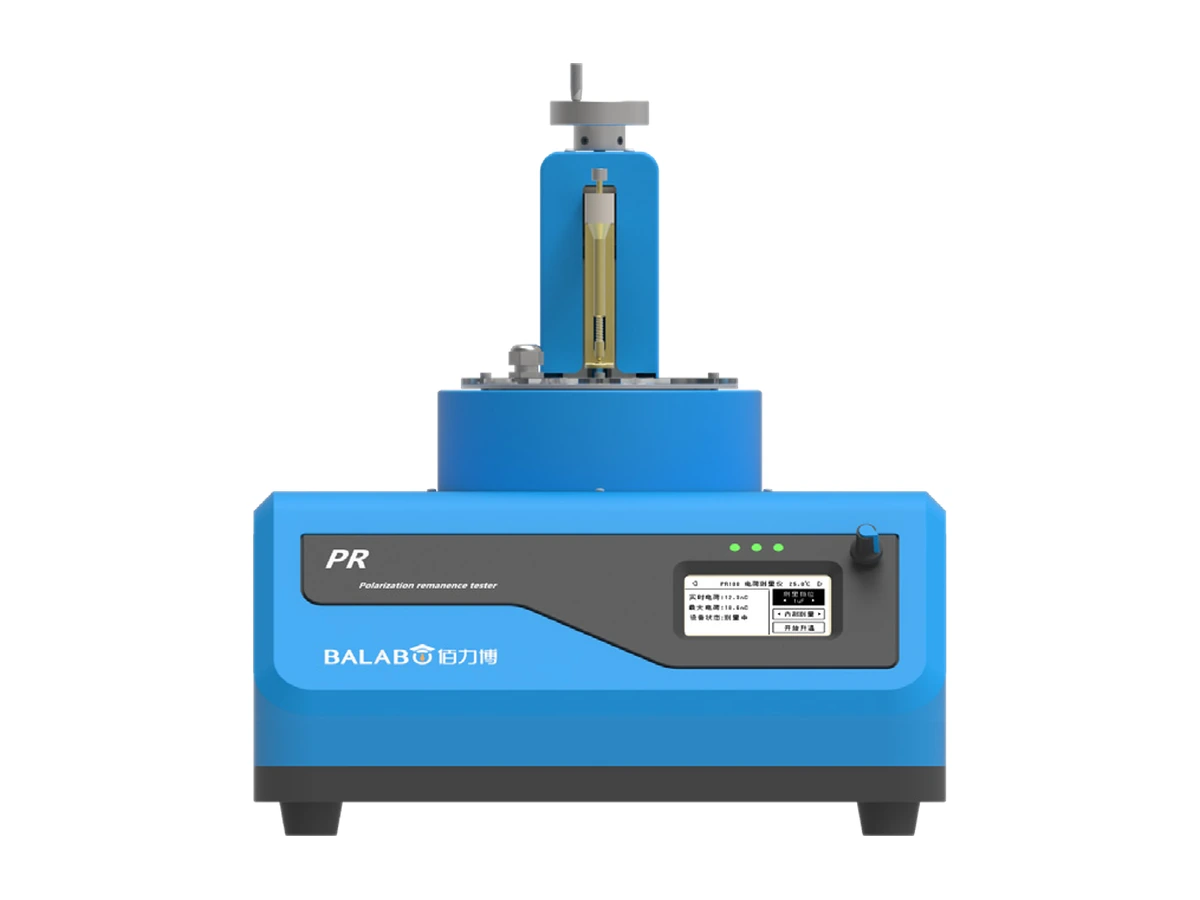
The MatMeas PR100 Polarization Charge Tester determines intrinsic remanent polarization (Pr) via the pyroelectric depolarization method. Pre-poled specimens undergo linear heating from RT to 250°C in a silicone oil bath under zero-field short-circuit conditions, while released pyroelectric current is directly integrated across precision reference capacitors.
Operating entirely without external high-voltage excitation, the PR100 eliminates resistive leakage current, space-charge drift, and artificial loop bloating common in conventional P-E hysteresis measurements—delivering direct physical charge values without empirical curve fitting.
Designed for both R&D verification and non-destructive batch quality control, the benchtop unit accommodates discs up to 25 mm OD and 5 mm thickness without subjecting devices to repeated high-voltage cycling shock.
Specifications
| Parameter | Specification |
|---|---|
| Measurement Channels | Single channel |
| Measurement Principle | Zero-field pyroelectric thermal depolarization charge integration |
| Temperature Range | RT to 250°C |
| Heating Rate (Ramp Slope) | 0–10°C/min (Typical: 6°C/min or 9°C/min) |
| Temperature Control Accuracy | ±3°C |
| Heating Method | Silicone oil bath heating (Dimethyl silicone oil included) |
| Charge Measurement Range | 5 nC to 100 μC |
| Integration Capacitance | 100 nF / 1 μF / 10 μF (Selectable) |
| Integrator Voltage Range | 0 to 10 V |
| Minimum Voltage Resolution | 0.1 mV |
| Recommended Sample Dimensions | Disc OD ≤ 25 mm, Thickness t ≤ 5 mm |
| Rated Power & Supply | 1 kW, 220–240 V AC, 50 Hz |
| Ambient Operating Conditions | 10°C to 35°C, 45% to 65% RH |
| Dimensions (W × D × H) | 350 × 350 × 390 mm |
| Net Weight | 15 kg |
| Standard Configuration | PR100 Main Unit ×1, Power Cord ×1, Dimethyl Silicone Oil ×1, Reference Capacitor Box ×1, Factory Documentation ×1 |
| Order Code | 050202009 |
| Warranty | 1 Year |
Applications
- FeRAM & Ferroelectric Thin Films: Non-volatile data retention and true remanent polarization verification on leaky heterostructures.
- Piezoelectric Ceramics & Crystals: Post-poling dipole alignment evaluation and thermal depoling quantification up to 250°C.
- MLCC & Acoustic Filter Batch QC: Lot-to-lot polarization consistency screening without high-voltage breakdown stress.
- Capacitive Energy Storage Dielectrics: Remanent charge loss separation for high-energy-density capacitor research.
- Solid-State Battery Electrodes: Interfacial charge storage and thermally stimulated depolarization behavior analysis.
Video
Operating Envelope & Specimen Boundaries
| Applicable Specimen & Test Conditions | Operating Boundaries & Prerequisites |
|---|---|
| Pre-poled bulk ceramics, thin films, heterostructures, and packaged MLCC/filter components (OD ≤ 25 mm, thickness ≤ 5 mm) | Does not apply high-voltage poling fields; unpoled specimens require prior poling (e.g., OBP, MPD, or FCP series) |
| Materials with Curie or thermal depoling temperatures within RT to 250°C | Specimens with Curie temperatures above 250°C cannot be fully thermally depolarized in the silicone oil bath |
| High-leakage ferroelectrics generating 5 nC to 100 μC total depolarization charge | Specimens must have metallized top/bottom electrodes and tolerate clean dimethyl silicone oil immersion |
FAQ
Why does the PR100 measure true remanent polarization (Pr) accurately on high-leakage samples where P-E loops fail?
Conventional Sawyer-Tower and virtual-ground P-E testers apply high alternating voltages, integrating resistive leakage current (I = V/R) alongside domain switching charge and producing artificially bloated 'banana' loops. The PR100 heats pre-poled samples under zero external electric field in a short-circuit configuration, ensuring only genuine thermally released pyroelectric charge (5 nC to 100 μC) is integrated.How does the PR100 differ from PUND pulsed testing and cryogenic TSDC spectroscopy?
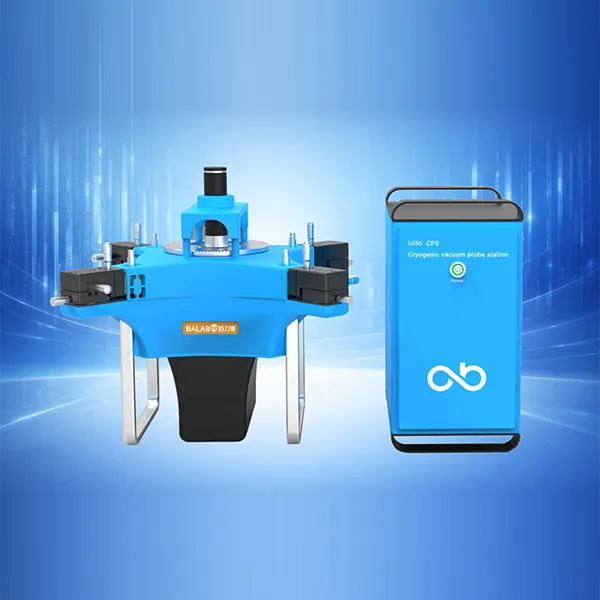
PUND separates switching charge under fast high-voltage pulses, whereas cryogenic TSDC (-160°C to 450°C) resolves femtoampere defect-trap relaxation spectra under vacuum. The PR100 is purpose-built for direct macroscopic polarization charge integration (5 nC to 100 μC) from RT to 250°C, providing rapid, compensation-free Pr determination for R&D and batch QC.What specimen dimensions, electrode preparation, and Curie temperature limits apply to the PR100?
The sample holder accommodates circular discs or Electroded chips up to 25 mm outer diameter and 5 mm thickness. Specimens must be pre-poled with conductive top and bottom electrodes, compatible with dimethyl silicone oil immersion, and exhibit complete thermal depolarization below the 250°C maximum bath temperature.How do the selectable 100 nF, 1 μF, and 10 μF integration capacitors cover the 5 nC to 100 μC range?
During linear heating (0–10°C/min, typically 6 or 9°C/min), released pyroelectric charge accumulates across the selected reference capacitor (Q = C × V) within a 0–10 V window at 0.1 mV resolution. Switching from 100 nF for low-charge thin films up to 10 μF for large-area ceramics prevents integrator saturation while preserving low-charge sensitivity.Does the PR100 require high-voltage amplifiers, or can it pole unpoled piezoelectric samples?
No. The PR100 is strictly a zero-field depolarization readout analyzer and applies no external poling voltage, eliminating high-voltage breakdown hazards during inspection. Unpoled ceramics or films should first be poled using a dedicated MatMeas OBP, MPD, or FCP poling system before measuring retained Pr on the PR100.
Related Products
Technical Guides & Application Notes
Measurement Methods & Metrology Guides
Explore standardized testing procedures, waveform analyses, and physical metrology implemented on this instrument platform.
5 Core Ferroelectric Testing Techniques for Advanced Materials
Master ferroelectric characterization. Explore the physics behind P-E hysteresis, C-V curves, leakage current, domain fatigue, and precision PUND testing.
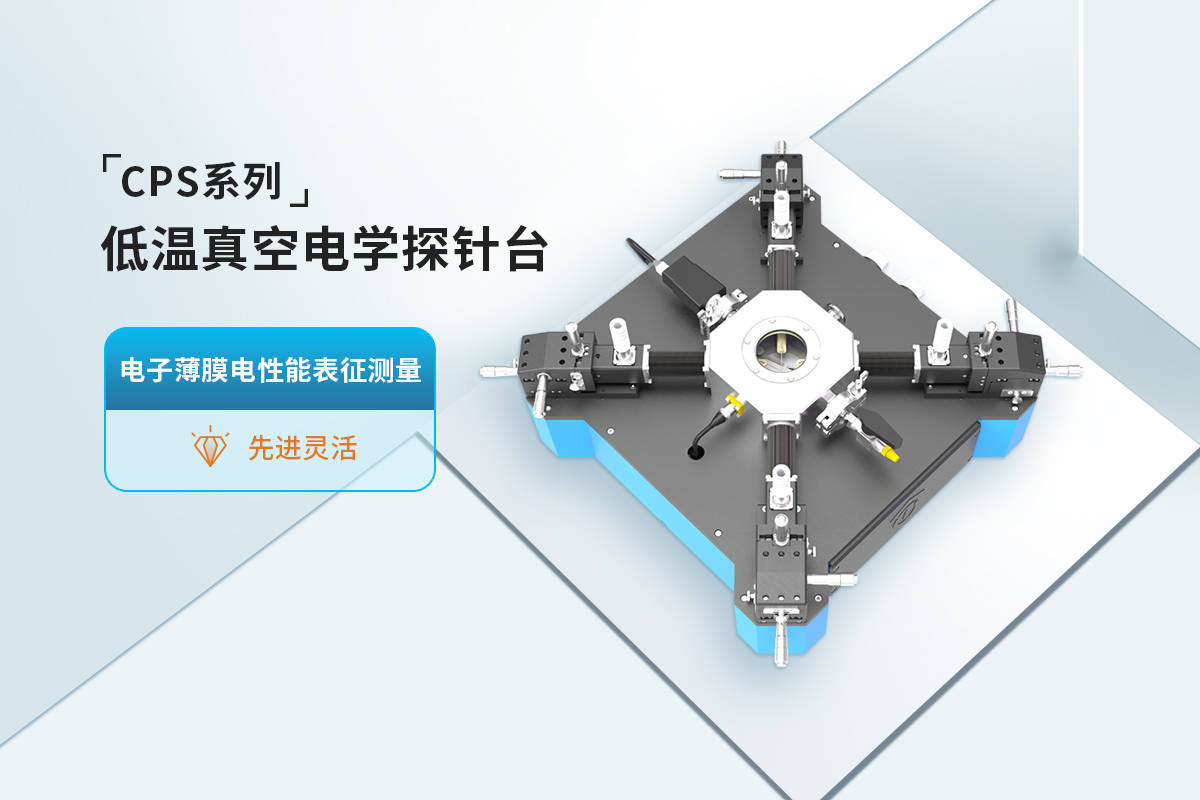
Thermally Stimulated Depolarization Current (TSDC) Testing
Discover how TSDC testing analyzes dipole relaxation and defect trap states. Learn the physics of thermal stimulation for polymers, ceramics, and semiconductors.