[Corrosion Science] Tianjin University Decodes Cu-Zr-Al Metallic Glass Oxidation, Powered by MatMeas MRVS-3002
Technical News
![[Corrosion Science] Tianjin University Decodes Cu-Zr-Al Metallic Glass Oxidation, Powered by MatMeas MRVS-3002](/_next/image?url=https%3A%2F%2Fmatmeas-media.us-lax-4.linodeobjects.com%2Fnews%2Ftianjin-cu-zr-al-metallic-glass-oxidation-vacuum-sealer%2Ffeatured.webp&w=3840&q=75)
A research team from the School of Materials Science and Engineering, Tianjin University, in collaboration with international partners from Empa (Swiss Federal Laboratories), published a landmark study in the prestigious journal Corrosion Science. The research provides a comprehensive understanding of the competition between synchronous and preferential oxidation in multi-component Cu-Zr-Al metallic glass systems.
📖 Literature Reference:
Title: On the competition between synchronous oxidation and preferential oxidation in Cu-Zr-Al metallic glasses
Journal: Corrosion Science
Research Team: Prof. Zumin Wang's Group, School of Materials Science and Engineering, Tianjin University
DOI Link: 10.1016/j.corsci.2020.108996
Cu-Zr-Al metallic glasses represent a new frontier in advanced structural and functional materials—prized for their exceptional glass-forming ability, mechanical strength, and chemical resistance. Yet, understanding precisely how these multi-component amorphous systems oxidize at elevated temperatures has remained a persistent challenge. Does each element oxidize simultaneously, or does one preferentially dominate? The answer determines the composition and thickness of the protective surface oxide layer, which is critical for real-world applications in aerospace, biomedical implants, and corrosion-resistant coatings.
🔬 The Challenge: Locking in a Precise Oxygen Atmosphere at Elevated Temperatures
To reveal the true oxidation behavior of Cux(Zr0.67Al0.33)100-x alloys, the researchers needed to isothermally oxidize the specimens at 250–350 °C under a perfectly controlled oxygen partial pressure of exactly 1 bar at the target temperature. The engineering challenge was precise: the initial oxygen pressures had to be calculated and physically locked in at room temperature so they would scale accurately to 1 bar upon heating—with zero leakage or atmospheric contamination. Any deviation would corrupt the kinetic rate law measurements and render months of sample preparation meaningless.
🌟 The Solution: MatMeas MRVS-3002 Vacuum Sealing System
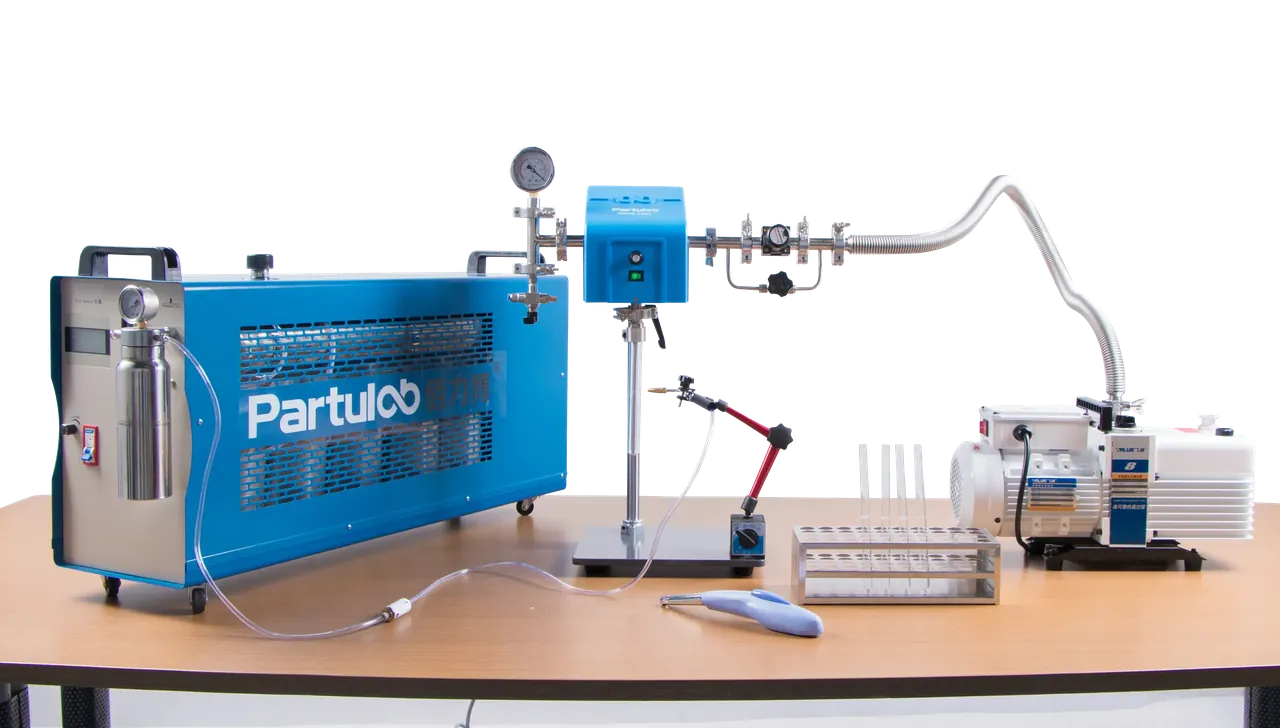
To achieve this exacting atmosphere control, the research team relied on the MatMeas MRVS-3002 Vacuum Sealing System (formerly BaLab / Partulab). As explicitly stated in the paper's Experimental Section:
"(Cux(Zr0.67Al0.33)100-x ribbons were sealed in quartz tubes for subsequent thermal oxidation in a vacuum sealing system (MRVS-3002, Partulab Technology Co. Ltd)"
Rather than a simple pump-and-seal device, the MRVS-3002 served as a fully integrated atmosphere management platform. The team first evacuated the quartz tubes containing the alloy ribbons to a deep base pressure of ~1 Pa, completely stripping away atmospheric nitrogen, moisture, and residual oxygen. The system's dynamic gas backfilling capability then allowed three cycles of 99.999 vol.% pure oxygen to be introduced at precisely controlled partial pressures—0.56, 0.52, and 0.47 bar at room temperature, which correspond exactly to 1 bar at 250, 300, and 350 °C respectively.
📈 Revealing the Competition: Synchronous vs. Preferential Oxidation
With the oxidation atmospheres perfectly locked in, the team deployed a comprehensive characterization toolkit including X-ray diffraction (XRD), Auger electron spectroscopy (AES), and cross-sectional transmission electron microscopy (TEM).
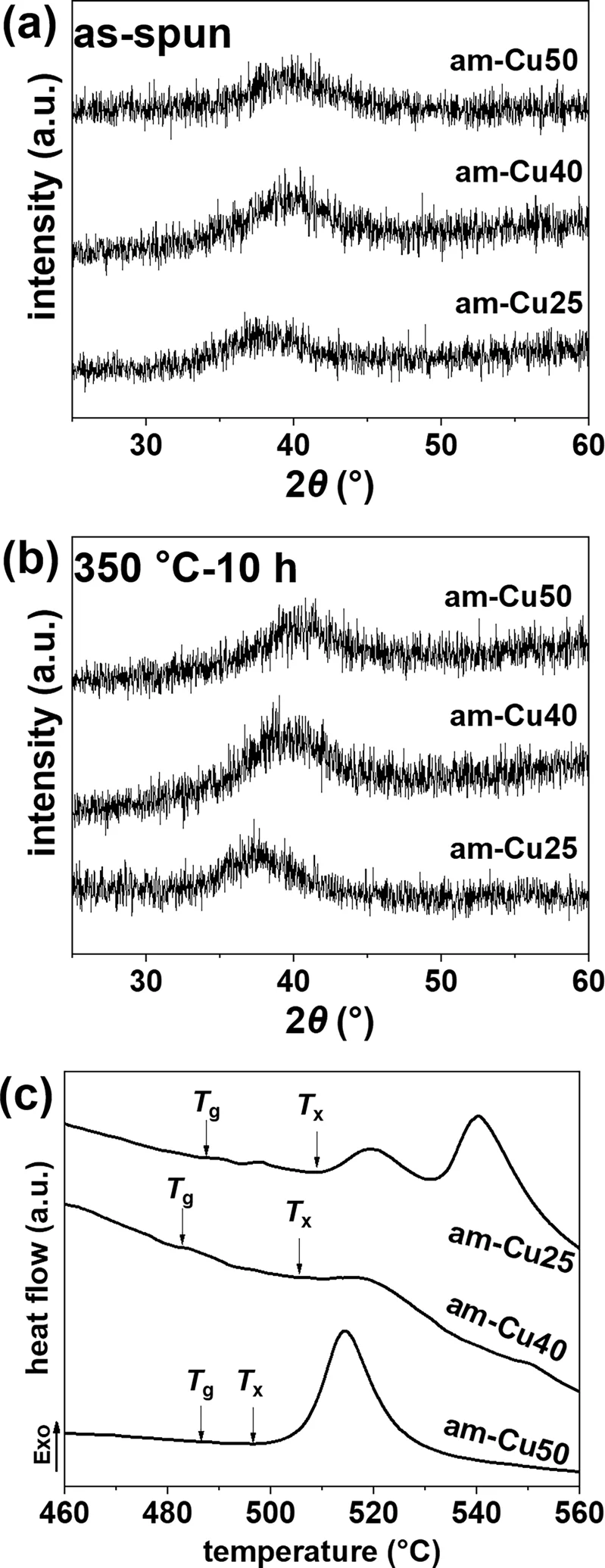
Structural characterization of Cu-Zr-Al metallic glass specimens thermally treated under the atmosphere-controlled environment enabled by the MatMeas MRVS-3002.
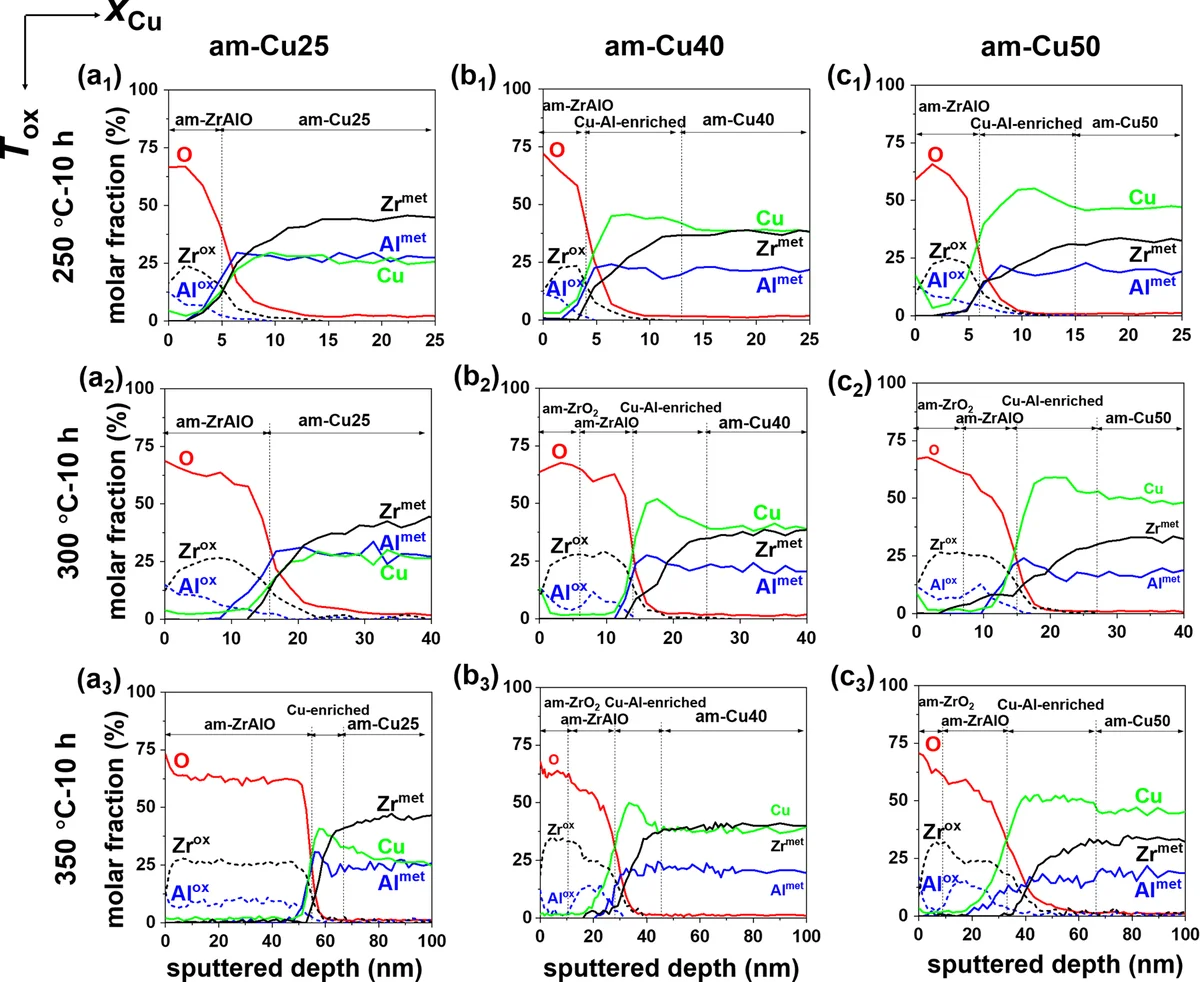
The results were definitive: in Cu-poor alloys, Zr and Al oxidize simultaneously (synchronously), forming a mixed oxide layer. However, as the Cu content increases, it disrupts this co-oxidation, driving a shift toward the preferential oxidation of Zr, which forms a pure ZrO₂ overlayer. This competition between synchronous and preferential oxidation is directly governed by the alloy composition.
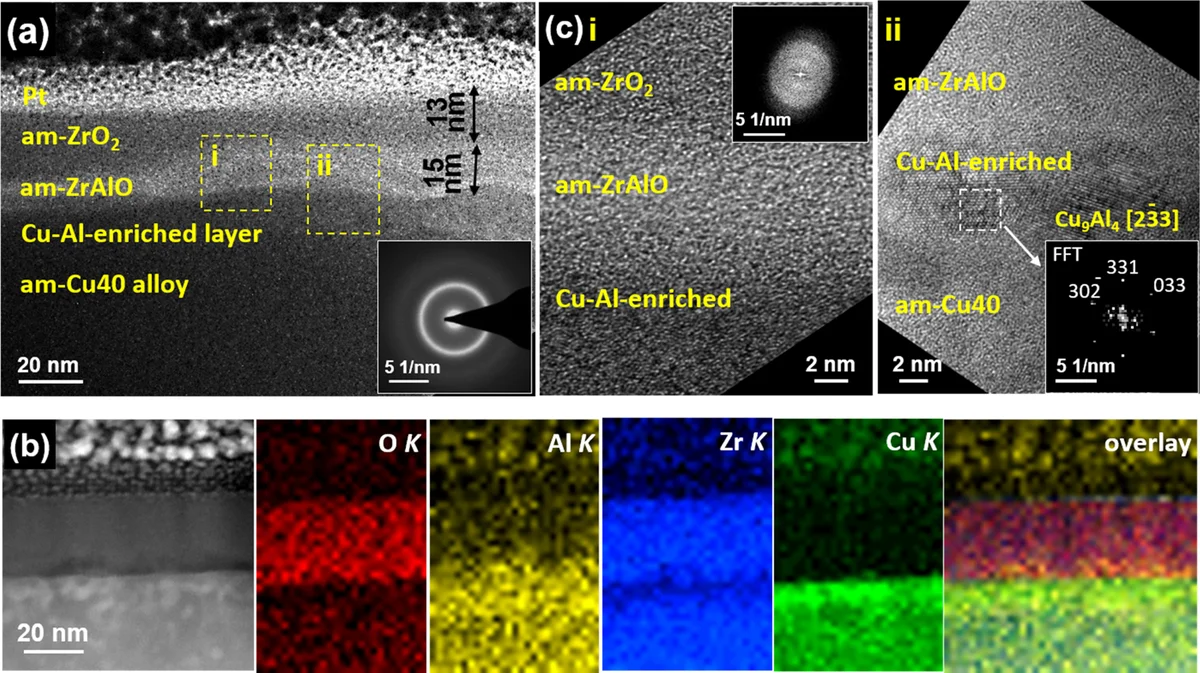
Cross-sectional TEM images revealing the nanoscale oxide layer structure formed under the precisely controlled oxygen atmosphere delivered by the MatMeas MRVS-3002 vacuum sealing system.
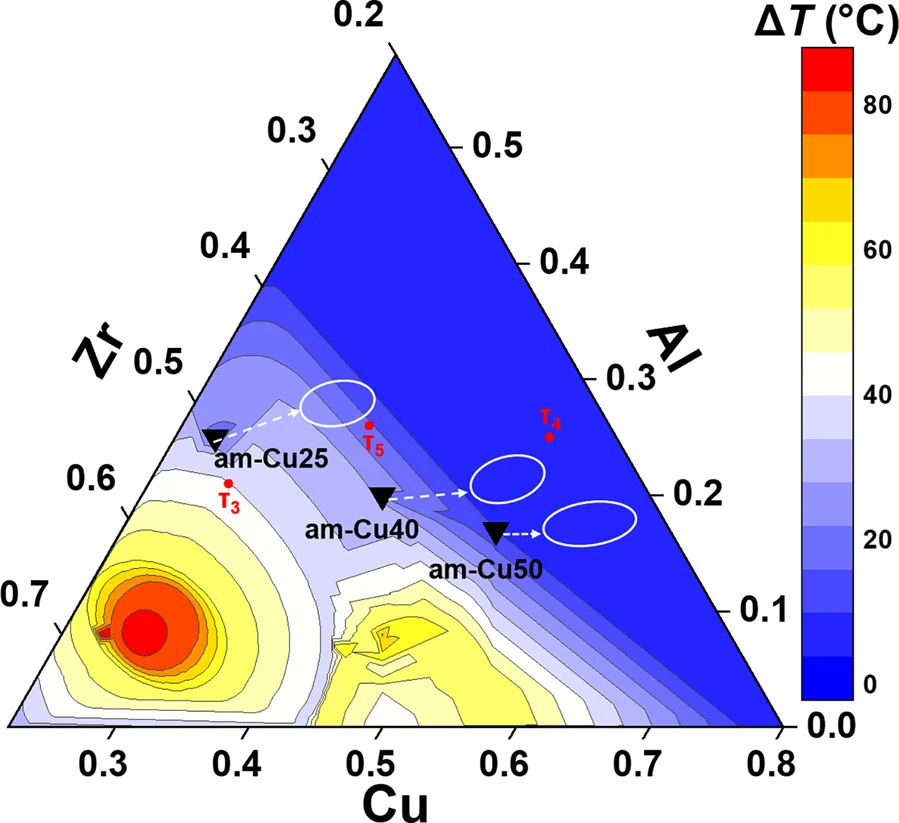
Detailed oxide phase evolution analysis, made possible by the uncompromising atmosphere control of the MatMeas MRVS-3002 system.
Empowering Global Corrosion Science Laboratories
World-class oxidation kinetics research demands equipment that goes far beyond basic vacuum. The MatMeas MRVS series is engineered to deliver the complete "vacuum-to-backfill" cycle required by top-tier laboratories—eliminating the guesswork from atmosphere-controlled thermal treatments.
Whether you are studying parabolic diffusion rates, mapping oxide phase evolution, or engineering functional surface oxide structures, trust the MatMeas MRVS-1003 High-Vacuum Rotary Sealing System—the proven choice of leading international research teams. Visit our official website or contact our expert technical team today!
📥 Literature PDF Download:
Request High-Precision Testing Solutions
Get expert guidance and customized instruments for your functional materials project.