[Applied Surface Science] Tianjin University Masters Selective Oxidation of Amorphous CuxZr1-x Alloys, Powered by MatMeas MRVS-3002
Technical News
![[Applied Surface Science] Tianjin University Masters Selective Oxidation of Amorphous CuxZr1-x Alloys, Powered by MatMeas MRVS-3002](/_next/image?url=https%3A%2F%2Fmatmeas-media.us-lax-4.linodeobjects.com%2Fnews%2Ftianjin-cu-zr-selective-oxidation-applied-surface-science%2Ffeatured.webp&w=3840&q=75)
A research team from the School of Materials Science and Engineering, Tianjin University, collaborated with the Max Planck Institute for Intelligent Systems (Germany), published a detailed investigation in the journal Applied Surface Science. The study systematically unravels the role of composition-dependent thermodynamic stability in governing the selective oxidation behavior of amorphous Cu–Zr alloys—research that opens new doors for functional surface engineering in catalysis, sensing, and corrosion protection.
📖 Literature Reference:
Title: Thermal oxidation of amorphous CuxZr1−x alloys: Role of composition-dependent thermodynamic stability
Journal: Applied Surface Science
Research Team: Prof. Zumin Wang's Group, School of Materials Science and Engineering, Tianjin University
DOI Link: 10.1016/j.apsusc.2019.144376
Amorphous Cu–Zr is a textbook active-noble (A-N) alloy system. Upon oxidation, the active element (Zr) oxidizes preferentially, leaving behind a Cu-enriched sublayer. This creates a unique amorphous ZrO₂ / Cu-enriched bilayer structure with remarkable potential for catalytic activity, tunable electrical resistivity, and protective surface engineering. However, to engineer this bilayer precisely, researchers need to understand exactly how the Cu-to-Zr composition ratio—and the resulting thermodynamic stability—dictates the oxidation mechanism. This question sits at the heart of the Tianjin University study.
🔬 The Challenge: Observing Slow, Low-Temperature Oxidation Without Contamination
The key scientific challenge was studying the subtle, slow-growth selective oxidation at relatively low temperatures of 200–250 °C. At these temperatures, the reaction kinetics are extremely slow and sensitive. Any presence of ambient gas, moisture, or oxygen at the wrong partial pressure would disrupt the reaction, leading to misleading results about the true driving force behind the selective oxidation of Zr. The experimental protocol required:
- Sealing sputtered amorphous Cu-Zr alloy specimens in a perfectly controlled oxygen environment
- Precise oxygen partial pressure lock-in at three compositions (0.56, 0.59, and 0.62 bar at room temperature, corresponding to 1 bar at 200, 225, and 250 °C)
- Maintaining this sealed atmosphere for up to 10 hours without any pressure decay or contamination
🌟 The Solution: MatMeas MRVS-3002 Vacuum Sealing System
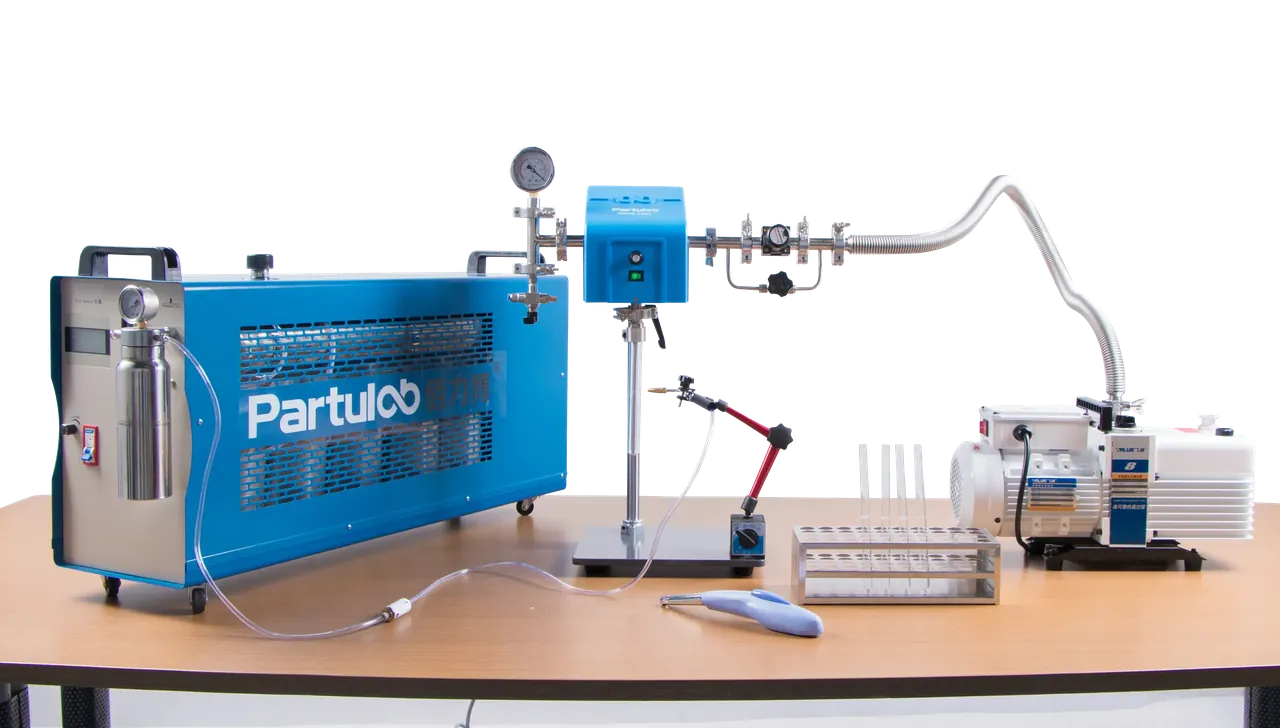
To execute this demanding protocol flawlessly, the research team utilized the MatMeas MRVS-3002 Vacuum Sealing System (formerly BaLab / Partulab). The paper's Experimental Section states directly:
"The as-deposited amorphous Cu–Zr alloys were then sealed in quartz tubes in a vacuum sealing system (MRVS-3002, Partulab Technology Co., Ltd)"
The MRVS-3002 handled the complete atmosphere engineering workflow: the quartz tubes were first evacuated to a pristine base pressure of ~1 Pa, removing all ambient contaminants. This was followed by three cycles of 99.999 vol.% pure oxygen backfilling to ensure complete atmospheric purity. The system's precision pressure control then allowed the team to lock in the exact target partial pressures at room temperature, creating hermetically sealed micro-reactors for each alloy composition.
📈 Uncovering the Thermodynamic Story Behind Selective Oxidation
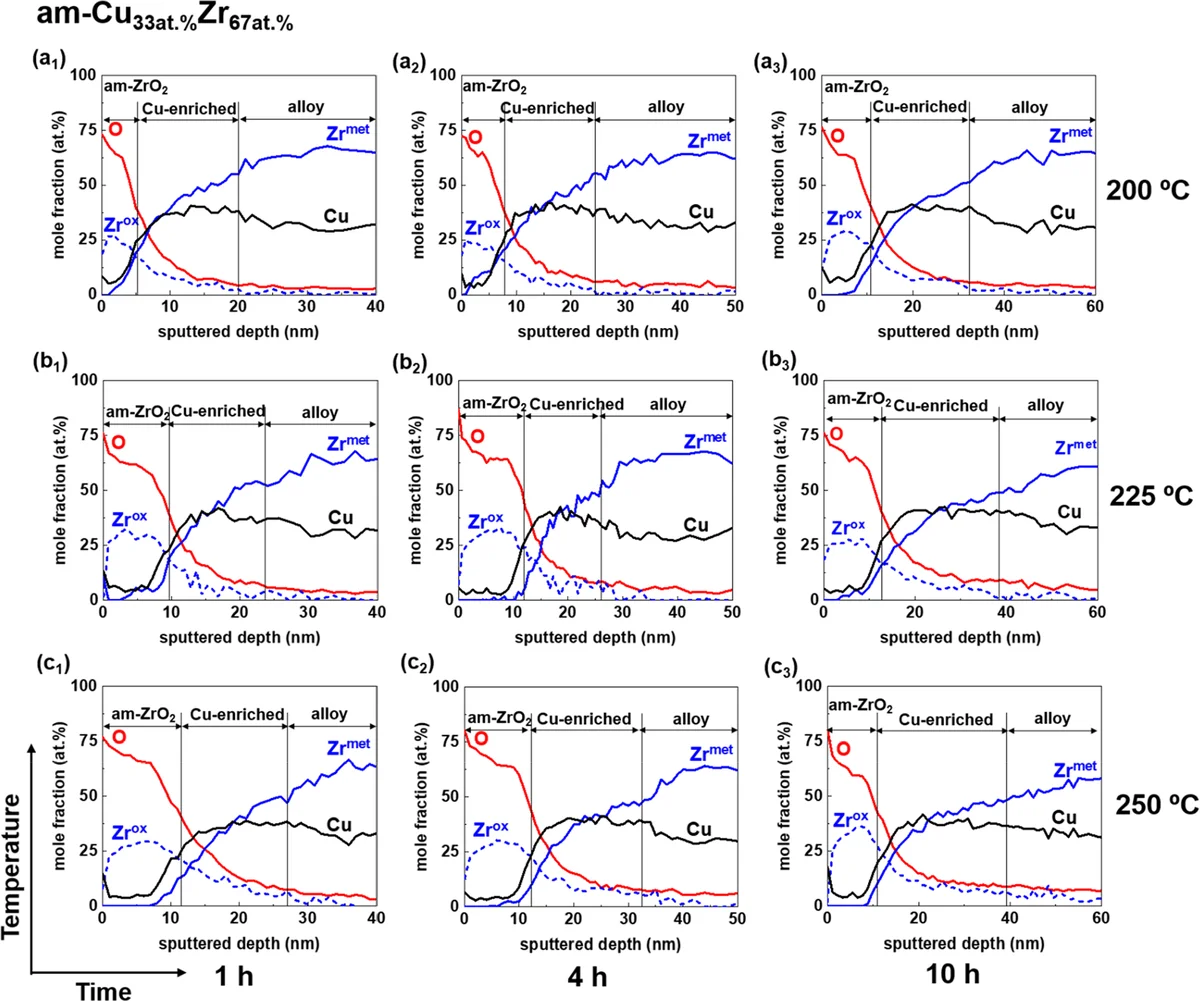
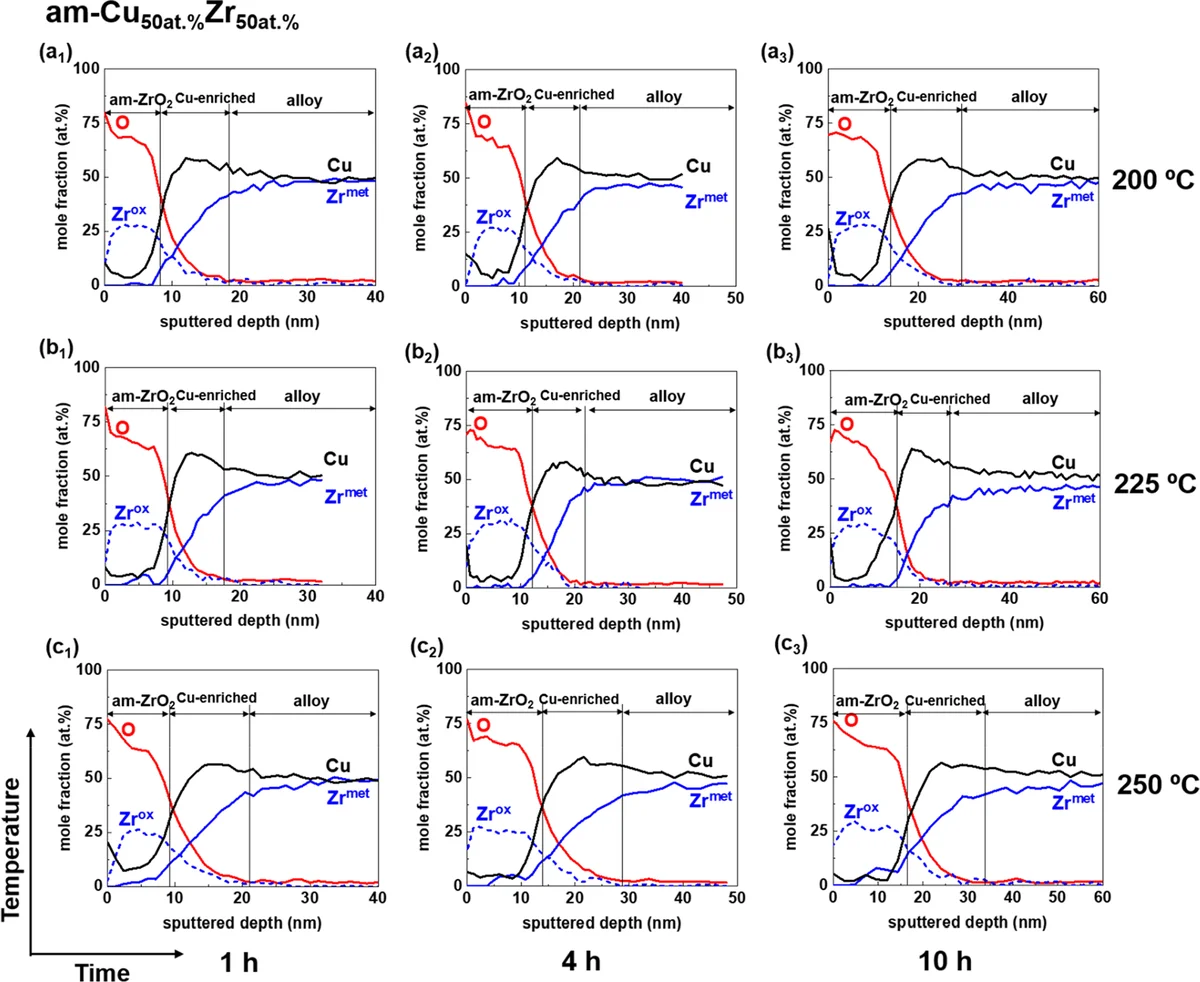
With the atmospheres perfectly controlled, the team employed XRD, AES, and cross-sectional TEM to characterize the oxide layer structures at the nanoscale.
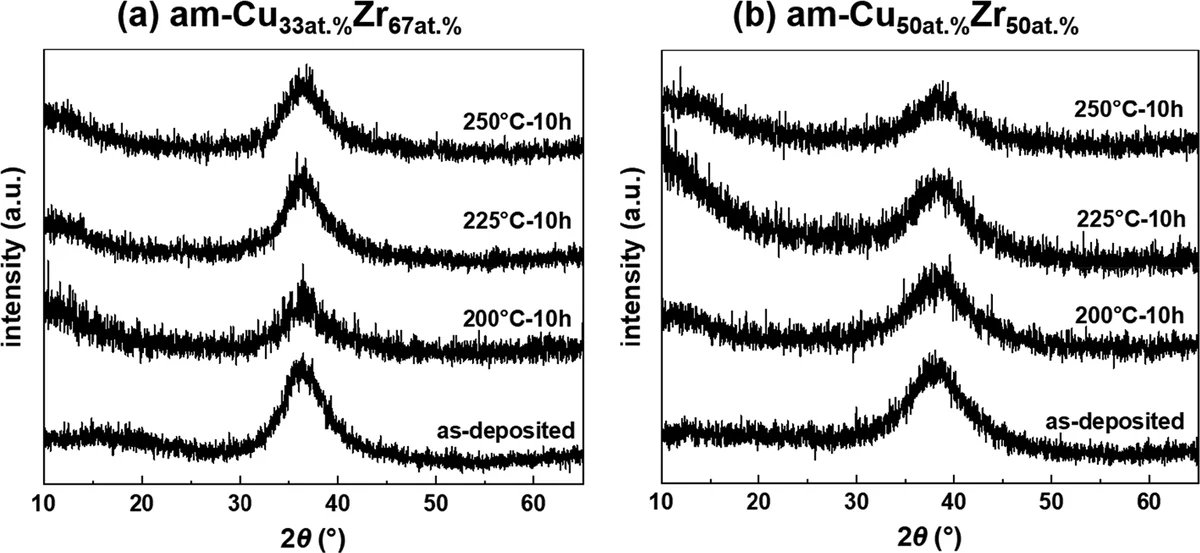
XRD patterns confirming the amorphous structure of the as-deposited CuxZr1-x alloy specimens prior to thermal oxidation.
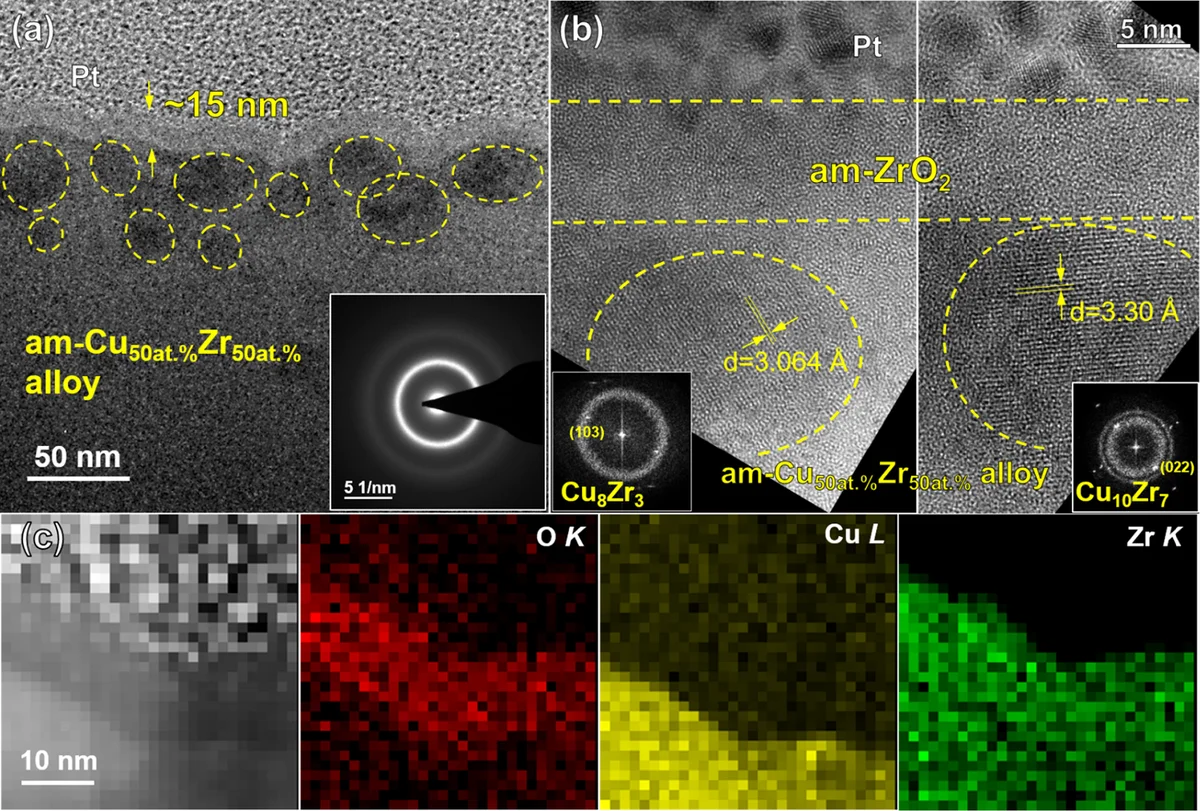
The results were illuminating. In the am-Cu₃₃Zr₆₇ alloy (Cu-poor), amorphous Cu-enriched nanoparticles approximately 10 nm in diameter formed in the Cu-enriched sublayer—sluggishly distributed, acting as a diffusion barrier that slows further oxidation. In contrast, the Cu₅₀Zr₅₀ alloy (higher Cu content) developed larger crystalline Cu-enriched particles (~20 nm) that provide fast ionic migration pathways, accelerating oxidation. This composition-dependent transition—from amorphous to crystalline nanoparticles—is the thermodynamic story at the heart of selective oxidation control.
Cross-sectional TEM images showing the amorphous ZrO₂/Cu-enriched bilayer formed by the selective oxidation of Zr atoms under the precise atmosphere provided by the MatMeas MRVS-3002.
Nanoparticle formation and oxide growth mechanism in selectively oxidized CuxZr1-x alloys, revealing how composition governs the thermodynamic stability of the Cu-enriched sublayer.
Eliminate Atmosphere Complexity from Your Functional Oxide Research
Controlling the oxidation atmosphere at the precision required for functional surface engineering is exactly the kind of challenge MatMeas systems are built to solve. From the first vacuum stroke to the final hermetic seal, our MRVS series handles the engineering so you can focus entirely on the science.
Discover the MatMeas MRVS-1003 High-Vacuum Rotary Sealing System—the premier choice for researchers working with active-noble alloy oxidation, thin-film surface functionalization, and controlled-atmosphere materials synthesis. Contact our technical team today for a customized quotation.
📥 Literature PDF Download:
Request High-Precision Testing Solutions
Get expert guidance and customized instruments for your functional materials project.