Alumina Substrate High-Temperature Resistivity Guide
Technical News
In heavy industrial smelting furnaces, commercial aerospace propulsion, and third-generation wide-bandgap power electronics, electronic substrates operate under severe thermal, mechanical, and electrical stresses. Among technical ceramic formulations, alumina (Al2O3) ceramic substrates remain the preferred structural and electrical insulation backbone due to their high mechanical strength, chemical inertness, and thermal stability.
However, operating environments in electric vehicle power modules, photovoltaic central inverters, and high-temperature turbine sensors continuously exceed 300°C to 600°C. Under these severe operating regimes, high electrical insulation is not an immutable constant. Evaluating high-temperature electrical resistivity is therefore essential to prevent catastrophic dielectric breakdown, excessive leakage current, and thermal runaway.
The Physical Imperative of High-Temperature Resistance Testing
Room-temperature electrical measurements frequently provide a misleading impression of ceramic insulation integrity. A substrate displaying volume resistivity exceeding 10^14 ohm-cm at 25°C can experience an exponential resistivity drop of five to eight orders of magnitude when heated to 600°C.
Systematic high-temperature testing serves three critical industrial functions:
-
Quality Screening and Purity Verification: Alumina ceramic substrates typically range from 96% to 99.6% purity. Sintering aids and residual alkali impurities form intergranular glass phases that mobilize under high thermal excitation, leading to premature insulation failure that standard room-temperature tests cannot detect.
-
Thermal Derating and Circuit Matching: Power electronic design engineers rely on empirical resistance-temperature curves to calculate substrate leakage dissipation, parasitic capacitance, and thermal impedance matching for silicon carbide (SiC) power modules.
-
Sintering Recipe and Microstructure Feedback: Resistance-temperature tracking reveals grain boundary defect densities, helping process metallurgists optimize firing schedules and grain boundary crystallization.
Conduction Mechanisms at Extreme Temperatures
Understanding electrical conduction across temperature gradients requires distinguishing bulk lattice transport from grain boundary phenomena:
-
Thermally Activated Ionic Conduction: In high-purity polycrystalline alpha-alumina, electrical transport at elevated temperatures follows Arrhenius behavior. Oxygen vacancies, interstitial cations, and trace mobile impurities gain sufficient kinetic energy to hop across potential energy barriers, exponentially increasing carrier concentration.
-
Grain Boundary Glass Phase Softening: Low-melting silicate phases (SiO2-CaO-MgO) concentrated along ceramic grain boundaries soften as temperatures exceed 400°C. These amorphous glassy channels facilitate rapid ionic migration, creating preferential low-resistance leakage paths across the substrate.
-
Surface Leakage vs. Bulk Conduction: Atmospheric humidity and surface carbonaceous contamination degrade surface insulation. At elevated temperatures, moisture desorbs while thermal ionization of surface states introduces complex surface conductivity that must be decoupled from bulk measurements.
Metrology Challenges in High-Temperature Electrical Characterization
Accurately measuring electrical resistance exceeding 10^12 ohms at temperatures up to 800°C introduces severe metrology hurdles that demand specialized instrumentation:
-
Guard Ring Electrode Geometry: Standard ASTM D257 and IEC 60093 three-terminal electrode configurations are essential to isolate volume resistance from surface leakage. The concentric guard ring intercepts surface currents and shunts them directly to ground, ensuring the central electrometer measures pure bulk current.
-
Electrometer Current Resolution: At elevated temperatures and ultra-high resistance states, current levels frequently drop into sub-picoampere regimes. Triaxial shielding, ultra-low input bias current electrometers, and guarded cabling are mandatory to suppress parasitic offset noise and capacitive pickup.
-
High-Purity Inert Electrodes: Conventional base metal contacts oxidize and delaminate at high temperatures, distorting contact resistance. Noble metal platinum electrodes ensure stable, non-reactive ohmic contact throughout continuous thermal sweeps.
-
Atmospheric Atmosphere Control: Testing in uncontrolled open air risks oxidation of metallization layers and volatile contamination. Multi-atmosphere test chambers supporting high vacuum, inert argon purge, and reducing forming gas environments allow researchers to isolate intrinsic lattice conduction.
Comprehensive Evaluation with the MatMeas HTS-1000HR
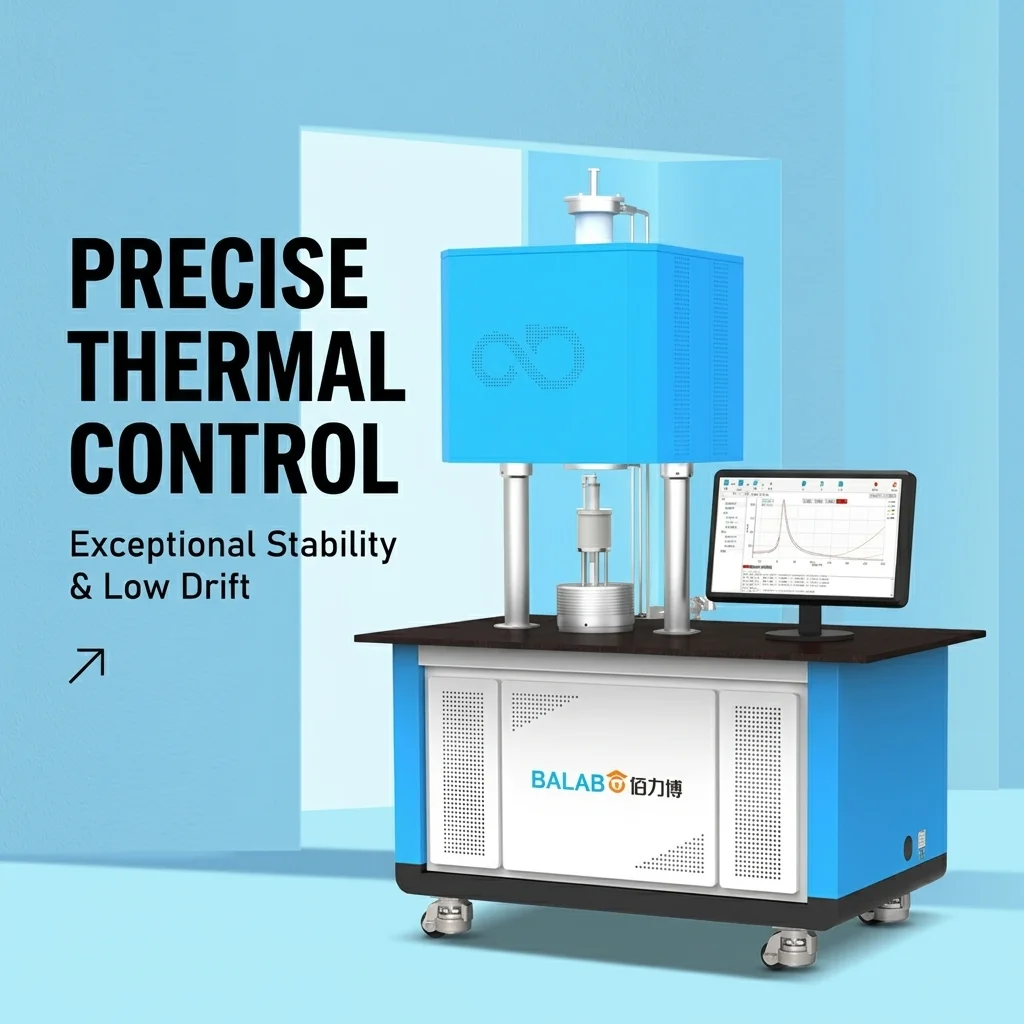
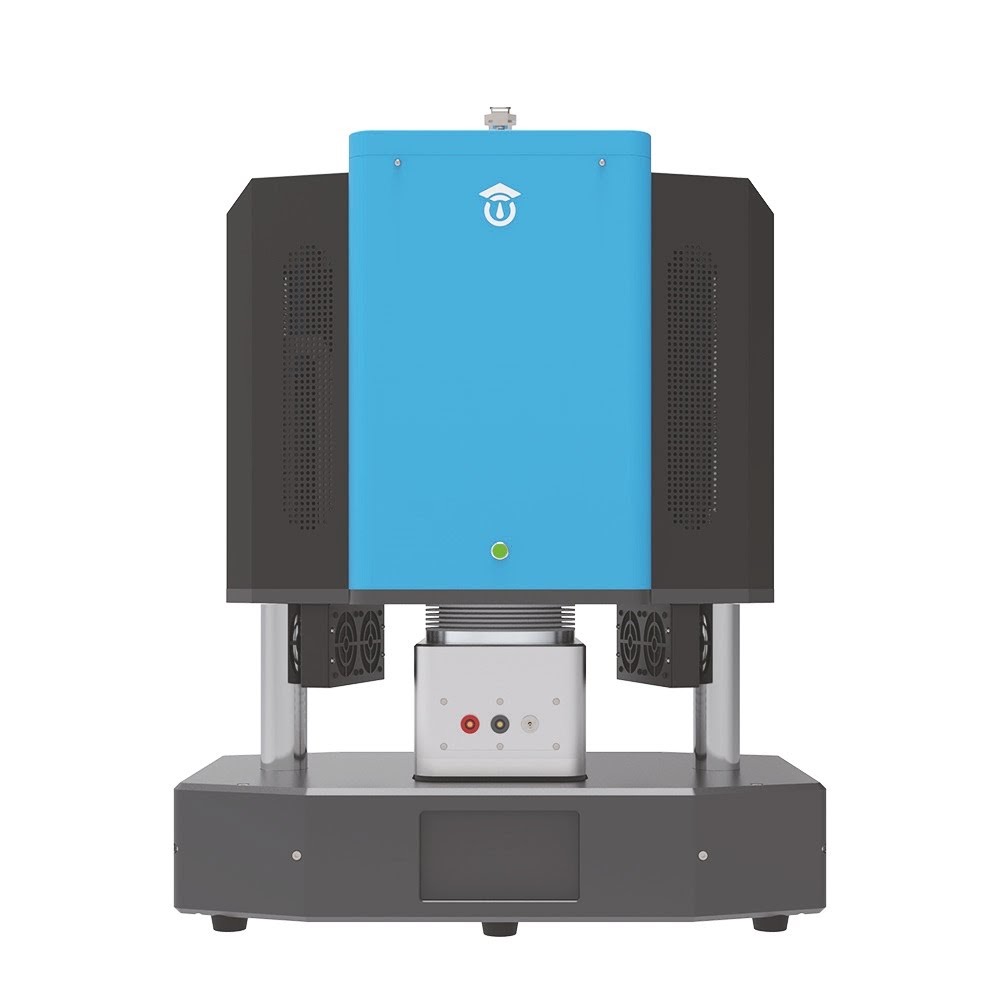
To address these characterization challenges, the MatMeas HTS-1000HR provides a specialized characterization platform for evaluating ceramic insulation across demanding thermal profiles.
The HTS-1000HR integrates an advanced heating furnace capable of stable thermal operation from room temperature up to 800°C, regulated by precision PID programming with thermal fluctuations held within ±1°C. Its electrometer measurement system resolves ultra-wide resistance ranges from 10^3 ohms to 10^15 ohms with picoampere current sensitivity.
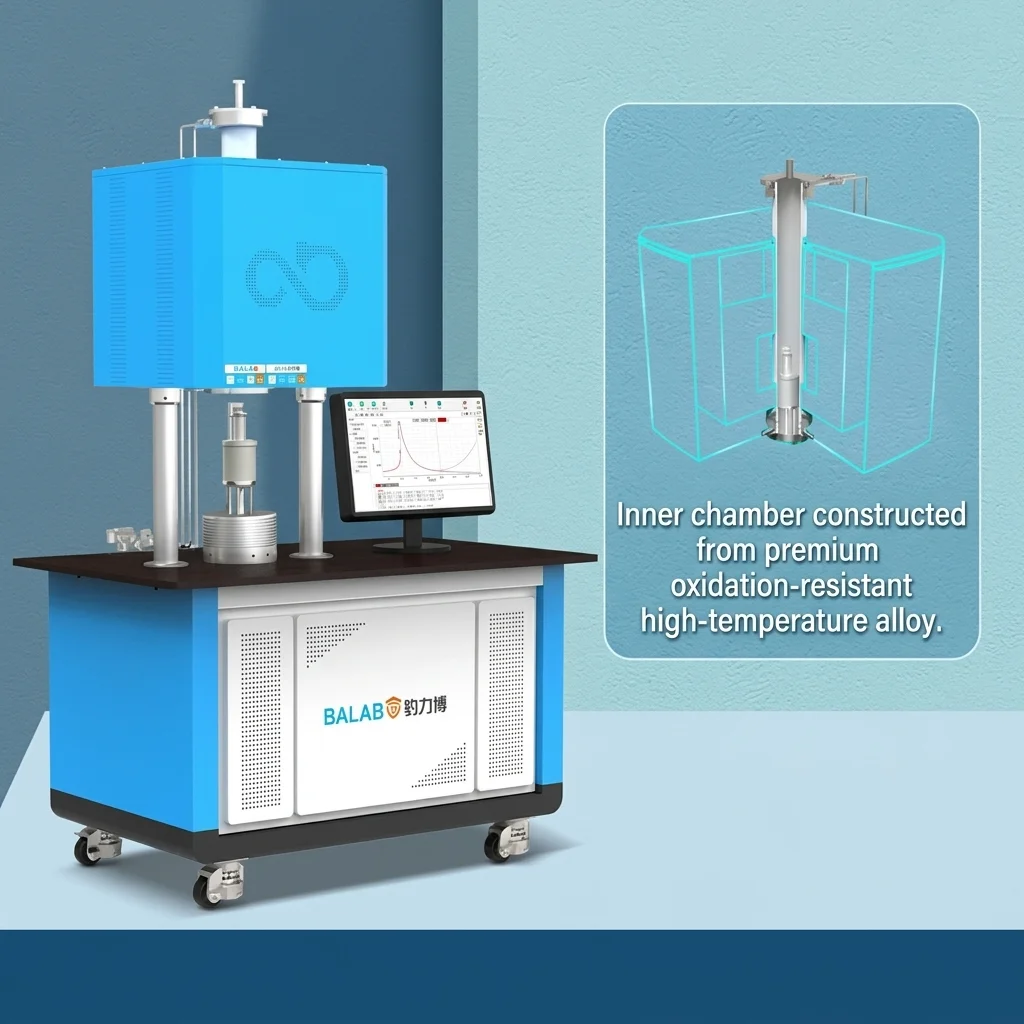
Equipped with guarded three-ring platinum fixtures and a vacuum-tight inner chamber constructed from high-temperature oxidation-resistant alloys, the system accommodates substrates up to 30 mm in diameter. Controlled mechanical loading ensures repeatable electrical contact without fracturing brittle ceramic plates, delivering reproducible resistance-temperature curves for aerospace and power module qualification.
Frequently Asked Questions
Why do alumina ceramic substrates exhibit exponential resistance loss at temperatures above 400°C?
Electrical conduction in alumina follows Arrhenius-type thermally activated transport. Above 400°C, thermal energy activates mobile oxygen vacancies and alkali impurity ions located in intergranular amorphous glass phases, sharply increasing ionic mobility and reducing volume resistivity by multiple orders of magnitude.
How does the three-ring electrode method eliminate measurement errors during high-temperature testing?
The three-ring configuration places a guarded ring around the primary measuring electrode on the substrate surface. The guard ring intercepts high-temperature surface leakage currents and diverts them directly to instrument ground, ensuring the picoammeter measures only currents traversing the bulk ceramic thickness.
Request High-Precision Testing Solutions
Get expert guidance and customized instruments for your functional materials project.