Piezoelectric Ceramics Testing Methods and Evaluation Guide
Technical News
Piezoelectric ceramics serve as the electromechanical cornerstone for ultrasonic transducers, high-precision micro-positioning actuators, underwater sonar arrays, and medical diagnostic probes. These functional electroceramics directly convert mechanical stress into electrical charge via the direct piezoelectric effect, or electrical potentials into micro-scale dimensional displacement via the converse piezoelectric effect. Because operational bandwidth, drive efficiency, and operational longevity depend strictly on reproducible electromechanical constants, standardized characterization is imperative for materials science research, design verification, and production quality control.
In precision applications, uncharacterized variations in piezoelectric properties lead directly to detuned resonance frequencies, acoustic mismatching, excessive heat generation, or premature dielectric breakdown. Implementing standardized characterization protocols based on international standards enables materials engineers to isolate domain dynamics, establish boundary limits, and guarantee transducer reliability across harsh operating environments.
Why Systematic Piezoelectric Ceramic Testing Is Critical
In industrial and academic applications, inconsistent piezoelectric response compromises system stability. Systematic testing addresses three pivotal stages in component development and deployment:
- Material Screening and Formulation Verification: Raw ceramic processing, grain boundary segregation, and high-voltage poling protocols introduce significant batch-to-batch variations. Rigorous electromechanical screening identifies defective formulations and incomplete domain orientation prior to expensive transducer assembly.
- Design Validation and Electromechanical Matching: Acoustic engineers and circuit designers require exact empirical values for elastic compliance, dielectric permittivity, and electromechanical coupling factors to design impedance-matching networks and acoustic backing layers.
- Degradation Monitoring and Depoling Kinetics: Continuous cyclic drive, mechanical shock, and elevated operational temperatures induce ferroelectric domain depoling and microcracking. Quantitative parameter tracking maps degradation kinetics to prevent sudden field failures in mission-critical ultrasonic systems.
Core Functional Parameters for Piezoelectric Evaluation
A comprehensive performance profile of a poled piezoelectric ceramic requires characterizing multiple interdependent physical constants governed by linear piezoelectric constitutive equations:
Direct piezoelectric effect:
D_i = d_ijk * T_jk + ε_ij^T * E_j
Converse piezoelectric effect:
S_ij = s_ijkl^E * T_kl + d_kij * E_k
where D_i represents electric displacement, T_jk denotes mechanical stress, E_j is electric field intensity, S_ij denotes mechanical strain, s_ijkl^E is elastic compliance at constant electric field, ε_ij^T is dielectric permittivity at constant stress, and d_ijk is the piezoelectric charge coefficient.
- Piezoelectric Charge Coefficients (d33, d31, d15): Quantify the charge density generated per unit of applied mechanical stress in units of pC/N, or conversely the strain generated per unit electric field (pm/V), as defined in our piezoelectric coefficients tensor guide (d33, d31, d15). The longitudinal coefficient d33 represents the primary figure of merit for stack actuators and longitudinal transducers.
- Electromechanical Coupling Factors (kp, kt, k33, k15): Represent the intrinsic efficiency with which stored electrostatic energy is converted into mechanical work, or vice versa. High coupling factors (such as planar coupling kp exceeding 0.60 in modified PZT ceramics) are mandatory for wideband ultrasonic imaging probes.
- Dielectric Permittivity (εr) and Loss Tangent (tan δ): Define the electrostatic capacitance and internal dielectric dissipation under alternating electric fields. Low dielectric loss (tan δ below 0.005) is vital in high-power ultrasonic drivers to mitigate severe internal heating.
- Elastic Compliance (s_ij) and Mechanical Quality Factor (Qm): The mechanical quality factor Qm represents the sharpness of the mechanical resonance peak, reflecting internal acoustic damping. High Qm values (exceeding 1000) are essential for resonant devices such as ultrasonic cutters and sonar projectors, where damping limits are screened via piezoelectric ceramics electromechanical safety testing.
- Curie Temperature (Tc): Denotes the phase transition temperature above which ferroelectric domains randomize into a centrosymmetric, non-piezoelectric paraelectric state, dictating the maximum thermal threshold for safe continuous operation (see Curie temperature measurement in piezoelectric ceramics).
Comprehensive Benchmark of Piezoelectric Testing Methodologies
Determining these interdependent constants requires selecting the appropriate measurement methodology based on specimen geometry, excitation frequency, and required metrological accuracy. International standards such as IEEE Std 176 and IEC 60483 define the primary experimental frameworks.
| Measurement Technique | Governing Standard | Primary Extracted Parameters | Operational Frequency | Specimen Geometry Constraints | Measurement Uncertainty |
|---|---|---|---|---|---|
| Quasi-Static Berlincourt Method | IEEE Std 176 / ASTM | Longitudinal charge coefficient d33 | Low frequency (typically 110 Hz) | Discs or blocks with parallel electroded faces; thickness 0.5 to 10 mm | ±2% to ±5% (sensitive to pre-clamp force) |
| Resonance-Antiresonance Method | IEEE Std 176 / IEC 60483 | Complete matrix: kp, kt, k33, Qm, s_ij^E, s_ij^D, εr | Continuous sweep (20 Hz to 10 MHz) | Dedicated geometries: thin discs (kp), long thin bars (k33), plates (kt) | ±0.1% to ±0.5% (frequency resolution) |
| Laser Doppler Vibrometry (LDV) | Non-contact optical | Real-time surface displacement, strain tensor, d33 | DC to 50 MHz broadband | Thin films, micro-cantilevers, MEMS structures | Sub-picometer displacement resolution |
| Pulse-Echo Acoustic Method | Ultrasonic standard | Acoustic wave velocity (longitudinal/shear), elastic stiffness c_ij | 1 MHz to 50 MHz | Thick blocks with parallel polished faces (reflection path) | ±1% to ±2% (transit-time dependent) |
While the quasi-static Berlincourt method is widely used for rapid production screening of d33, it does not reveal dynamic mechanical damping, frequency dispersion, or cross-axis elastic coupling. Conversely, the dynamic resonance-antiresonance method provides the entire electromechanical parameter tensor from complex impedance sweeps.
The Dynamic Resonance Method and IEEE Std 176 Extraction Models
Standardized under IEEE Std 176, the dynamic method analyzes complex impedance (Z) and admittance (Y) spectra across mechanical resonance modes. As the excitation frequency sweeps across resonance, the electrical admittance exhibits an electromechanical loop characterized by minimum impedance at series resonance (fs) and maximum impedance at parallel antiresonance (fp).
For a thin circular disc electroded on its major faces vibrating in the fundamental radial mode, the planar electromechanical coupling factor kp is calculated using the Onoe transcendental equation:
(kp^2) / (1 - kp^2) = [ (1 - σ^E) / (1 + σ^E) ] * [ η_p * J_0(η_p) - (1 - σ^E) * J_1(η_p) ] / [ J_1(η_p) ]
where σ^E is Poisson's ratio at constant electric field, J_0 and J_1 are Bessel functions of the first kind, and η_p = (π * fs / fp). For rapid engineering estimates, standard polynomial approximations link the normalized frequency separation (fp - fs) / fs directly to kp.
For thin plates vibrating in the thickness extensional mode, the thickness coupling factor kt is determined by:
kt^2 = (π / 2) * (fs / fp) * tan[ (π / 2) * (fp - fs) / fp ]
The mechanical quality factor Qm, representing internal friction and acoustic loss, is derived from the series resonance frequency fs, minimum impedance resistance R1, parallel antiresonance frequency fp, and low-frequency clamped capacitance C0:
Qm = fp^2 / [ 2 * π * fs * R1 * C0 * (fp^2 - fs^2) ]
The specimen behavior around resonance maps to the equivalent Butterworth-Van Dyke (BVD) circuit, comprising a static capacitance branch C0 in parallel with a motional branch consisting of motional inductance L1, motional capacitance C1, and motional resistance R1.
Material Benchmarks Across Leading Piezoelectric Ceramic Classes
Formulation adjustments drastically alter ferroelectric domain mobility, switching barriers, and operational limits. Acceptor dopants create pinned domain structures with high mechanical quality factors, whereas donor dopants increase domain mobility to maximize charge sensitivity.
| Ceramic Formulation | Dopant / Classification | Piezoelectric d33 (pC/N) | Planar Coupling kp | Mechanical Quality Factor Qm | Relative Permittivity εr | Dielectric Loss tan δ | Curie Temp Tc (°C) |
|---|---|---|---|---|---|---|---|
| PZT-4 | Hard PZT (Acceptor-doped) | 280 - 320 | 0.55 - 0.60 | 500 - 1200 | 1200 - 1400 | 0.003 - 0.005 | 320 - 340 |
| PZT-8 | Hard PZT (Heavy Acceptor) | 210 - 240 | 0.48 - 0.52 | 1000 - 1800 | 950 - 1100 | 0.002 - 0.004 | 300 - 325 |
| PZT-5A | Soft PZT (Donor-doped) | 370 - 450 | 0.60 - 0.65 | 70 - 90 | 1700 - 2100 | 0.015 - 0.020 | 350 - 365 |
| PZT-5H | Soft PZT (High Sensitivity) | 550 - 650 | 0.65 - 0.70 | 60 - 75 | 3100 - 3600 | 0.018 - 0.025 | 190 - 210 |
| KNN Lead-Free | (K,Na)NbO3-modified | 200 - 310 | 0.40 - 0.50 | 80 - 200 | 800 - 1400 | 0.020 - 0.040 | 380 - 420 |
| Bi4Ti3O12 | Bismuth Layer-Structured | 15 - 25 | 0.12 - 0.18 | 2000 - 4000 | 130 - 180 | 0.002 - 0.005 | 650 - 675 |
Hard PZT materials maintain high Qm and low dielectric loss under high electrical drive fields, preventing excessive thermal buildup in ultrasonic welders and sonar arrays. In contrast, soft PZT formulations deliver exceptional charge output for hydrophones and precision positioning systems.
Automated Resonance Analysis via the MatMeas PCA-1000
Manual impedance measurement and graphical resonance circle construction are time-consuming and prone to human transcription errors. The MatMeas PCA-1000 is an integrated piezoelectric ceramic parameter analyzer engineered specifically around the IEEE Std 176 resonance-antiresonance test framework.
Featuring a frequency acquisition span from 20 Hz to 10 MHz with a fundamental measurement accuracy of ±0.05%, the PCA-1000 sweeps complex impedance and admittance spectra in seconds. Proprietary fitting algorithms automatically identify series resonance, parallel antiresonance, and half-power bandwidth points, outputting calculated planar coupling kp, thickness coupling kt, longitudinal coupling k33, mechanical quality factor Qm, and complete BVD equivalent circuit parameters. By automating IEEE 176 parameter calculation directly from raw admittance sweeps, the instrument accelerates materials research and production line quality verification.
High-Temperature Depoling and Thermal Stability via the PMS-1000
In automotive sensors, downhole energy exploration, and aerospace turbine monitoring, piezoelectric components operate under extreme thermal gradients where domain structures relax and phase stability limits are challenged. Characterizing piezoelectric constants solely at ambient room temperature introduces severe risks of field depoling.
The MatMeas PMS-1000 provides in-situ piezoelectric temperature spectrum characterization from ambient temperatures up to 800°C. Engineered with a shielded furnace chamber, programmable multi-segment thermal profiles, and high-temperature platinum test fixtures, the PMS-1000 records continuous shifts in resonance frequencies, dielectric capacitance, and loss tangent across the heating and cooling cycles. This measurement capability allows research teams to map domain relaxation kinetics, evaluate the thermal stability of lead-free formulations, and establish exact Curie temperature thresholds to prevent in-service thermal depoling.
Experimental Best Practices and Specimen Preparation SOP
Accurate electromechanical parameter extraction requires meticulous attention to specimen geometry, electrode fabrication, and fixture clamping mechanics:
- Dimensional Aspect Ratios: IEEE Std 176 mandates specific aspect ratios to isolate discrete vibrational modes from spurious acoustic coupling. For planar disc evaluation, maintain a diameter-to-thickness ratio (D/t) of at least 10:1 to decouple planar extensional modes from thickness modes. For longitudinal rod evaluation (k33), the length-to-diameter ratio (L/d) must exceed 3:1.
- Electrode Integrity and Contact Resistance: Sputtered gold, evaporated silver, or high-purity fired silver paste must form continuous, uniform ohmic contacts across opposing parallel faces. Incomplete electrode coverage distorts the electric field distribution, lowering apparent coupling factors.
- Fixture Mechanical Clamping Stress: Excessive mechanical pressure from contact probes dampens mechanical resonance and artificially degrades the measured mechanical quality factor Qm. Test fixtures must apply light, resilient spring-loaded contacts at the acoustic nodal points of the vibrating specimen.
Frequently Asked Questions
Why does IEEE Std 176 require distinct sample geometries for extracting different electromechanical coefficients?
Piezoelectric ceramics exhibit anisotropic electromechanical coupling across three dimensions. A single sample geometry excites overlapping vibrational modes (such as radial, thickness extensional, and shear modes) that interfere with each other. IEEE Std 176 specifies thin discs for planar coupling kp, tall slender rods for longitudinal coupling k33, and thin plates for thickness coupling kt to isolate fundamental resonance peaks without spurious acoustic cross-talk.
What causes the discrepancy between quasi-static Berlincourt d33 and dynamic resonance d33 values?
Quasi-static Berlincourt meters measure charge response under low-frequency cyclic force (typically 110 Hz) with an applied pre-clamping stress that can inhibit domain wall mobility, often underestimating d33 in soft ceramics. The dynamic resonance method extracts d33 indirectly from high-frequency elastic compliance, permittivity, and coupling coefficients under zero-stress acoustic resonance, capturing purely intrinsic electromechanical coupling without mechanical clamp damping.
How does in-situ thermal depoling testing assist in high-power transducer engineering?
High-power ultrasonic transducers generate substantial internal heat during continuous operation. In-situ thermal testing with a system like the PMS-1000 tracks the exact degradation of coupling factors and mechanical quality factor Qm as temperature climbs toward the Curie point Tc. This data enables acoustic engineers to establish safe electrical drive limits and incorporate thermal cooling thresholds to prevent irreversible domain depoling during service.
Related Instruments & Equipment
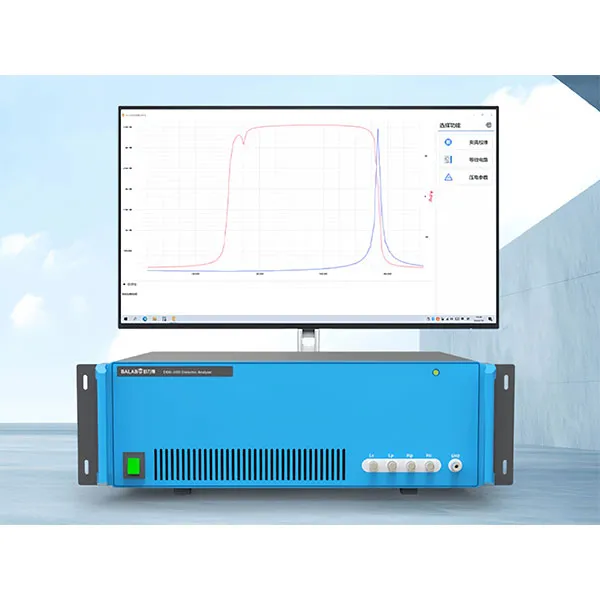
MatMeas High Precision Piezoelectric Ceramic Parameter Analyzer PCA1000
The MatMeas PCA1000 is a domestic-first, cutting-edge Piezoelectric Ceramic Integrated Analyzer engineered to comprehensively evaluate the performance of piezoelectric materials using the advanced AC resonance method. Operating across a wide frequency range from 20Hz to 10MHz with a high measurement accuracy of ±0.05%, it eliminates complex manual calculations by instantly extracting critical data, including electromechanical coupling coefficients (Kp, Kt), mechanical quality factors (Qm), piezoelectric constants (d33, d31, d15), and equivalent circuit models. With intelligent frequency sweeping and visualized data interfaces, the PCA1000 is the ultimate one-stop solution for both rigorous academic research and high-throughput quality screening in industrial mass production.
View details →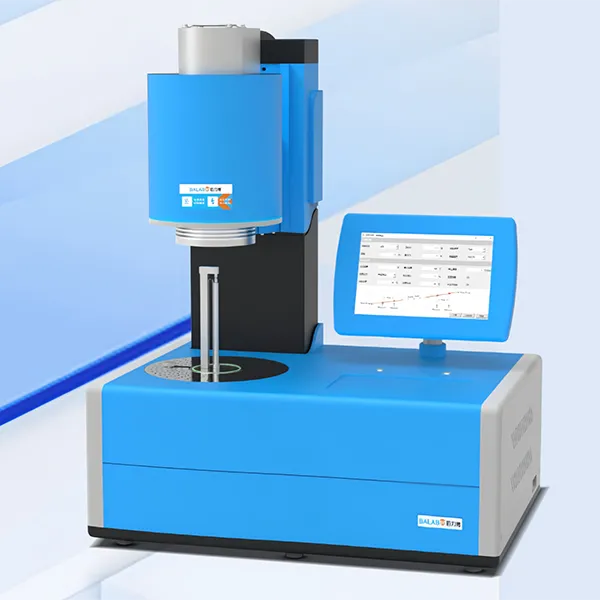
MatMeas PMS-1000 Piezoelectric Temperature Spectrum Measurement System
High-precision piezoelectric temperature spectrum measurement system for analyzing piezoelectric properties under varying temperatures.
View details →Request High-Precision Testing Solutions
Get expert guidance and customized instruments for your functional materials project.