Alumina Ceramic Substrate High-Temperature Resistance Guide
Technical News
From power electronics in electric vehicle traction inverters to aerospace turbine sensors, energy conversion modules, and third-generation wide-bandgap semiconductors, alumina (Al2O3) ceramic substrates serve as the premier electrical isolation platform. Operating environments in these mission-critical sectors frequently subject electronic assemblies to continuous operating temperatures ranging from 200°C to well above 600°C. Under such severe thermal gradients, maintaining exceptionally high electrical insulation resistance is vital to prevent catastrophic leakage currents, signal interference, dielectric degradation, and thermal runaway.
While high-purity alumina ceramics (typically 96% to 99.6% Al2O3) exhibit room-temperature volume resistivities exceeding 10^14 ohm-cm, their electrical resistance decays exponentially as temperature escalates—a thermal degradation contrasting sharply with carrier freeze-out observed during alumina ceramic low-temperature resistivity testing. High-temperature resistance testing provides the quantitative empirical foundation needed to establish safe operating temperature limits, optimize glass-phase sintering formulations, verify dielectric reliability, and eliminate defective substrates before deployment.
Thermal Degradation Mechanisms in Alumina Ceramic Substrates
Electrical conduction in polycrystalline alumina ceramics at elevated temperatures is dominated by thermally activated charge carriers traversing the crystal lattice and amorphous intergranular grain boundaries. As thermal energy increases, multiple conduction regimes emerge, governed by the generalized Arrhenius relation:
σ(T) = σ_1 * exp( -E_a1 / (k_B * T) ) + σ_2 * exp( -E_a2 / (k_B * T) )
where σ(T) is electrical conductivity, σ_1 and σ_2 are pre-exponential factors, E_a1 and E_a2 denote activation energies for distinct conduction mechanisms, k_B is the Boltzmann constant (8.617 * 10^-5 eV/K), and T is absolute temperature in Kelvin.
- Grain Boundary Glass-Phase Conduction (Low to Intermediate Temperatures, 200°C to 500°C): Sintering aids (such as SiO2, MgO, and CaO) form amorphous intergranular boundary phases. At elevated temperatures, these glassy interlayers soften and mobilize trace alkali (Na+, K+) or alkaline-earth impurity ions. This extrinsic conduction pathway exhibits a low activation energy (typically 0.6 eV to 1.1 eV), accelerating resistivity degradation well before lattice conduction activates.
- Intrinsic and Oxygen Vacancy Hopping (High Temperatures, >500°C): In high-purity alumina (99.6% Al2O3), extrinsic glass phases are minimal. Conduction is governed by point defect migration, primarily doubly ionized oxygen vacancies (V_O^••) and aluminum vacancies (V_Al^'''). This intrinsic regime exhibits high activation energy (typically 1.8 eV to 2.5 eV), leading to a steep, predictable drop in volume resistivity at extreme temperatures.
- Surface Moisture and Adsorbate Desorption: In transitional thermal regimes (ambient to 200°C), physically adsorbed hydroxyl groups and moisture desorb from the substrate surface, causing erratic initial resistance spikes before intrinsic bulk conduction stabilizes.
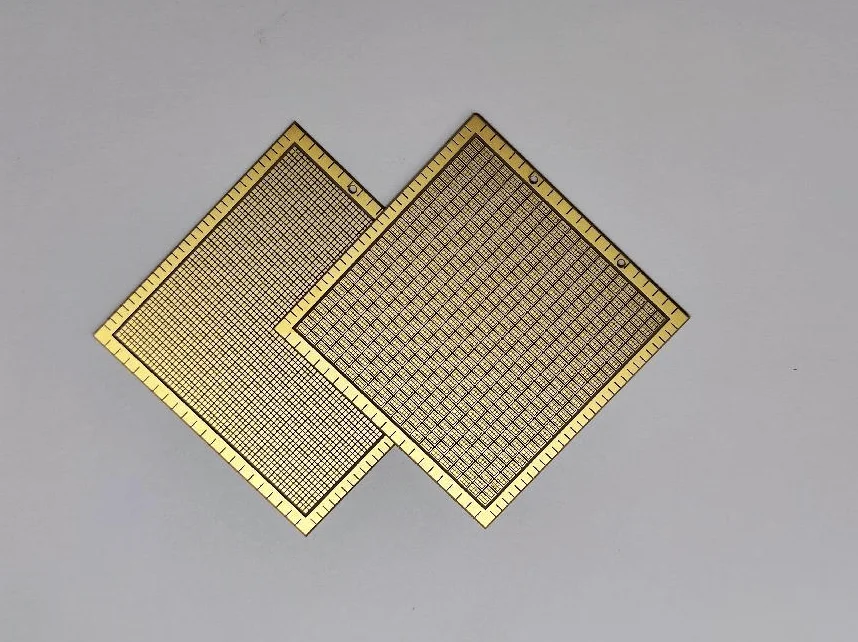
High-Temperature Volume Resistivity Benchmark Across Substrate Materials
Evaluating high-temperature electrical insulation requires comparing alumina variants against competing advanced ceramic substrates across full operating temperature ranges.
| Substrate Formulation | Purity / Dopant Class | 25°C Volume Resistivity (Ω·cm) | 300°C Volume Resistivity (Ω·cm) | 600°C Volume Resistivity (Ω·cm) | 800°C Volume Resistivity (Ω·cm) | Thermal Activation Energy Ea (eV) | Primary High-Temp Conduction Limiter |
|---|---|---|---|---|---|---|---|
| 96% Al2O3 | Standard Electronic Grade (4% glass) | > 10^14 | 1.0 * 10^11 | 4.5 * 10^7 | 2.0 * 10^5 | 0.85 - 1.15 | Alkali ion migration in intergranular glassy silicate phase |
| 99.6% Al2O3 | Thin-Film Laser Grade (0.4% glass) | > 10^15 | 8.0 * 10^12 | 1.2 * 10^9 | 6.5 * 10^6 | 1.45 - 1.85 | Oxygen vacancy mobility along clean grain boundaries |
| AlN (Aluminum Nitride) | High Thermal Conductivity (Y2O3 aid) | 5.0 * 10^13 | 4.0 * 10^11 | 8.0 * 10^7 | 5.0 * 10^5 | 0.90 - 1.20 | Intergranular Y-Al-O aluminate boundary phase |
| Si3N4 (Silicon Nitride) | High Toughness AMB Grade (Al2O3/Y2O3) | > 10^14 | 2.5 * 10^12 | 3.0 * 10^8 | 1.5 * 10^6 | 1.10 - 1.35 | Oxynitride glassy grain boundary phase softening |
| ZTA (Zirconia Toughened Alumina) | 20% ZrO2 Toughened Matrix | 2.0 * 10^13 | 6.0 * 10^10 | 1.0 * 10^7 | 8.0 * 10^4 | 0.75 - 0.95 | Oxygen vacancy migration in stabilized zirconia phase |
The comparative data illustrates why 99.6% alumina maintains superior electrical isolation over 96% alumina at temperatures above 400°C. The reduction of silicate glassy boundaries suppresses early ionic leakage, as systematically verified in broadband ceramic substrate resistivity testing.
Volume and Surface Resistivity Metrology via Three-Ring Electrodes
Accurately measuring electrical resistance in ultra-high-resistance ceramics (often spanning from 10^6 ohms to 10^15 ohms) requires rigorous physical separation of bulk volume conduction from surface leakage currents. Standardized testing deploys the guarded three-ring electrode geometry, conforming to ASTM D257, IEC 60093, and ASTM D1829 protocols.
| ASTM D257 / IEC 60093 Parameter | Electrode Definition | Recommended Dimension | Metrological Function |
|---|---|---|---|
| Protected Electrode (d1) | Circular inner electrode on upper surface | 20.0 mm diameter | Collects pure volumetric current passing through the substrate thickness |
| Guard Electrode Gap (g) | Concentric clearance between d1 and guard ring | 1.5 mm radial gap | Defines insulating boundary; must minimize surface fringing fields |
| Guard Ring Outer Diameter (d2) | Annular outer electrode on upper surface | 30.0 mm to 40.0 mm | Diverts surface tracking and parasitic furnace leakage directly to ground |
| Unguarded Counter Electrode (d3) | Continuous planar electrode on bottom face | ≥ 40.0 mm diameter | Connects to high-voltage DC excitation source, spanning entire test area |
| Effective Diameter (d_eff) | Geometrical correction diameter | d_eff = d1 + g = 21.5 mm | Compensates for electric field fringing across the electrode gap |
The effective electrode area A_eff and corresponding volume resistivity ρ_v are extracted using standard geometric equations:
A_eff = (π / 4) * (d1 + g)^2
ρ_v = R_v * ( A_eff / t )
where R_v is the measured volume resistance in ohms and t is specimen thickness in centimeters. By maintaining the central measurement electrode and the concentric guard ring at identical electrical potentials, the system completely suppresses surface leakage currents, ensuring that the central electrometer captures only intrinsic volumetric transport.
Defect Screening and Sintering Quality Verification
High-temperature resistance testing serves as an invaluable diagnostic tool within comprehensive alumina ceramic substrate inspection and testing protocols:
- Sub-Surface Porosity and Micro-Voids: Trapped pores from incomplete sintering or inconsistent binder burnout lower effective insulation cross-sections. Under thermal excitation, electric field crowding around micro-voids accelerates local dielectric fatigue, appearing as premature resistivity drops.
- Impurity Segregation and Raw Material Consistency: Even trace iron or alkali metal impurities present at parts-per-million levels migrate toward grain boundaries during high-temperature operation. Temperature-dependent resistance testing exposes poor-quality raw materials that pass standard room-temperature screening.
- Process Feedback for Sintering Profiles: Correlating resistance-temperature curves with sintering furnace profiles enables process engineers to refine firing temperatures and cooling rates, achieving optimal crystalline density and minimal glassy phase segregation.
Atmospheric Control and High-Temperature Leakage Suppression
Testing ceramics at temperatures approaching 800°C introduces severe environmental measurement challenges that must be engineered into the testing apparatus:
- Controlled Test Atmospheres: Testing in ambient open air can cause electrode oxidation and uncontrolled atmospheric moisture interaction. Precision test chambers support inert gas purges (such as nitrogen or argon), reducing gas mixtures, or high-vacuum environments to isolate intrinsic material properties.
- Noble Metal Electrode Integrity: Conventional base-metal electrodes oxidize and degrade at high temperatures. High-temperature resistivity systems utilize high-purity platinum or gold electrodes that maintain inert contact interfaces across full thermal cycles.
- Furnace Insulation Leakage Elimination: Test fixtures must utilize high-grade sapphire or ultra-pure recrystallized alumina insulating supports to ensure furnace components do not form parasitic parallel conduction paths that compromise ultra-weak current readings.
High-Temperature Resistivity Characterization with MatMeas HTS-1000HR
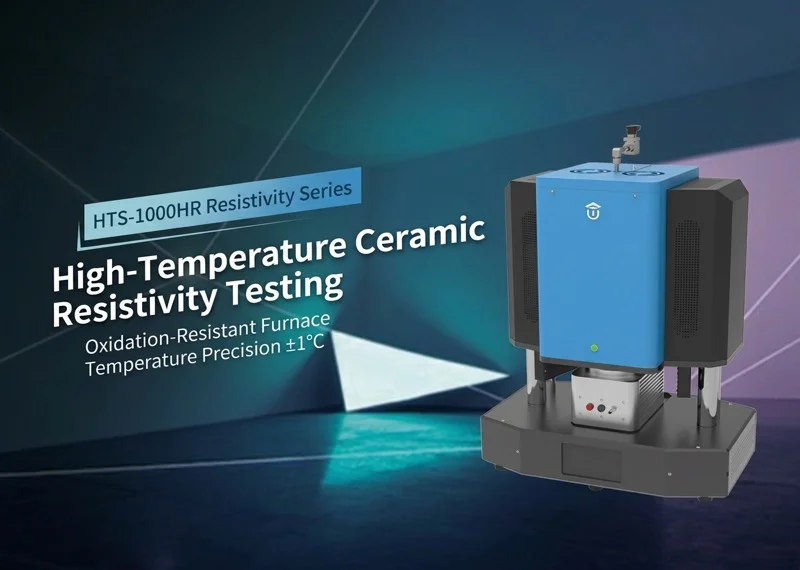
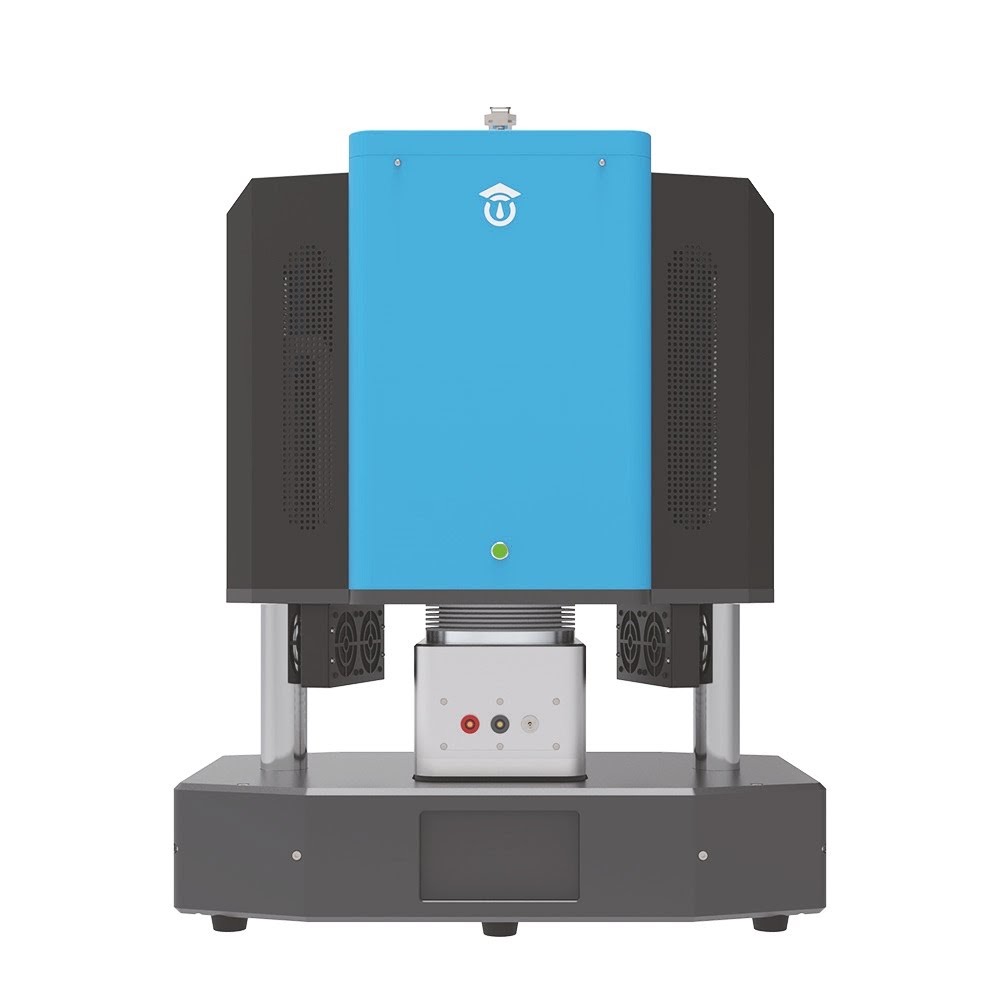
For industrial and academic laboratories evaluating the insulation boundaries of alumina substrates and functional ceramics, the MatMeas HTS-1000HR High Temperature Resistivity Measurement System provides a comprehensive characterization platform.
Engineered specifically for demanding high-temperature electroceramics research, the HTS-1000HR features:
- Extended Thermal Range: Operates from room temperature up to 800°C with precision PID temperature regulation (±1°C), accommodating programmable heating and cooling ramp rates up to 10°C/min.
- Ultra-Wide Resistance Dynamic Range: Resolves insulation resistances spanning from 10^3 ohms to 10^15 ohms, utilizing an electrometer measurement channel capable of detecting leakage currents from 500 fA to 20 mA.
- Guarded Three-Ring Platinum Fixtures: Standard three-ring guarded platinum electrodes ensure reproducible, standardized separation of surface and volume resistance conforming to ASTM D257.
- Triaxial Shielding Architecture: Integrated driven-guard triaxial cabling shields the measurement path against external electromagnetic noise and cable dielectric absorption.
- Non-Destructive Specimen Clamping: Features calibrated sample contact pressure (max 0.25 N) to secure fragile ceramic plates up to 30 mm in diameter without mechanical microcracking.
Frequently Asked Questions
Why does alumina ceramic insulation resistance drop exponentially at high temperatures?
In high-purity polycrystalline alumina, electrical conduction follows thermally activated ionic and defect transport mechanisms described by the Arrhenius relation. As temperature rises, thermal energy frees trapped charge carriers and accelerates oxygen vacancy and impurity mobility across grain boundaries, causing electrical resistivity to decrease by several orders of magnitude.
What is the primary purpose of the guard electrode in high-temperature resistivity measurements?
The guard ring in a three-ring electrode configuration shunts surface leakage currents directly to system ground before they can reach the electrometer. This ensures that the instrument measures only current flowing directly through the sample volume, preventing surface contaminants, moisture, or furnace wall leakage from corrupting bulk resistivity data.
Can room-temperature resistivity testing reliably predict high-temperature ceramic performance?
No. Low-purity ceramics with suboptimal grain boundary glass phases or trace alkali impurities often display deceptively high insulation resistance at room temperature. Elevated-temperature testing above 400°C activates mobile ions and reveals premature insulation breakdown, making high-temperature testing indispensable for harsh-environment qualification.
Request High-Precision Testing Solutions
Get expert guidance and customized instruments for your functional materials project.