ARVS Automated Vacuum Sealing: Complete Video Guide & Operation Workflow
Technical News
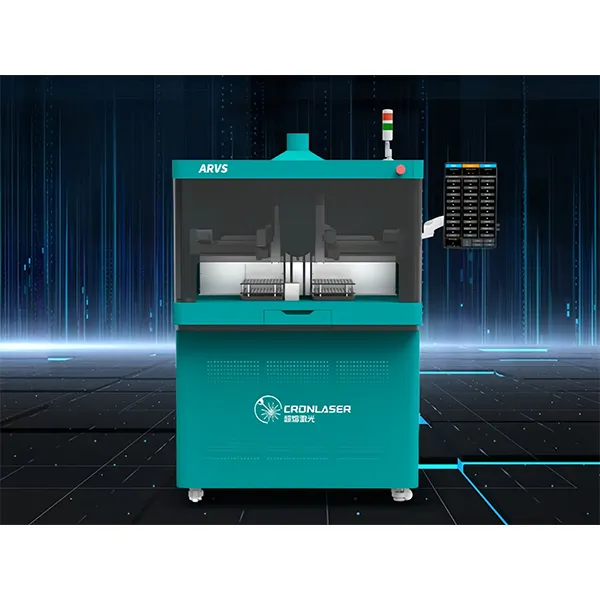
Vacuum flame-sealing of quartz and borosilicate glass ampoules is an essential preparation step across solid-state physics, air-sensitive coordination chemistry, solid-state battery synthesis, and microbiological strain cryopreservation. However, traditional manual sealing stations introduce severe experimental liabilities: human operator inconsistency, uneven circumferential wall heating, localized thermal stress, and throughput bottlenecks that severely limit high-throughput laboratory research and pilot production.
The MatMeas ARVS Series was engineered to replace manual glassblowing torches with a fully automated, robotic handling and high-temperature flame fusion platform. Capable of processing up to 100 to 156 tubes per batch with sub-10-second cycle times, the system integrates robotic XYZ manipulation, automated dynamic evacuation, and synchronized hydrogen-oxygen (HHO) flame cutting.
Below is the complete engineering video walkthrough and standard operating guide detailing the mechanical layout, auxiliary gas integration, and step-by-step sealing protocol.
1. System Architecture, Workstations & XYZ Robotic Modules
To enable unattended batch processing, the ARVS platform segments the complete preparation workflow into three distinct physical domains: the Loading Area, the Melting Zone, and the Unloading Area.
Video 1: ARVS Main Unit Overview & XYZ Robotic Handling Modules
Key Functional Workstations
- Loading Area: Accommodates precision batch trays holding pre-filled ampoules or tubes (compatible with Φ6 mm, Φ7 mm, Φ8 mm, and custom diameters). Optical proximity sensors detect tube presence and verify orientation before pickup.
- Melting / Sealing Zone: The central processing bay equipped with high-temperature rotary sealing chucks, dual-opposed oxyhydrogen flame burner heads, electronic spark igniters, and an integrated scrap collection box to capture trimmed quartz tips.
- Unloading Area: A dedicated receiving tray array where sealed and fused ampoules are automatically placed for controlled ambient cooling.
Precision Motion Kinematics
- Dual XYZ Modules (Left & Right): High-rigidity linear rails driven by closed-loop servo/stepper motors achieve multi-axis positional accuracy within ±0.05 mm, eliminating positioning drift across repetitive cycles.
- Electric Gripper End-Effectors: Multi-axis robotic grippers feature calibrated clamping force feedback, ensuring secure handling of fragile, thin-walled quartz tubes without risk of surface scratching or micro-cracking.
2. Gas Supply & HO700 Hydrogen-Oxygen Generator Integration
Safe, reliable flame sealing of quartz glass demands concentrated thermal energy exceeding 1700 °C (the softening point of fused silica) without introducing carbon residues, water condensation, or volatile contaminants into the vacuum environment.
Video 2: Gas Supply & HO700 Hydrogen-Oxygen Generator Connection
2800 °C Water-Electrolysis Flame Technology
Rather than relying on hazardous bottled hydrocarbons (acetylene or propane), the ARVS system pairs with an on-demand HO700 Hydrogen-Oxygen Generator (producing up to 700 L/h of stoichiometric H₂/O₂ gas via deionized water electrolysis):
- Peak Flame Temperature: Reaches up to 2800 °C, delivering clean, pinpoint heat transfer that collapses quartz walls in seconds.
- Zero Carbon Emissions: Combustion yields pure water vapor that is exhausted harmlessly without contaminating sample chambers.
- On-Demand Gas Generation: Gas is generated only during active demand, preventing high-pressure combustible gas accumulation in the laboratory.
Piping & Safety Interlocks
- Flexible Reinforced Gas Lines: Connect the rear gas manifold of the HO700 directly to the ARVS automated fuel-control block.
- Multi-Stage Flashback Arrestors: Dual dry-type and wet-type flame check valves prevent backfire propagation.
- Inert Gas Backfill Port: An integrated auxiliary manifold allows automated backfilling of high-purity argon or nitrogen into the ampoules prior to final cutoff, preserving sensitive organometallic and halide perovskite samples.
3. Standardized 10-Step Automated Sealing Workflow
The operational execution of the ARVS system is managed entirely through an industrial touchscreen HMI, executing automated recipes with consistent thermal dwell times.
Video 3: Automated Tube Sealing Operation & Quality Inspection
Step-by-Step Sealing Sequence:
- Recipe & Parameter Selection: Operators configure sealing parameters on the touchscreen interface according to tube material (borosilicate vs quartz) and wall thickness.
- Rotation Speed Setting: Adjustable rotational speed (Fast / Medium / Slow, up to 35 rpm) is selected to ensure circumferential thermal uniformity as the tube rotates in the flame.
- Torch Height & Focal Alignment: Micro-stepping motorized stages position the dual flame torches precisely at the designated necking cutoff coordinate.
- Thermal Cycle Time Setting: Heating duration is programmed (typically 4–8 seconds depending on quartz tube outer diameter).
- Robotic Tube Transfer: The robotic XYZ gripper extracts an unsealed tube from the Loading Zone and places it into the motorized vacuum sealing chuck.
- Evacuation & Gas Backfill: The pneumatic valve sequence initiates rotary dynamic evacuation down to target vacuum levels (up to $10^{-5}\text{ Pa}$ with turbomolecular pumping), followed by optional inert gas backfill cycles.
- Automated Ignition & Flame Fusion: The automated ignition system lights the HHO torches, directing focused 2800 °C heat onto the rotating neck.
- Dynamic Necking & Severing: Under coordinated axial tension and thermal softening, the tube walls fuse airtightly, and the upper waste stem drops into the internal scrap collection box.
- Automatic Venting & Robotic Transfer: The vacuum chuck vents to ambient pressure, and the unloading robotic arm transfers the sealed ampoule to the cooling rack in the Unloading Area.
- Sealing Tightness & Integrity Inspection: Once cooled, the sealed hemisphere is inspected for wall thickness uniformity, bubble-free fusion, and hermetic vacuum retention.
4. High-Throughput Performance & Technical Specifications
| Feature / Metric | Specification Parameter |
|---|---|
| Throughput Capacity | 100 to 156 Tubes per batch (tray-dependent) |
| Kinematic System | Dual XYZ closed-loop robotic modules ($\pm 0.05\text{ mm}$ accuracy) |
| Sealing Speed | $< 10\text{ seconds}$ per tube |
| Ultimate Vacuum | Up to $10^{-5}\text{ Pa}$ (Turbomolecular Configuration) |
| Flame Heat Source | 2800 °C Electrolytic Hydrogen-Oxygen ($H_2/O_2$) Flame |
| Compatible Media | Quartz, High-Borosilicate, Medical Ampoules ($\Phi 6 - 8\text{ mm}$) |
| System Helium Leak Rate | $\le 1 \times 10^{-8}\text{ Pa}\cdot\text{m}^3/\text{s}$ |
| Control Architecture | Color Touchscreen HMI with recipe memory and fault diagnostics |
Summary & Technical Consultation
The MatMeas ARVS Series transforms laboratory vacuum sealing from an unpredictable craft into an industrial-grade, repeatable process. By combining robotic sample handling, computerized vacuum control, and clean HHO flame fusion, it delivers the hermetic integrity required for advanced crystal growth, 2D material synthesis, and sensitive biological preservation.
To discuss tube specifications, custom vacuum configurations, or pilot-scale automation requirements, contact our engineering team directly or explore the full product catalog below.
Related Instruments & Equipment
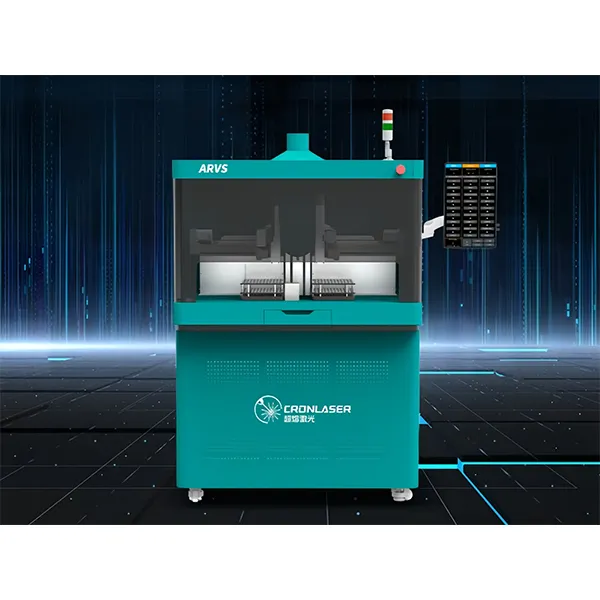
MatMeas ARVS Automated Quartz Ampoule Processing System
The MatMeas ARVS Series is an advanced automated vacuum tube sealing system designed for high-throughput laboratory and pilot-scale production applications. Developed to replace labor-intensive manual sealing processes, the ARVS integrates an automated robotic handling system with high-precision XYZ positioning (±0.05 mm) to automatically load, position, evacuate, backfill and seal up to 100 glass or quartz tubes per batch with excellent process consistency and minimal operator intervention.
View details →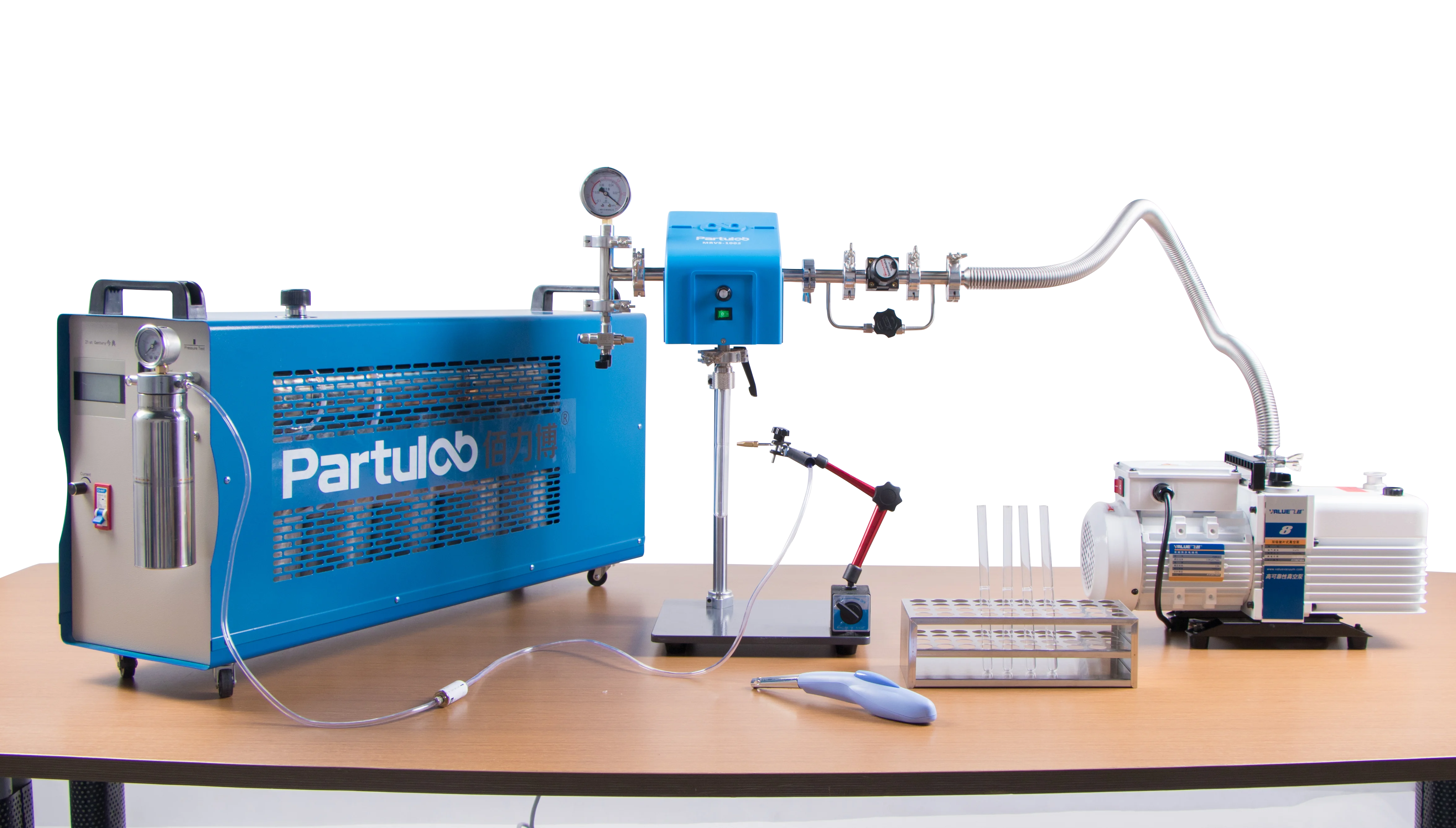
MRVS-1003 Vacuum Rotary Quartz Tube Sealing System
The MatMeas MRVS-1003 is an advanced single-station vacuum sealing machine engineered for the rigorous requirements of high-temperature solid-phase synthesis and oxygen-free/moisture-free sample preservation. Utilizing proprietary magnetic fluid dynamic sealing technology, it allows the quartz tube to rotate automatically at an adjustable speed of 0 to 35 rpm during the vacuuming process. Powered by an eco-friendly water electrolysis system generating a precise 2800℃ hydrogen-oxygen flame (700 L/H), and supporting an ultimate vacuum of up to 10⁻⁵ Pa via German-imported molecular pumps, it ensures perfectly uniform and reliable sealing for thermoelectric materials, 2D materials, and delicate powder samples.
View details →Request High-Precision Testing Solutions
Get expert guidance and customized instruments for your functional materials project.