High-Temperature Resistance Testing: Measurement Challenges and Systems
Technical News
High-temperature electrical resistance and volume resistivity testing serves as an indispensable evaluation methodology across aerospace propulsion, solid-state energy storage, wide-bandgap power electronics, and advanced structural ceramics. As engineering materials are deployed into increasingly severe thermal, mechanical, and electrical environments, mapping the precise relationship between electrical resistance, charge transport, and temperature becomes mandatory, as synthesized in our foundations of high-temperature resistance and resistivity testing. Accurate resistance characterization provides the empirical foundation to identify phase transformations, quantify ionic hopping activation energies, evaluate thermal runaway boundaries, and guarantee dielectric insulation integrity under prolonged thermal stress.
However, conducting electrical measurements at temperatures from 300°C to well above 800°C introduces severe physical measurement challenges. Thermal expansion mismatch, parasitic thermoelectric Seebeck voltages, cable insulation leakage, and atmospheric electrode oxidation corrupt conventional electrical test fixtures. Overcoming these artifacts requires specialized metrological architectures tailored to material geometry, ranging from macroscopic bulk ceramic fixtures to micro-scale vacuum cryogenic probe stations.
Technical Challenges in Extreme-Temperature Electrical Metrology
Executing reproducible electrical measurements at temperatures approaching 800°C to 1000°C requires identifying and mitigating several physical error mechanisms:
- Parasitic Thermoelectric Seebeck Voltages: When measurement leads traverse steep temperature gradients between the hot furnace interior and ambient room temperature, junctions between dissimilar metals generate thermoelectric electromotive forces (
V_Seebeck = S_AB * ΔT). In DC resistance testing, this thermal voltage introduces severe baseline drift, especially when measuring low resistances or micro-currents in conductive media evaluated in high-temperature electrical conductivity testing of metals and alloys. - Cable and Fixture Insulation Resistance Degradation: Alumina lead tubes, quartz glass supports, and mineral-insulated cabling experience exponential decreases in insulation resistance as temperature escalates. If the fixture insulation resistance drops to within two orders of magnitude of the specimen resistance, parallel leakage paths completely corrupt the measured current.
- Electrode Oxidation and Interface Barrier Shifts: Base metals oxidize rapidly at elevated temperatures in air, forming non-conductive oxide scales. This creates high contact resistance and rectifying Schottky barriers that mask the intrinsic resistivity of the material.
- Thermal Expansion Mechanical Clamping Stress: Differential thermal expansion coefficients between ceramic specimens, metallic contact electrodes, and mechanical push-rods can alter contact pressure during heating, potentially crushing brittle specimens or causing intermittent open-circuit contact.
High-Temperature Parasitic Measurement Errors & Engineering Countermeasures
Isolating intrinsic material resistance requires implementing targeted hardware and circuit countermeasures.
| Error Mechanism | Physical Root Cause | Impact on Measured Data | Engineering Mitigation Strategy |
|---|---|---|---|
| Thermoelectric Seebeck EMF | Thermal gradient across dissimilar metal wiring junctions | Adds an offset voltage (0.1 mV to 50 mV) causing false resistance readings | Bipolar delta current reversal technique; symmetric all-platinum wiring inside hot zone |
| Cable Insulation Leakage | Dielectric degradation of high-temperature lead insulation | Creates parallel parasitic conduction paths, artificially lowering measured resistance | Driven-guard triaxial cabling; high-purity single-crystal sapphire insulating standoffs |
| Electrode Oxidation | Atmospheric reaction of base metals above 400°C | Forms resistive oxide scales, inducing erratic Schottky barrier contact | Fired platinum paste or vacuum-sputtered noble metal contacts; inert gas purges |
| Thermal Expansion Mismatch | Differential dimensional expansion of sample and clamping rod | Uncontrolled mechanical contact pressure, sample cracking, or probe lift-off | Spring-loaded force-limiting counter-weights maintaining constant contact pressure (≤ 0.25 N) |
| Triboelectric & Static Charges | Friction from gas flow or mechanical vibration on high-resistance cabling | Induces stray charge spikes in picoampere-level measurement circuits | Braided graphite shielding, rigid low-noise PTFE/triaxial cabling, physical cable anchoring |
Mathematical Principles of Thermoelectric EMF Cancellation and Guarding
To eliminate parasitic thermoelectric Seebeck voltages during DC resistance characterization, modern instrumentation employs the bipolar delta current reversal technique. In this protocol, current is driven sequentially in positive and negative polarities:
Forward polarity cycle:
V_fwd = I * R_specimen + V_Seebeck
Reverse polarity cycle:
V_rev = -I * R_specimen + V_Seebeck
Subtracting the reverse reading from the forward reading cancels the common-mode thermoelectric voltage:
V_delta = V_fwd - V_rev = 2 * I * R_specimen
R_specimen = ( V_fwd - V_rev ) / ( 2 * I )
For ultra-high-resistance insulation testing where currents fall into the picoampere or femtoampere regime, driven-guarding circuits are deployed. An active buffer amplifier drives the intermediate shield of a triaxial cable to the exact same electrical potential as the central high-impedance signal core (V_guard = V_signal). Because the potential difference across the inner dielectric is virtually zero (ΔV = 0), cable leakage current is completely suppressed (I_leak = ΔV / R_insulation = 0), ensuring all current generated by the sample enters the electrometer.
Architectural Matrix: Bulk Furnace Systems vs Micro-Area Probe Stations
Evaluating advanced materials requires matching the test topology to specimen physical morphology, spanning bulk ceramic discs, thick refractories, epitaxial thin films, and microscopic wafer-scale devices, as well as amorphous solid electrolytes examined in our guide to ionic conductivity testing of glass materials.
| Metrological Parameter | Bulk Material Testing Architecture (MatMeas HTS-1000HR) | Micro-Area Probe Station Architecture (MatMeas CPS-7000) |
|---|---|---|
| Primary Specimen Form Factor | Bulk discs, sintered pellets, rectangular plates (Ø 10 to 30 mm, thickness 0.5 to 5.0 mm) | Epitaxial thin films, 2D functional materials, microelectronic wafers (up to 40 mm) |
| Temperature Operating Range | Ambient to 800°C (programmable furnace with PID control) | -160°C to 450°C (Liquid nitrogen cooling combined with resistive hot chuck) |
| Probe Contact Mechanics | Standardized ASTM D257 three-ring guarded platinum electrode fixtures | 4 independent triaxial micromanipulator probe arms (tungsten or beryllium-copper tips) |
| Resistance Dynamic Range | 10^3 Ω to 10^15 Ω (Current sensitivity from 500 fA to 20 mA) | 10^-3 Ω to 10^12 Ω (Van der Pauw four-point probe, Hall effect, transistor gating) |
| Atmospheric Control | Ambient air, flowing inert/reducing gas purge, rough vacuum | Sealed high-vacuum chamber (10^-3 Pa to 10^-5 Pa) suppressing condensation and oxidation |
| Target Material Classes | High-voltage insulating ceramics, solid battery electrolytes, refractory bricks | Semiconductor thin films, 2D transition metal dichalcogenides, MEMS sensors |
While bulk furnace systems excel at characterizing high-resistance volume insulation conforming to ASTM D257, cryogenic vacuum probe stations provide microscopic precision for thin-film transport, Hall effect mobility, and device-level micro-probing.
Bulk Material Metrology via the MatMeas HTS-1000HR System
For bulk ceramics, solid electrolytes, and high-temperature insulating plates, dedicated furnace metrology systems provide stable, repeatable testing environments.
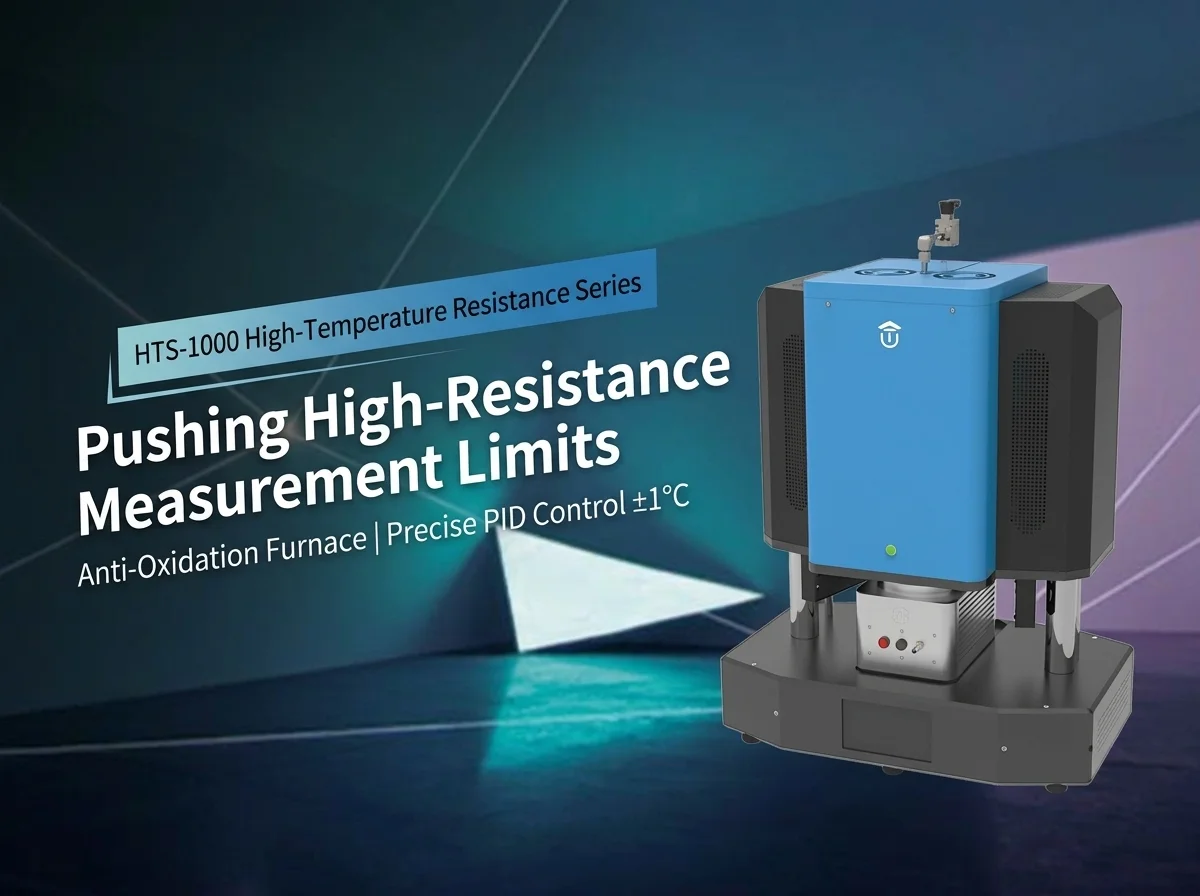
The MatMeas HTS-1000HR high-temperature resistivity measurement system provides integrated, ultra-wide range resistance and volume resistivity evaluation up to extreme temperatures.
Key technical capabilities of the HTS-1000HR include:
- Thermal Stability up to 800°C: Features an oxidation-resistant tube furnace with precision PID control achieving ±1°C stability across extended thermal soaks.
- Wide Resistance Dynamic Range (10^3 Ω to 10^15 Ω): Capable of resolving ultra-low currents from 500 fA to 20 mA, evaluating high-resistance insulating thresholds without range-switching discontinuities.
- ASTM D257 Guarded Platinum Fixtures: Equipped with high-purity platinum electrodes implementing the guarded three-ring method to isolate bulk volume resistivity.
- Calibrated Non-Destructive Clamping: Automated sample loading guarantees a calibrated maximum contact pressure of 0.25 N, safeguarding fragile ceramic discs against mechanical microcracking.
- Multi-Atmosphere Capability: Supports testing in ambient air, flowing gas atmospheres, and vacuum environments to prevent electrode oxidation during thermal cycles.
Thin-Film Micro-Probing with the MatMeas CPS-7000 Probe Station
Evaluating wafer-scale semiconductors, two-dimensional functional materials, and electronic thin films requires localized micro-probing under controlled thermal and vacuum conditions.
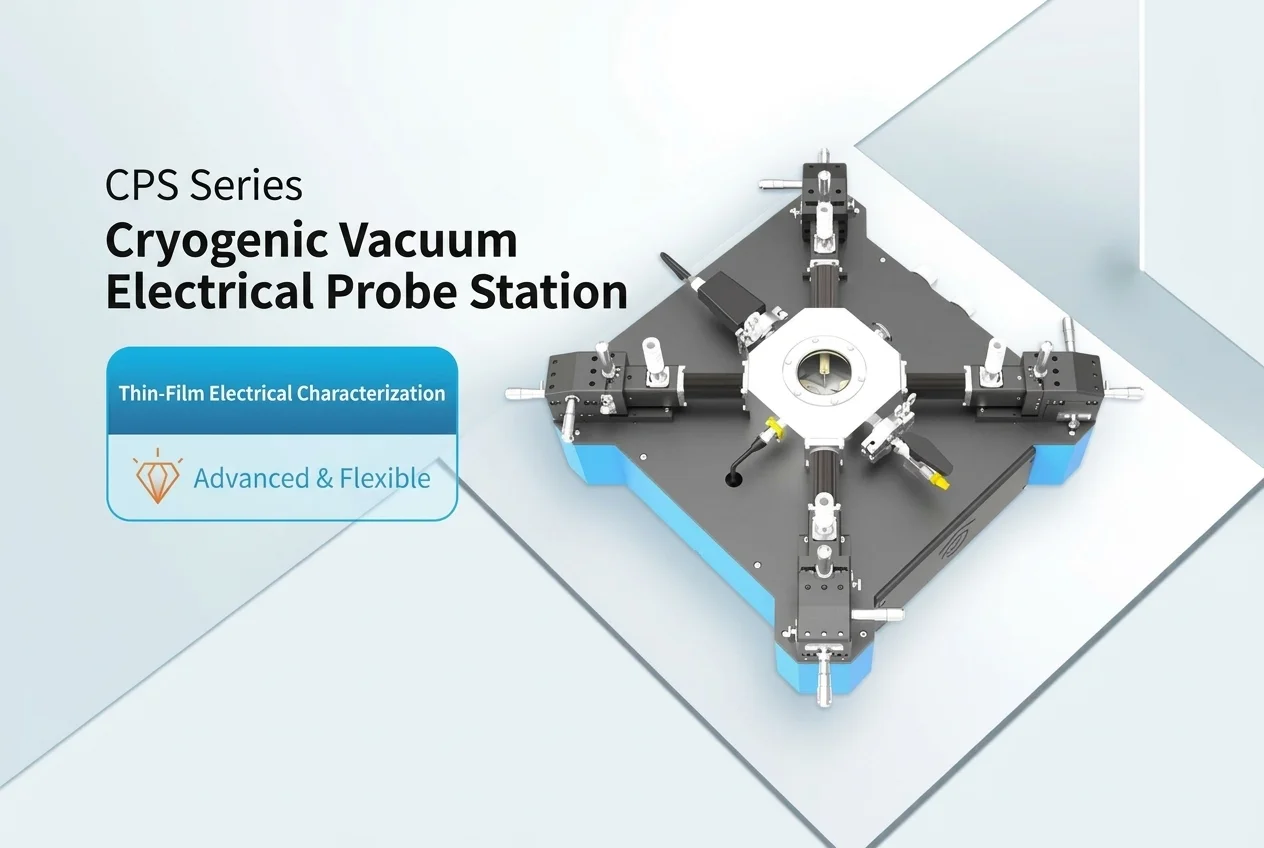
The MatMeas CPS-7000 cryogenic vacuum electrical probe station delivers advanced multi-terminal characterization for microscopic specimens.
Key technical specifications of the CPS-7000 include:
- Broad Thermal Span (-160°C to 450°C): Employs continuous-flow liquid nitrogen cooling combined with precision resistive heating to map electrical transitions across cryogenic and elevated temperatures.
- High-Vacuum Operating Envelope: Protects air-sensitive thin-film structures and prevents atmospheric moisture condensation during sub-zero temperature sweeps.
- Four-Arm Precision Micromanipulation: Equipped with 4 independent probe arms featuring sub-micron triaxial micro-positioners for four-terminal Van der Pauw sheet resistance and transistor device testing.
- Versatile Specimen Accommodation: Accommodates functional thin films, diced dies, and wafers up to 40 mm in diameter and 5 mm thickness.
Frequently Asked Questions
Why do standard resistance fixtures fail at temperatures above 500°C?
At extreme temperatures, conventional ceramic insulation (such as lower-grade mullite or impure alumina) experiences steep resistivity drops, creating massive parasitic leakage currents that bypass the sample and overwhelm the electrometer. Furthermore, base-metal contact pins oxidize rapidly in air, introducing erratic interface contact resistance. Specialized systems like the HTS-1000HR overcome this by utilizing high-purity recrystallized ceramic standoffs and noble platinum three-ring electrodes.
How does the bipolar delta technique eliminate Seebeck thermoelectric errors?
When electrical leads pass through thermal gradients, junctions of dissimilar metals act as thermocouples, generating a parasitic DC voltage offset. The bipolar delta technique drives alternating forward and reverse current pulses through the sample. Subtracting the reverse voltage from the forward voltage cancels the common-mode thermoelectric offset, isolating the true ohmic voltage drop across the specimen.
When should a researcher select a cryogenic vacuum probe station over a bulk furnace system?
A cryogenic vacuum probe station like the CPS-7000 is required when testing microscopic samples (such as thin films, lithographed micro-devices, or 2D flakes) that cannot accept macroscopic three-ring electrodes. It provides sub-micron micromanipulator probing, four-terminal Van der Pauw measurements, a sealed high-vacuum chamber to prevent surface oxidation, and an extended thermal envelope spanning from -160°C to 450°C.
Related Instruments & Equipment
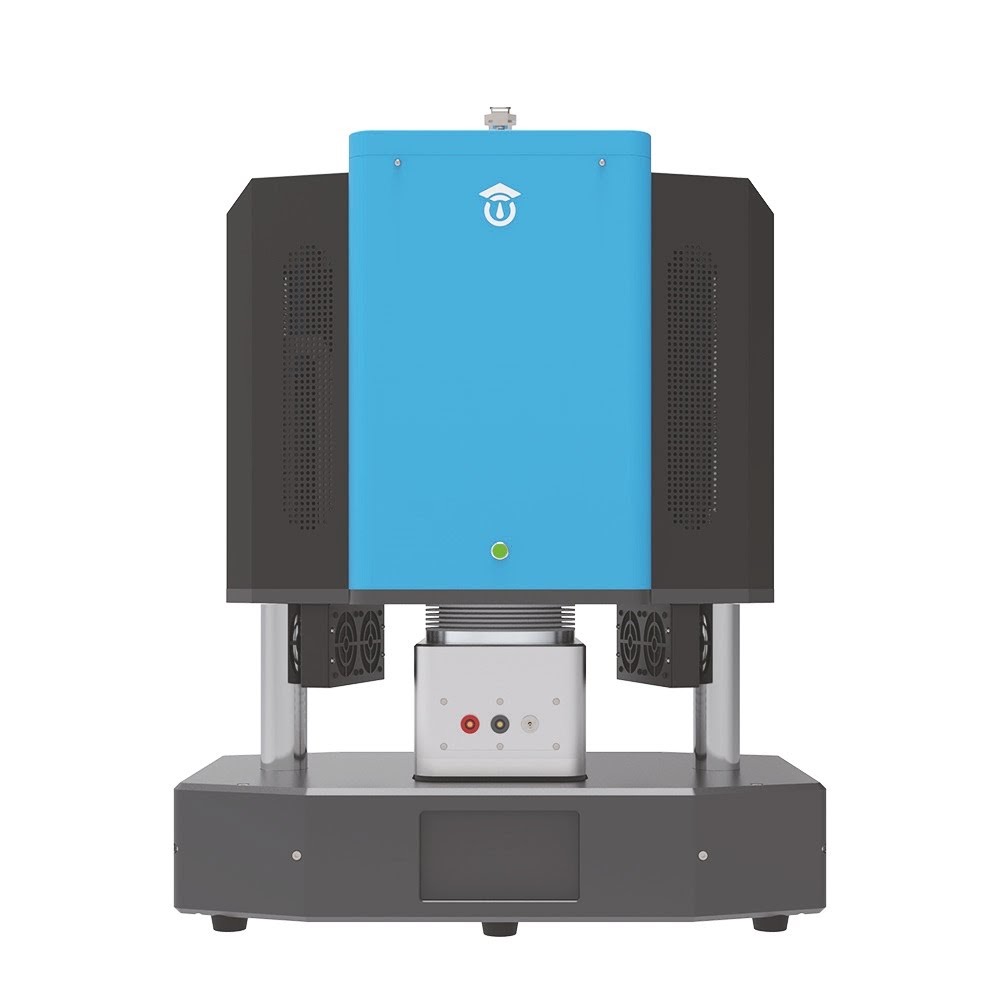
HTS1000HR High Temperature Resistivity Measurement System
The HTS1000HR is an advanced, integrated testing platform specifically engineered to precisely evaluate the electrical conductivity and insulation properties of advanced materials at extreme temperatures up to 800℃. By supporting various atmospheric conditions and offering an ultra-wide resistance measurement range, it serves as an indispensable characterization tool for material research and industrial quality control.
View details →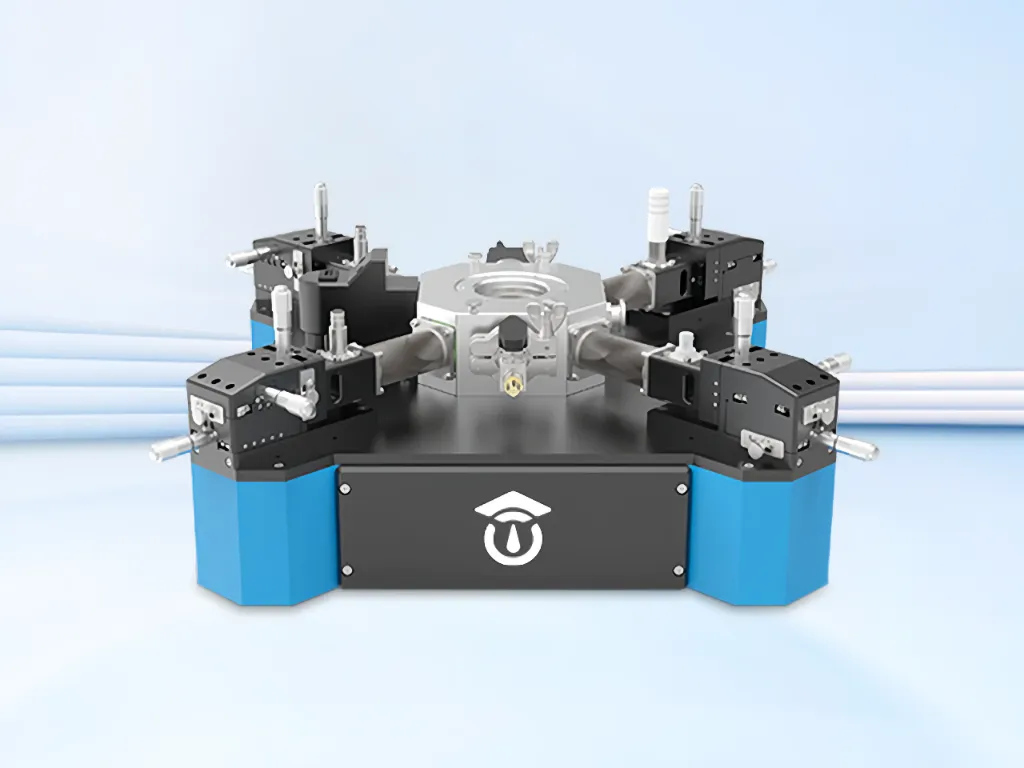
CPS7000 High-Low Temperature Dielectric Vacuum Probe Station (Cryogenic to 1650°C, 10µHz–20MHz Impedance Spectroscopy)
The MatMeas CPS7000 is an advanced, highly integrated desktop High-Low Temperature Dielectric Vacuum Probe Station engineered for the rigorous electrical characterization of thin films, bulk materials, and semiconductor wafers, featuring unmatched capabilities from Cryogenic to 1650°C alongside 10µHz–20MHz Impedance Spectroscopy. Delivering performance directly comparable to industry-leading American brands like Lake Shore and Janis, this compact platform offers an ultra-wide temperature range via specialized thermal stages. Uniquely equipped with a proprietary built-in air shock anti-vibration system, the CPS7000 eliminates data jumping points during continuous temperature variations. Supporting complex high-voltage and low-current testing environments, it is the ultimate infrastructure for evaluating dielectric, piezoelectric, ferroelectric, and TSDC properties in high-vacuum conditions.
View details →Request High-Precision Testing Solutions
Get expert guidance and customized instruments for your functional materials project.