Temperature-Dependent d33 Measurement of Piezoelectric Materials
Technical News

Piezoelectric ceramics—ranging from legacy lead zirconate titanate (PZT) formulations to bismuth-layer structured ferroelectrics (Aurivillius phases), lithium niobate single crystals, and lead-free alkali niobate solid solutions—serve as the foundational electromechanical elements in aerospace vibration monitors, downhole geothermal drilling sensors, high-temperature non-destructive testing (NDT) transducers, and automotive combustion knock sensors. The longitudinal piezoelectric charge coefficient d33 quantifies the charge density generated per unit of applied axial mechanical stress. In mission-critical environments, transducers encounter sustained thermal gradients and operating temperatures approaching several hundred degrees Celsius.
A recurring failure mode in piezoelectric device engineering is confusing the intrinsic Curie temperature (T_c)—the crystallographic point where the non-centrosymmetric ferroelectric lattice undergoes a phase transition into a centrosymmetric, non-piezoelectric paraelectric phase—with the operational depolarization temperature (T_d). Thermal energy accelerates domain randomization, releases trapped space charges, and lowers coercive field barriers, frequently causing irreversible loss of net remanent polarization (P_r) at temperatures well below T_c.
Rigorous metrological characterization requires distinguishing between in-situ dynamic measurements, ex-situ thermal-exposure recovery tests, dielectric permittivity anomalies, and electromechanical resonance spectrum shifts according to IEEE Std 176 and IEC 60483.
Phenomenological Theory: Phase Transitions and Thermal Depoling Kinetics
In ferroelectric ceramics, piezoelectricity is not an intrinsic ground-state property of an unpoled crystallite; it is an induced macroscopic anisotropy established by aligning spontaneous polarization vectors within ferroelectric domains under an intense DC electric field.
Under the Landau-Ginzburg-Devonshire (LGD) phenomenological framework, the stress-free elastic Gibbs free energy (G) of a uniaxial ferroelectric system is expanded as a power series in polarization (P) around the phase transition:
G = G_0 + (1 / 2) * alpha_0 * (T - T_0) * P^2 + (1 / 4) * beta * P^4 + (1 / 6) * gamma * P^6
Where alpha_0, beta, and gamma are phenomenological coefficients, and T_0 is the Curie-Weiss temperature. For a second-order phase transition (beta > 0), the spontaneous polarization decreases continuously to zero as the temperature approaches T_c = T_0:
P_s(T) = sqrt((alpha_0 / beta) * (T_c - T)) for T < T_c
For temperatures exceeding the transition point (T > T_c), the material enters the paraelectric state, and the relative dielectric permittivity obeys the classic Curie-Weiss law:
epsilon_r = C / (T - T_0)
Where C is the Curie constant (typically 1e5 K for perovskite oxides).
Spontaneous Polarization and Permittivity Behavior Across Curie Point:

Polarization P_s                     Permittivity epsilon_r
    ^                                     ^
P_0 |***                                  |        * Peak at T_c
    |   *****                             |       ***
    |        ***                          |      *   *
    |           **                        |     *     * Curie-Weiss Decay
    |             *                       |    *       *
  0 +--------------*---------> T        0 +---*---------*---------> T
                   T_c                                 T_c
         (Ferro)  |  (Para)                         (Ferro) | (Para)
The Microscopic Origin of the Piezoelectric Coefficient
Macroscopic piezoelectricity in poled polycrystalline ceramics is formally expressed as electrostriction linearized by spontaneous remanent polarization (P_r):
d33(T) = 2 * epsilon_0 * epsilon33_T(T) * Q11 * P_r(T)
Where:
- epsilon_0: Vacuum permittivity (8.854e-12 F/m).
- epsilon33_T(T): Stress-free relative dielectric permittivity along the polar axis, which climbs dramatically as temperature approaches T_c due to softening of the transverse optical phonon lattice mode.
- Q11: Longitudinal electrostrictive coefficient, which remains relatively temperature-independent.
- P_r(T): Macroscopic remanent polarization, which degrades monotonically due to thermal domain reorientation and internal defect screening.
Because d33(T) is the product of a divergent permittivity (epsilon33_T -> infinity at T_c) and an extinguishing remanent polarization (P_r -> 0 at T_c), the in-situ piezoelectric coefficient often exhibits an anomalous peak immediately prior to catastrophic depoling. Operating a transducer near this peak introduces non-linearities and the risk of complete thermal failure upon cooling.
Metrological Paradigms: In-Situ Testing versus Thermal Recovery
Characterizing high-temperature piezoelectric response requires decoupling instantaneous temperature effects from permanent thermal degradation. Three primary metrological protocols are practiced:
+---------------------------------------------------------------------------------------------------+
|                        Piezoelectric Thermal Metrology Comparison                                 |
+---------------------------------------------------------------------------------------------------+
|  [1. In-Situ Dynamic d33-T Testing]                                                               |
|  Sample under active heating; AC force F(t) applied inside furnace; lock-in charge extraction.    |
|  Measures: Real-time electromechanical coupling at operational temperature.                       |
|                                                                                                   |
|  [2. Ex-Situ Thermal Annealing Recovery Testing]                                                  |
|  Heat to T_soak -> dwell 60 min -> cool to 25 C -> measure room-temperature d33 on benchtop.      |
|  Measures: Irreversible depoling threshold (T_d) and permanent property retention.                |
|                                                                                                   |
|  [3. IEEE 176 Dynamic Resonance / Anti-Resonance Spectroscopy]                                    |
|  RF impedance analyzer sweeps f_r and f_a across temperature; extracts k33, kt, and elastic s_ij. |
|  Measures: Small-signal electromechanical coupling tensor and acoustic damping factor (Q_m).      |
+---------------------------------------------------------------------------------------------------+
In-Situ Dynamic Force Testing and Pyroelectric Decoupling
In an in-situ dynamic test, the ceramic disc is mounted between heat-resistant alumina push-rods within an integrated tube furnace. A dynamic mechanical force F(t) = F_0 * sin(omega * t) is applied while the specimen temperature ramps. The total current collected across the electrodes is a superposition of piezoelectric, pyroelectric, and ohmic conduction currents:
I_total(t) = d33(T) * (dF / dt) + p(T) * A * (dT / dt) + V_bias / R_sample(T)
Where:
- d33(T) * (dF/dt): Desired dynamic piezoelectric displacement current, oscillating at frequency omega.
- p(T) * A * (dT/dt): Pyroelectric current generated by the temperature ramp rate (dT/dt), where p(T) is the pyroelectric coefficient.
- V_bias / R_sample(T): High-temperature leakage current stemming from thermally activated oxygen vacancy migration.
Standard Berlincourt-style quasi-static meters fail completely in high-temperature in-situ testing because DC pyroelectric currents saturate their input charge amplifiers. To overcome this, phase-sensitive lock-in detection referenced to the mechanical exciter drive frequency (omega) must be implemented. Orthogonal lock-in demodulation isolates the true piezoelectric charge from the slowly drifting pyroelectric background.
The dedicated MatMeas PMS-1000 Piezoelectric Temperature Spectrum Measurement System resolves this challenge. It integrates an automated low-noise tube furnace with phase-locked dynamic force excitation up to 800 C, utilizing motorized self-adjusting mechanical preloads to prevent sample crushing or contact loss during thermal expansion.
Longitudinal Extensional Resonance Spectroscopy (IEEE Std 176)
In addition to direct force methods, the electromechanical resonance method defined by IEEE Std 176 provides a rigorous small-signal assessment of piezoelectric coupling across temperature. For a slender rod poled along its length (length l >> lateral dimensions width w and thickness t), sweeping the electrical impedance across frequency reveals the longitudinal extensional fundamental resonance (f_r, minimum impedance) and anti-resonance (f_a, maximum impedance).
The longitudinal electromechanical coupling factor (k33) is extracted from the transcendental resonance relation:
k33^2 / (1 - k33^2) = (pi / 2) * (f_a / f_r) * tan((pi / 2) * (f_a - f_r) / f_a)
Using the extracted coupling factor k33, the elastic compliance at constant electric field (s33_E) and the piezoelectric strain constant (d33) are determined simultaneously:
s33_E = 1 / (4 * rho * l^2 * f_r^2)
d33 = k33 * sqrt(epsilon_0 * epsilon33_T * s33_E)
Where rho is the material mass density. Tracking f_r and f_a as a function of temperature reveals not only the loss of piezoelectric activity when f_a collapses onto f_r (indicating k33 -> 0 at T_d), but also detects elastic softening and internal friction (1 / Q_m) anomalies associated with ferroelastic domain wall freezing.
Metrological Method Comparison Matrix
The table below contrasts the three primary experimental techniques used to characterize piezoelectric thermal stability and phase transition boundaries.
| Metrological Parameter | In-Situ Dynamic d33(T) Testing | Ex-Situ Thermal Annealing & Recovery | IEEE 176 Resonance / Anti-Resonance |
|---|---|---|---|
| Physical Measurement State | Real-time at elevated temperature | Post-cooling room-temperature recovery | Real-time small-signal RF impedance sweep |
| Primary Output Metrics | In-situ d33*(T), phase lag loss angle tan(theta) | Retained d33(25 C), percentage depoling | k33, kp, kt, elastic compliance s_ij^E, Q_m |
| Excitation Signal | Cyclic mechanical force (0.1 N to 5 N, 30–300 Hz) | Ambient quasi-static force (~0.25 N at 110 Hz) | High-frequency AC voltage (0.1 V to 1.0 V RMS) |
| Primary Fixture Challenge | Differential thermal expansion, push-rod compliance | None (measured in standard ambient fixture) | High-temperature lead inductance, fixture parasitics |
| Thermal Lag Susceptibility | High; requires coplanar sample thermocouple | Low; sample fully cooled before measurement | Moderate; swept at discrete isothermal steps |
| Depolarization Determination | Direct observation of d33 -> 0 cutoff | Identifies permanent depoling onset (T_d) | Identifies coupling disappearance (f_a -> f_r) |
| Applicable Standards | IEEE Std 176, IEC 60483 | MIL-STD-1376, DIN EN 50324-2 | IEEE Std 176, IEC 60483, JIS C2141 |
High-Temperature Piezoelectric Families and Depolarization Thresholds
The table below compiles benchmark data for major commercial and experimental piezoelectric materials, highlighting the divergence between operational depolarization thresholds (T_d) and crystallographic Curie points (T_c).
| Piezoelectric Material Classification | Chemical Composition / Crystal System | Nominal Room-Temp d33 (pC/N) | Operational Depolarization Temp T_d (C) | Crystallographic Curie Point T_c (C) | Primary High-Temperature Degradation Mechanism |
|---|---|---|---|---|---|
| Soft PZT (PZT-5A / PZT-5H) | Pb(Zr_x Ti_1-x)O3 + Nb/La donor dopants | 400 to 650 | 180 to 220 | 350 to 365 | Rapid domain de-aging, high dielectric loss, early depoling |
| Hard PZT (PZT-4 / PZT-8) | Pb(Zr_x Ti_1-x)O3 + Fe/Mn acceptor dopants | 220 to 320 | 260 to 300 | 320 to 340 | Acceptor-defect dipole pinning stabilizes domains up to 280 C |
| Modified Bismuth Titanate | Bi4Ti3O12 (BIT) Aurivillius layer phase | 18 to 25 | 600 to 640 | 675 | High resistivity along layer planes; low coupling but high stability |
| Lithium Niobate (LiNbO3) | LiNbO3 (36-deg / 41-deg Y-cut single crystal) | 25 to 40 | 1100 to 1150 | 1142 to 1210 | High-temperature oxygen loss and thermal twinning; excellent T_c |
| Lead-Free KNN Solid Solution | (K_0.5 Na_0.5)NbO3 - Li/Ta/Sb modified | 200 to 400 | 120 to 160 | 300 to 420 | Polymorphic phase transition (PPT, orthorhombic-tetragonal) |
| Bismuth Ferrite-Lead Titanate | BiFeO3 - PbTiO3 (BF-PT) solid solution | 150 to 280 | 550 to 600 | 630 to 680 | High leakage conductivity at elevated temperature limits poling |
Corroborating Phase Transitions with Broadband Dielectric Spectroscopy
While in-situ d33 testing reveals the functional mechanical boundary, assigning true crystallographic Curie points requires corroborating dielectric permittivity anomalies. Near T_c, the dielectric permittivity exhibits a pronounced peak that satisfies the Curie-Weiss relation.
When testing lossy materials at elevated temperatures, electrical conduction (sigma_dc) contributes an apparent dielectric loss that obscures the true phase transition peak:
epsilon_total'' = epsilon_dipole'' + sigma_dc / (epsilon_0 * omega)
To resolve intrinsic phase transitions without conductive distortion, broadband dielectric spectroscopy must be conducted across multiple frequencies (100 Hz to 10 MHz). The MatMeas DMS-1000 High-Temperature Dielectric Spectrometer provides coplanar thermocouple monitoring and multi-sample scanning up to 1000 C, enabling simultaneous permittivity peak deconvolution and Curie-Weiss fitting.
For emerging quantum relaxors, cryogenic ferroelectrics (e.g., SrTiO3, KTaO3), or fluoropolymer transducers operating down to liquid nitrogen temperatures, the MatMeas DMS-2000 High-Low Temperature Dielectric Spectrometer provides continuous thermal sweeps from -160 C to 450 C under high vacuum, preventing atmospheric frost condensation from corrupting low-temperature phase boundary measurements.
Best-Practice Laboratory SOP for Curie Temperature and Thermal Stability
To obtain audit-compliant thermal stability curves, execute the following standardized procedure:
- Specimen Sizing and Electroding: Prepare ceramic discs (diameter 10 mm to 15 mm, thickness 0.5 mm to 1.0 mm) with parallel polished faces (taper < 5 um). Sputter high-temperature platinum or gold electrodes (thickness > 200 nm), or fire platinum paste at 850 C. Do not use low-temperature silver paste, which oxidizes and migrates above 300 C.
- Post-Poling Thermal Aging: Before thermal testing, age poled specimens at 25 C for at least 48 hours to allow reversible domain back-switching to stabilize (nominal aging rate < 1% per decade).
- Mounting in In-Situ Fixture:
- Align the ceramic disc coaxially between the alumina push-rods.
- Set a static mechanical preload (typically 1.0 N to 2.0 N) to maintain contact while avoiding ferroelastic depoling stress (ensure preload stress sigma_preload < 2 MPa).
- Place a calibrated Type-S or Type-K thermocouple within 1.5 mm of the specimen circumference.
- Thermal Ramp Execution:
- Maintain a controlled heating ramp of 2 C/min to 3 C/min to avoid thermal shock cracking and minimize internal thermal gradients.
- Apply a dynamic sinusoidal force delta_F = 0.25 N at 110 Hz.
- Record in-situ d33, phase angle theta, and real-time specimen temperature continuously.
- Thermal Annealing Cycle (Ex-Situ):
- To establish the irreversible depolarization temperature T_d, heat identical specimens to target soak temperatures (e.g., 100 C, 150 C, 200 C, 250 C) at 3 C/min.
- Hold at the soak temperature for 60 minutes.
- Cool slowly (<= 2 C/min) to 25 C.
Defect Dipole Dynamics and Acceptor Pinning at Elevated Temperatures
In acceptor-doped "hard" ferroelectrics (such as Fe3+ or Mn2+ substituted onto the Ti4+ B-site of PZT), the high-temperature stability of remanent polarization is strongly governed by defect dipole kinetics. Because trivalent acceptors carry an effective negative charge in the perovskite lattice, they electrostatically bind to positively charged oxygen vacancies (V_O_ddot), forming aligned defect dipole complexes:
Fe_Ti_prime + V_O_ddot <-> (Fe_Ti_prime - V_O_ddot)_dot
During the original high-temperature poling treatment, mobile oxygen vacancies reorient to align the defect dipole moment (P_D) parallel to the spontaneous polarization vector (P_s) within each domain. Upon cooling, these aligned defect dipoles freeze into the crystal lattice, establishing a macroscopic internal bias field (E_int):
E_int = (N_d * P_D) / (epsilon_0 * epsilon_r)
Where N_d is the volume concentration of defect dipoles. This internal bias field exerts a continuous electrostatic restoring force that pins 90-degree and 180-degree domain walls, preventing thermal agitation from randomizing the domain orientation. Consequently, acceptor-doped hard ceramics exhibit depolarization temperatures (T_d) that approach within 30 C of their Curie point (T_c).
However, when operational temperatures exceed 250 C to 300 C, thermal activation energy exceeds the binding energy of the defect complex (typically 0.8 eV to 1.1 eV for oxygen vacancy hopping). Oxygen vacancies become mobile and dissociate from their acceptor pinning sites. As the internal bias field dissipates, domain walls unlock, causing sudden domain reorientation and rapid loss of piezoelectric charge sensitivity. Measuring the temperature dependence of the internal bias field through asymmetric P-E hysteresis loops provides a direct method to verify the thermal endurance of acceptor-pinned transducers.
Frequently Asked Questions (FAQ)
What is the fundamental difference between Curie temperature (T_c) and depolarization temperature (T_d)?
Curie temperature (T_c) is a thermodynamic state variable denoting the crystallographic phase transition from the non-centrosymmetric ferroelectric phase to the centrosymmetric paraelectric phase. In contrast, depolarization temperature (T_d) is a kinetic operational threshold where thermal energy overcomes the internal coercive field and domain pinning energies, causing spontaneous ferroelectric domains to randomize and annihilate macroscopic net remanent polarization (P_r). For hard PZT, T_d is typically 40 C to 60 C lower than T_c. For soft PZT, T_d can be 100 C to 150 C below T_c. In lead-free materials like KNN, T_d is defined by polymorphic phase transitions (PPT) occurring far below the Curie point.
Why does the in-situ measured d33 often increase before abruptly dropping to zero?
The longitudinal piezoelectric coefficient is governed by d33 = 2 * epsilon_0 * epsilon33_T * Q11 * P_r. As temperature approaches the phase transition, the crystal lattice softens, causing dielectric permittivity (epsilon33_T) to diverge toward an enormous Curie-Weiss peak. Over a moderate temperature window, the exponential climb in dielectric permittivity outpaces the gradual reduction in remanent polarization (P_r), producing a characteristic "overshoot" peak in in-situ d33. Beyond T_d, severe domain randomization accelerates, P_r collapses to zero, and d33 drops precipitously.
How does mechanical clamping preload affect high-temperature d33 testing?
An excessive static mechanical preload generates uniaxial compressive stress that drives 90-degree ferroelastic domain switching. In perovskite ceramics, compressive stress colinear with the poling axis forces polar vectors into the orthogonal plane, mechanically depoling the material. At elevated temperatures, the mechanical coercive stress drops dramatically. If the test fixture exerts an uncalibrated preload (>5 to 10 MPa), premature mechanical depoling occurs, causing an apparent underestimation of T_d. Automated fixtures with dynamic load cell feedback are necessary to maintain a constant, minimal contact force across thermal expansion cycles.
Related Instruments & Equipment
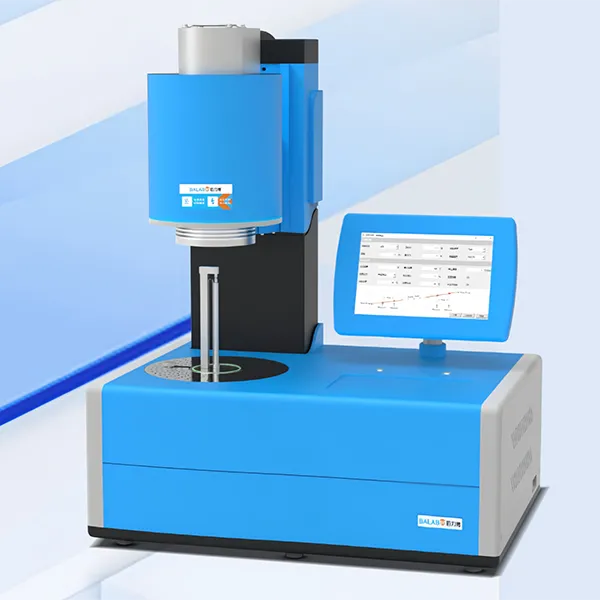
MatMeas PMS-1000 Piezoelectric Temperature Spectrum Measurement System
High-precision piezoelectric temperature spectrum measurement system for analyzing piezoelectric properties under varying temperatures.
View details →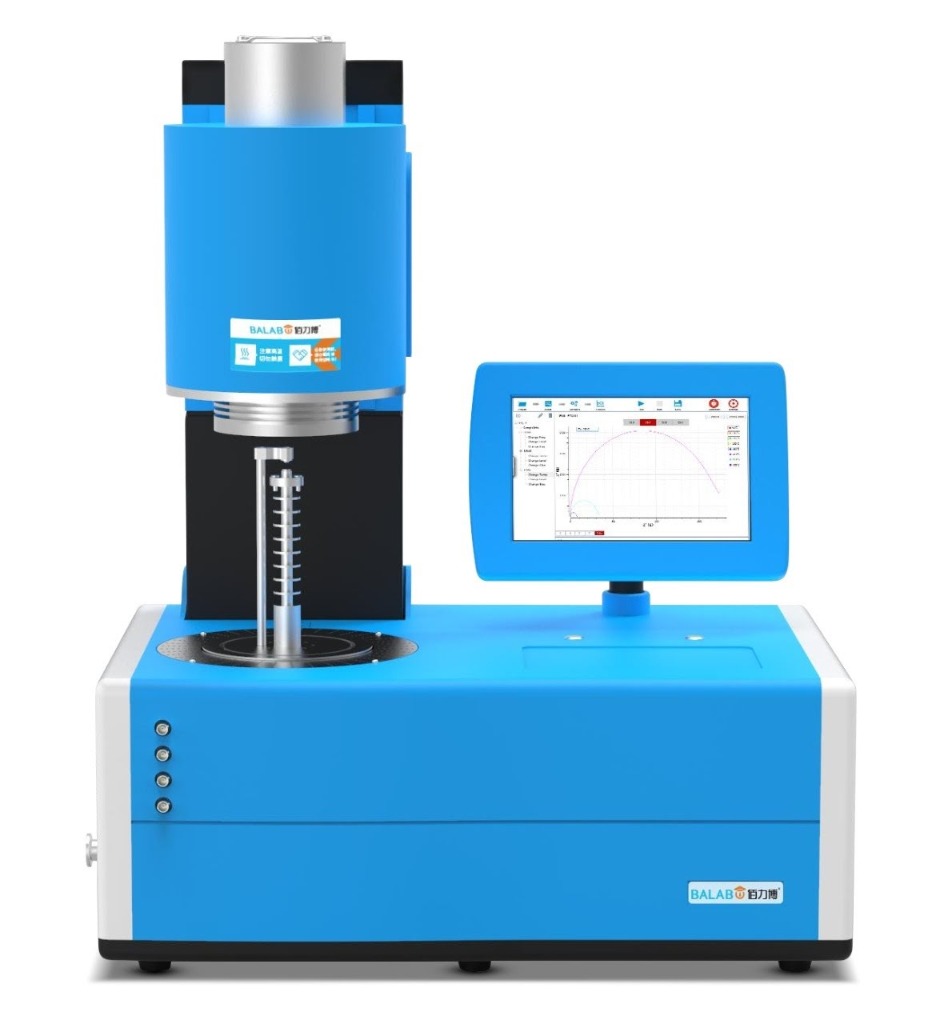
MatMeas DMS1000 High-Temperature Dielectric Spectrometer
The MatMeas DMS1000 is an advanced High-Temperature Dielectric Impedance Temperature Spectrometer engineered for the ultimate electrical characterization of bulk materials. Delivering an exceptional measurement accuracy of 0.05%, it operates efficiently from Room Temperature (RT) to 1000°C. Its upgraded platform supports both single-sample and four-sample simultaneous measurements. Integrated with a sealable metal shielding system and high-purity platinum electrodes, the DMS1000 enables highly reliable testing across inert, oxidizing, reducing, and vacuum atmospheres, making it an indispensable infrastructure for precision materials science.
View details →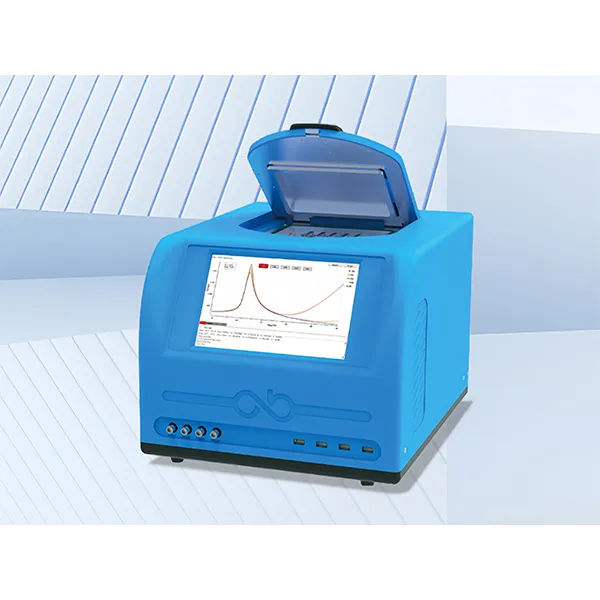
MatMeas DMS2000 High-Low Temperature Dielectric Spectrometer
The MatMeas DMS2000 is an advanced High and Low Temperature Dielectric Impedance Spectrometer engineered for evaluating the dielectric properties of materials under extreme thermal conditions. Compliant with the ASTM D150 standard, it integrates a proprietary LNP-95 liquid nitrogen injection system to achieve seamless continuous temperature variation from -160°C to 450°C. Uniquely featuring a vacuum-enabled sample chamber to completely prevent thermal frosting and eliminate false water peaks near 0°C, along with versatile options for single-sample or five-sample simultaneous testing, the DMS2000 ensures unparalleled data fidelity and high throughput for advanced scientific research.
View details →Request High-Precision Testing Solutions
Get expert guidance and customized instruments for your functional materials project.