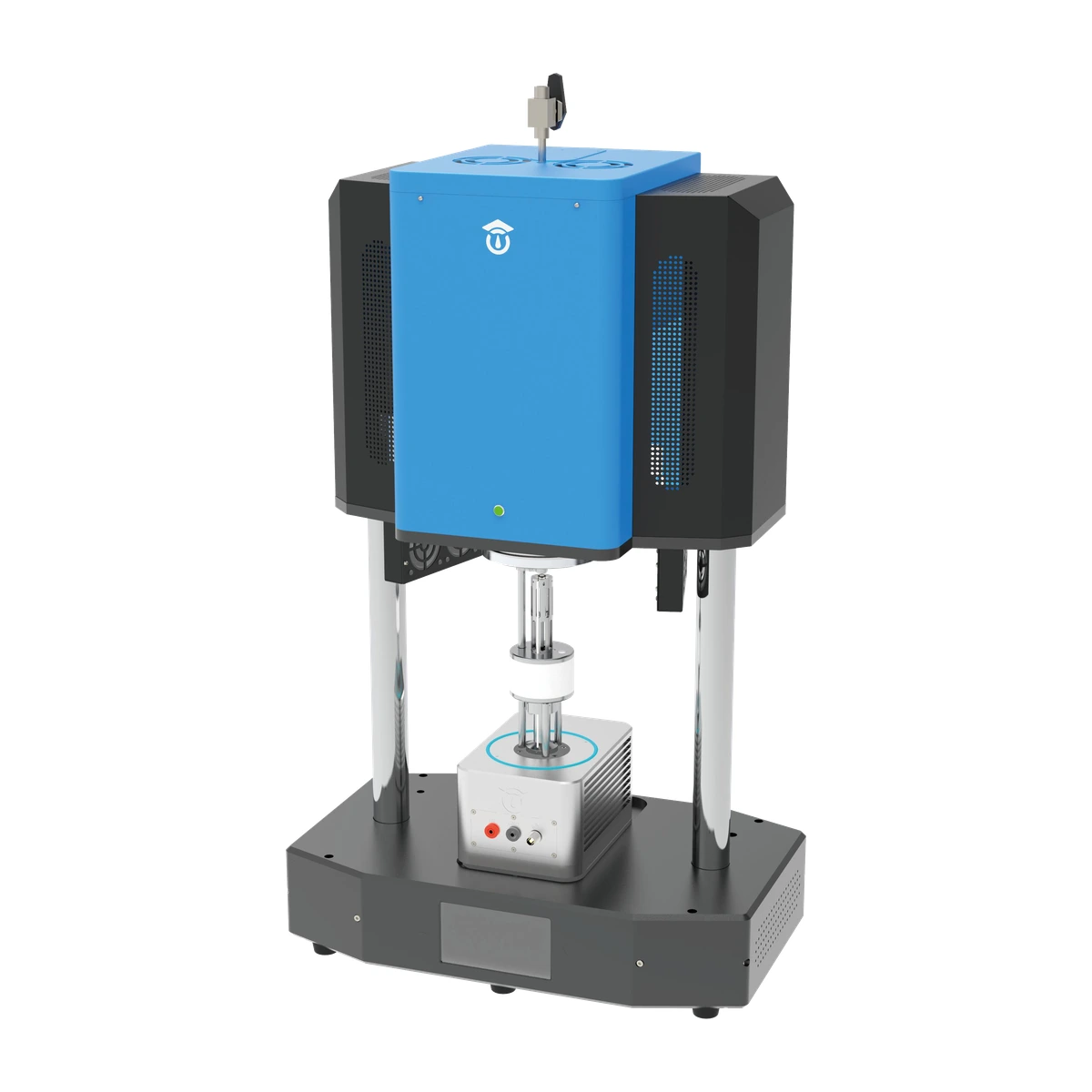
Overview
📢 Official Platform Generation Upgrade Notice:
The RTS-1000C represents the official next-generation flagship evolution of the widely deployed RMS-1000C platform (originally Partulab / BaLab RMS-1000C in earlier literature citations). Built upon customer feedback from leading research institutes, the RTS-1000C introduces a newly engineered vertical motorized test stand, dense 99% Zirconia (ZrO₂) thermal isolation, upgraded dual-material platinum/tungsten-carbide probes, and guaranteed dynamic measurement from 10 nΩ to 100 MΩ.
The RTS-1000C High-Temperature Conductive Material Resistivity Test System is designed for the rigorous evaluation and electrical transport characterization of functional conductive materials across elevated temperature profiles. Built upon the four-wire (Kelvin) resistance measurement principle, the system measures resistance and volume resistivity curves as a function of temperature and time under vacuum or controlled atmosphere conditions.
Specifically engineered to overcome low-resistance measurement bottlenecks without data dropouts or post-hoc corrections, the RTS-1000C accommodates circular disc samples (Φ15–25 mm diameter), squares, and rectangular strip specimens (including specialized dimensional positioning fixtures for delicate 5×5×10 mm to 5×5×20 mm monoliths). It is extensively utilized in university laboratories and industrial R&D for carbon-based conductors (synthetic graphite, graphene, carbon black), metal alloys, conductive metal oxides, structural conductive polymers, superconducting materials, and advanced composites.
Specifications
| Parameter | Specification |
| Measurement Method | Four-Wire Resistance Method (Kelvin Configuration) |
| Main Measurement | Resistance & volume resistivity vs. temperature and time |
| Temperature Range | RT–600°C (Standard; optional high-temperature package up to 1000°C under controlled N₂/Ar) |
| Temperature Control Accuracy | ±1°C |
| Temperature Control Method | PID precise temperature control |
| Heating Slope | 0–10°C/min (Typical: 3°C/min) |
| Resistance Measurement Range | 10 nΩ – 100 MΩ |
| Resistivity Measurement Range | 10 nΩ·cm – 100 MΩ·cm |
| Sample Geometries & Sizes | Discs (Φ15–25 mm diameter), square blocks, rectangular strips (including customized dimensional positioning fixtures for 5×5×10 mm to 5×5×20 mm bars) |
| Electrode Configuration | Left/right current electrodes: High-purity Platinum; Center voltage probe: High-temperature Tungsten Carbide (optional low-contact-pressure elastic fixture with cold-zone spring mechanism for fragile porous specimens) |
| Insulation & Support Components | 99 Zirconia (ZrO₂), high-temperature and oxidation resistant with minimal contact resistance |
| Measurement Environment | High temperature under vacuum or controlled/inert atmosphere |
| System Architecture | Integrated desktop vertical test stand with motorized lifting mechanism |
| Communication & Networking | Built-in Wi-Fi & USB data acquisition |
| Software Functions | Real-time temperature and resistance curve monitoring, automated fault diagnosis & localization |
| Standard Configuration | Main unit, measurement fixture, measurement software, standard sample toolbox, factory inspection report, power cord, user manual |
| Dimensions (L×W×H) | 630 × 640 × 450 mm |
| Power Supply | 220V ±10%, 50Hz |
| Warranty | 1 Year Factory Warranty |
Applications
- The RTS-1000C is purpose-built for resistivity characterization of carbon-based conductive materials (synthetic graphite, flexible graphite, graphene, carbon black), metal-based conductors and high-temperature alloys (copper, aluminum, nickel, refractory metals), conductive metal oxides, structural conductive polymers, and advanced composite conductors. Indispensable for battery electrode characterization, electromagnetic shielding (EMI) evaluation, superconducting transitions, and aerospace electrical engineering.
Platform Evolution & Benchmark: RTS-1000C vs. Legacy RMS-1000C
For researchers and procurement committees referencing historical academic citations (originally published under the Partulab / BaLab RMS-1000C platform), the table below highlights the key architectural, metrological, and material engineering advancements incorporated into the next-generation MatMeas RTS-1000C:
| Subsystem / Parameter | Legacy Platform (RMS-1000C) | Next-Gen Flagship (RTS-1000C) | Scientific & Operational Advantage |
|---|---|---|---|
| Mechanical Architecture | Split horizontal/modular chassis; manual furnace positioning | Integrated vertical stand (630×640×450 mm) with motorized precision lift | Eliminates sample displacement, lateral contact shear, and operator-dependent loading variability |
| High-Temp Thermal Isolation | Standard high-alumina ceramic / quartz supports | Dense 99% Zirconia (ZrO₂) structural isolation components | Superior chemical inertness, high mechanical hardness, and elimination of parasitic leakage currents at elevated temperatures |
| Electrode Probe Assembly | Conventional metallic pressure pins | High-purity Platinum (Pt) current leads + refractory Tungsten Carbide (WC) sensing probe | Platinum eliminates contact oxidation scaling; tungsten carbide tip prevents flattening across repeated thermal cycles |
| Dynamic Measurement Range | Standard conductive material range | 10 nΩ to 100 MΩ (Resistivity: 10 nΩ·cm to 100 MΩ·cm) | Continuous wide-span characterization from nano-ohm aerospace superalloys to mega-ohm semiconductor ceramics |
| Thermal EMF Suppression | Standard DC measurement or manual reversal | Automated bipolar pulsed current reversal | Mathematically cancels high-temperature Seebeck thermoelectric offset voltages across probe junctions in real time |
| Atmospheric Integrity | Basic inert gas line | Sealed quartz hot zone with vacuum (< 10⁻¹ Pa) and dynamic argon/nitrogen purge | Completely prevents specimen oxidation and surface decomposition across the entire thermal envelope |
| Diagnostics & Networking | Standalone USB text data logging | Built-in Wi-Fi & USB, dual-parameter real-time curve monitoring, automated fault localization | Instant automated detection of contact resistance anomalies, thermocouple discontinuities, or specimen slippage |
| Standard Quality Kit | Basic instrument cable harness | Turnkey system with dedicated 4-wire fixture, standard sample toolbox, factory calibration report | Directly traceable metrology out of the box with verifiable reference benchmarks |
FAQ
How does the RTS-1000C differ from the earlier RMS-1000C platform?
The RTS-1000C is the official next-generation flagship upgrade to the earlier RMS-1000C platform (originally cited in literature as Partulab / BaLab RMS-1000C). Key advancements include: (1) an integrated vertical motorized test stand replacing earlier multi-piece chassis; (2) dense 99% Zirconia (ZrO₂) isolation components replacing older alumina/ceramic supports for superior oxidation resistance; (3) a hybrid Platinum and Tungsten Carbide electrode system for superior ohmic contact; and (4) a factory-calibrated 10 nΩ to 100 MΩ measurement range backed by real-time software fault diagnosis.What is the primary measurement principle of the RTS-1000C?
The RTS-1000C utilizes the four-wire (Kelvin) resistance measurement method to characterize bulk resistance and resistivity. By separating current injection leads from high-impedance voltage sensing probes, the system completely eliminates contact resistance and cable lead errors, ensuring stable data down to 10 nΩ.How does the system prevent sample oxidation during elevated temperature testing?
The system features a sealed vacuum/atmosphere chamber allowing testing under high vacuum or with continuous inert gas purge (such as high-purity argon or nitrogen). This completely protects oxidation-prone carbon composites, metallic alloys, and nanomaterials from degradation up to 600°C.Why are 99 zirconia insulation components used in this system?
Conventional alumina or quartz supports can exhibit surface degradation and electrical leakage at elevated temperatures. The RTS-1000C incorporates dense 99% Zirconia (ZrO₂) insulation, ensuring superior oxidation resistance, mechanical stability, and high electrical isolation at high temperatures.What sample shapes and dimensions are supported?
The standard measurement fixture accommodates circular disc samples ranging from 15 mm to 25 mm in diameter, as well as square blocks and rectangular strips. Customized dimensional positioning fixtures are available for small rectangular bars such as 5 × 5 × 10 mm and 5 × 5 × 20 mm.Can the RTS-1000C measure fragile or porous 3D-printed ceramic monoliths without sample breakage?
Yes. For porous, mechanically delicate specimens (such as 3D-printed CaCO₃/CaO-based ceramic monoliths containing conductive additives), MatMeas provides a specialized low-pressure elastic electrode fixture. The spring-loaded mechanism is positioned in the low-temperature cold zone, isolating mechanical spring fatigue from high-temperature relaxation. This guarantees constant, low-contact pressure and fixed electrode spacing across RT to 1000°C under controlled N₂/inert atmospheres without fracturing delicate porous structures.Can the system be extended to 1000°C for small rectangular bar specimens?
Yes. While the standard configuration is optimized for RT–600°C and Φ15–25 mm discs, the RTS-1000C platform offers an optional 1000°C High-Temperature Controlled Atmosphere Package with customized dimensional positioning fixtures. This configuration reliably supports rectangular monoliths (such as 5 × 5 × 10 mm and up to 5 × 5 × 20 mm) for DC four-wire R(T), ρ(T), and σ(T) characterization under inert nitrogen or argon purge.What is included in the standard factory configuration?
The standard system includes the main unit with integrated furnace, dedicated four-wire measurement fixture, proprietary data acquisition and analysis software, standard sample toolbox, factory calibration/inspection report, power cord, and user manual.
Related Products
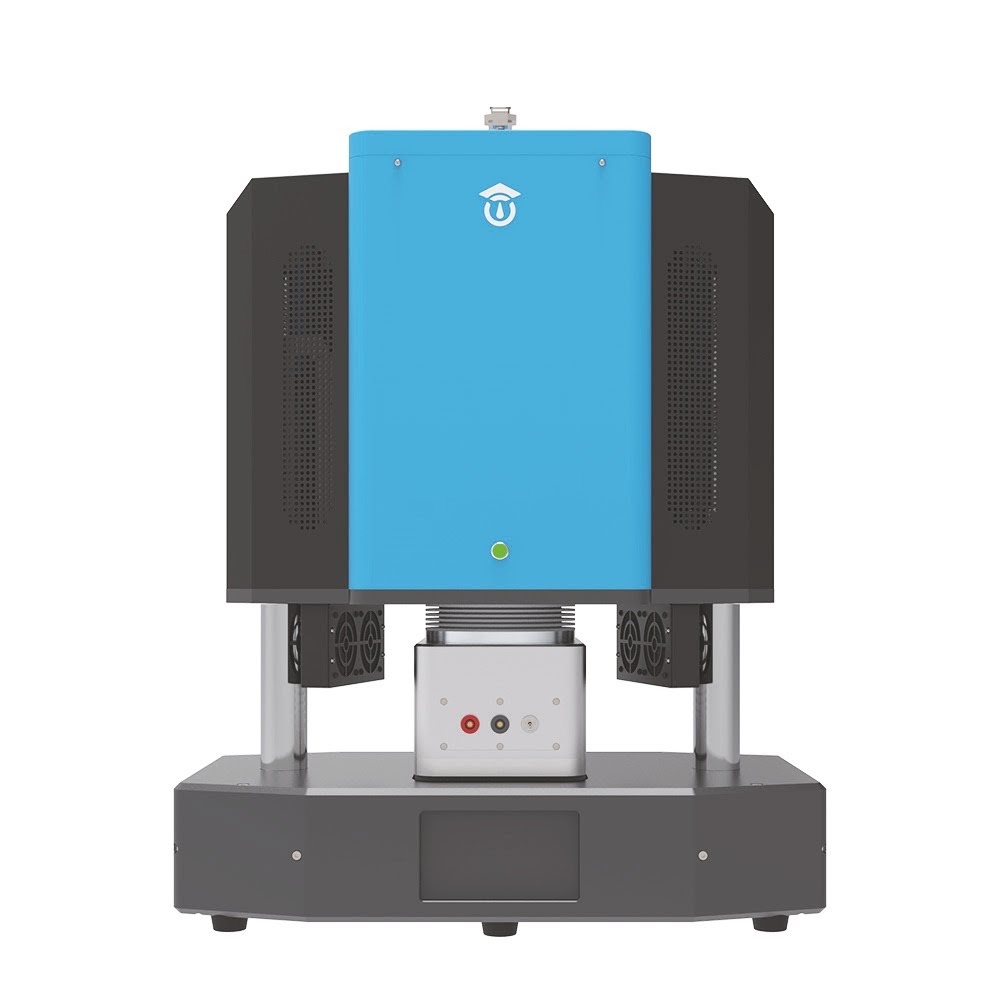
HTS1000HR High Temperature Resistivity Measurement System
The HTS1000HR is an advanced, integrated testing platform specifically engineered to precisely evaluate the electrical conductivity and insulation properties of advanced materials at extreme temperatures up to 800℃. By supporting various atmospheric conditions and offering an ultra-wide resistance measurement range, it serves as an indispensable characterization tool for material research and industrial quality control.
View details →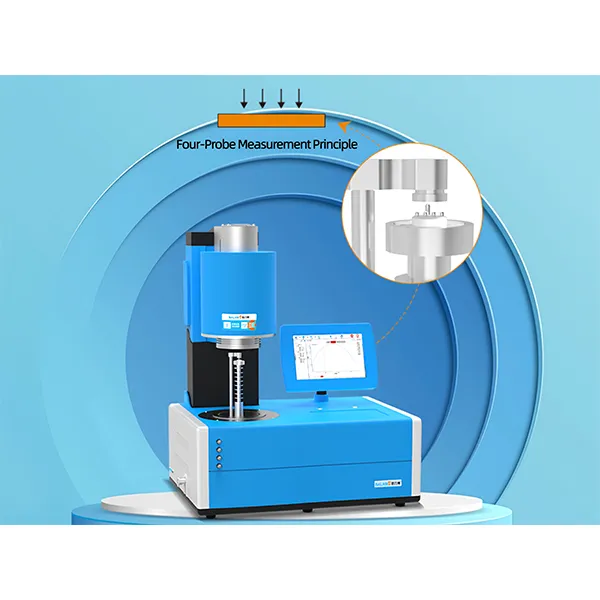
MatMeas RMS-1000P High-Temp Four-Point Probe Resistivity System
RMS-1000P uses four-point probe method for thin film and wafer resistivity measurement, featuring dual-electrostatic measurement, 0.1mΩ~100MΩ range, and specialized fixture for semiconductor materials.
View details →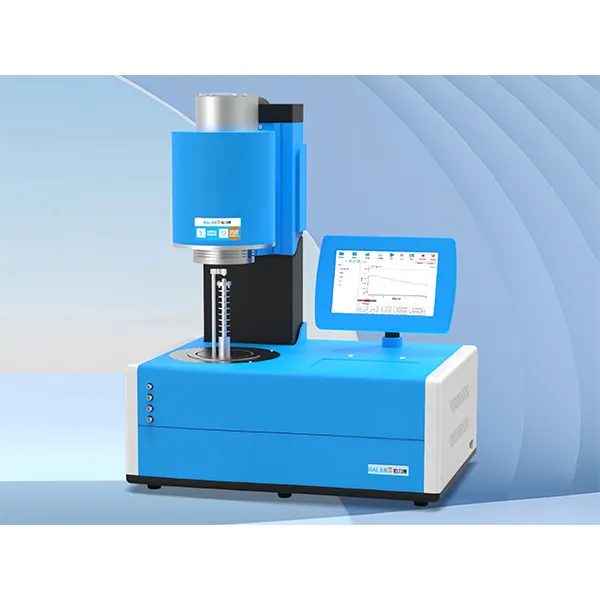
MatMeas RMS-1000S High-Temp Semiconductor Resistivity System
RMS-1000S is optimized for semiconductor bulk materials with four-wire method, offering 0.1mΩ~100MΩ measurement range, spring-loaded platinum electrodes, and multiple atmosphere environments for complex resistivity characterization.
View details →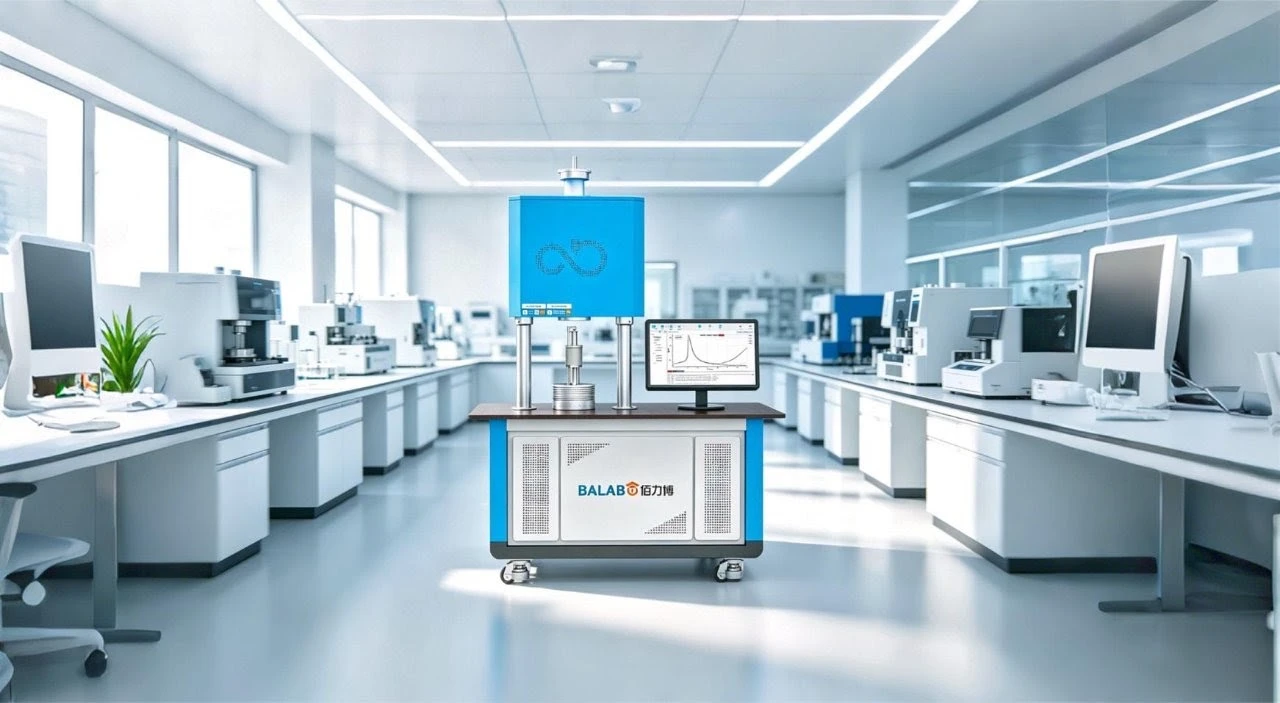
RMS1650 Ultra-High Temperature Resistivity Measurement System
The RMS1650 Ultra-High Temperature Resistivity Measurement System is engineered for the rigorous electrical characterization of insulating and dielectric materials up to 1600°C. Utilizing a proprietary guarded three-terminal electrode configuration, the system enables in-situ acquisition of resistivity and leakage current kinetics under extreme temperatures, vacuum, and controlled gas atmospheres.
View details →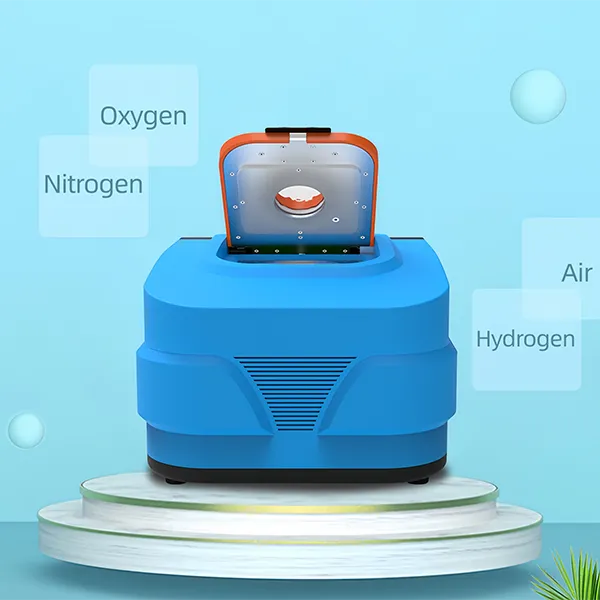
MatMeas SMS-215 High Temperature Gas Sensor Resistance and Resistivity Measurement System
High temperature gas sensor resistance and resistivity measurement system for precise electrical characterization of gas-sensitive materials.
View details →
Technical Guides & Application Notes
Measurement Methods & Metrology Guides
Explore standardized testing procedures, waveform analyses, and physical metrology implemented on this instrument platform.
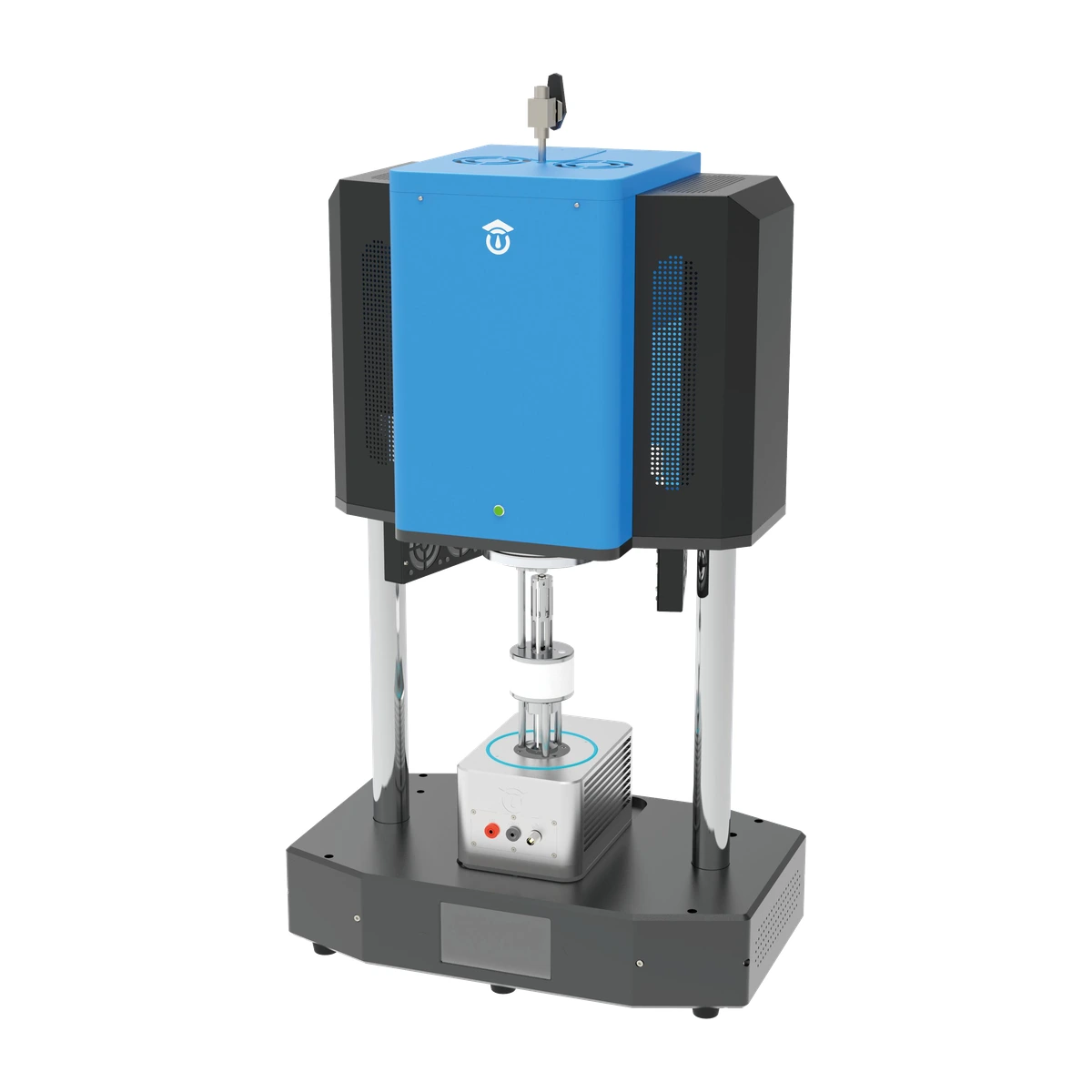
Electrical Conductivity Testing of Porous 3D-Printed Ceramics: Contact Mechanics & Thermal-EMF (RT–1000°C)
A practical engineering guide to high-temperature four-wire DC electrical conductivity and resistivity testing for fragile, porous 3D-printed ceramic monoliths up to 1000°C, focusing on cold-zone spring isolation and thermal EMF cancellation.
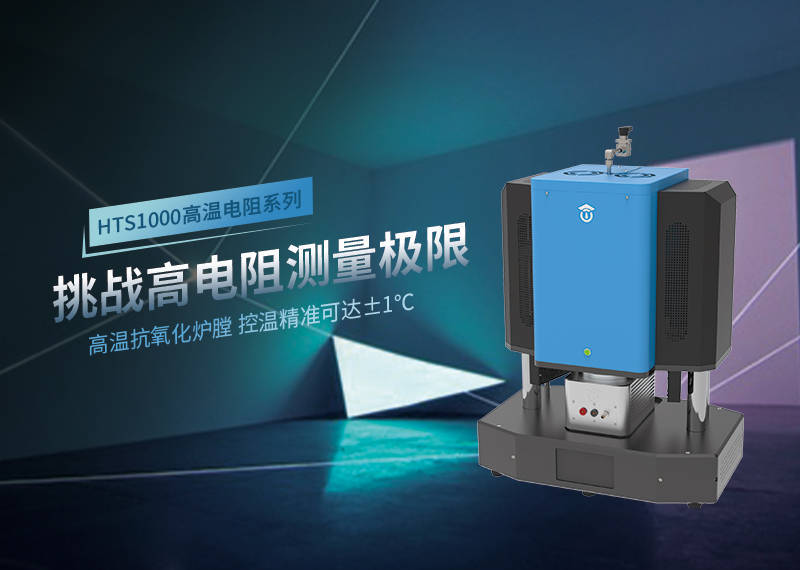
High-Temperature Electrical Conductivity Testing of Metals and Alloys
Electrical conductivity testing determines the performance of copper, aluminum, and advanced alloys. Learn about four-point probe techniques, sample preparation, and high-temperature characterization.
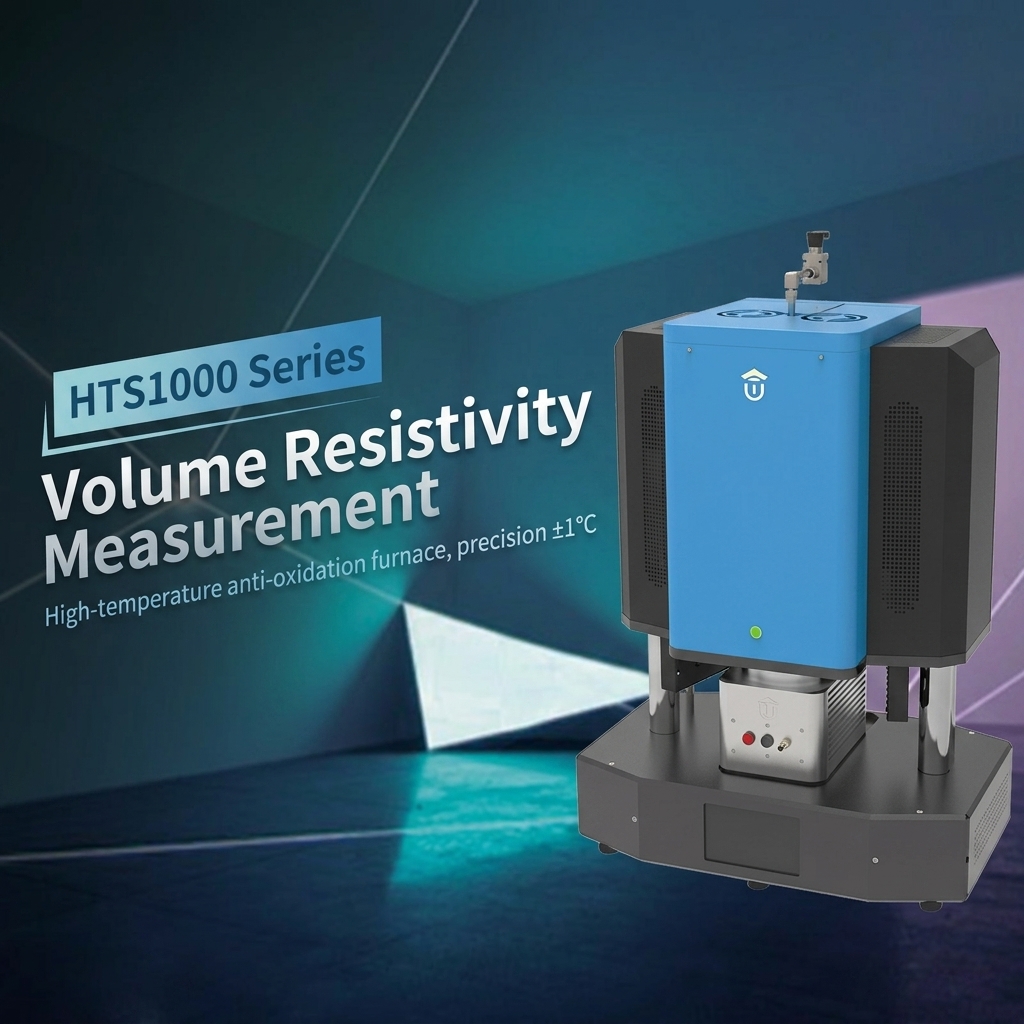
Advancements in Volume Resistivity Testing for Modern Material Science
Volume resistivity testing is a critical metric for evaluating the internal conductivity of materials. Standardized testing supports the development of semiconductors, new energy, and high-voltage power applications.
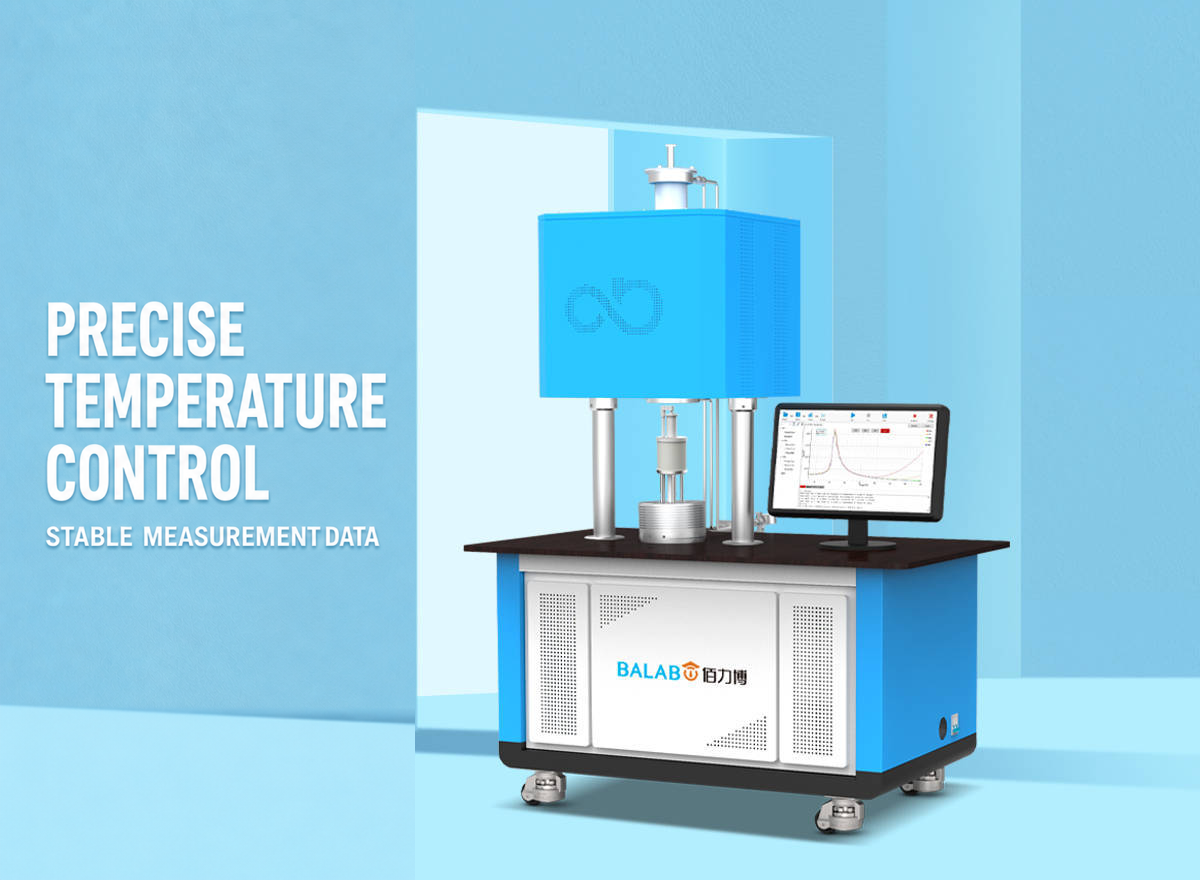
Four-Point Probe Testing of Graphite Conductivity: Standards, Geometry, and Anisotropy
A practical overview of graphite conductivity testing, four-point probe measurements, anisotropy, specimen condition, temperature, and material applications.
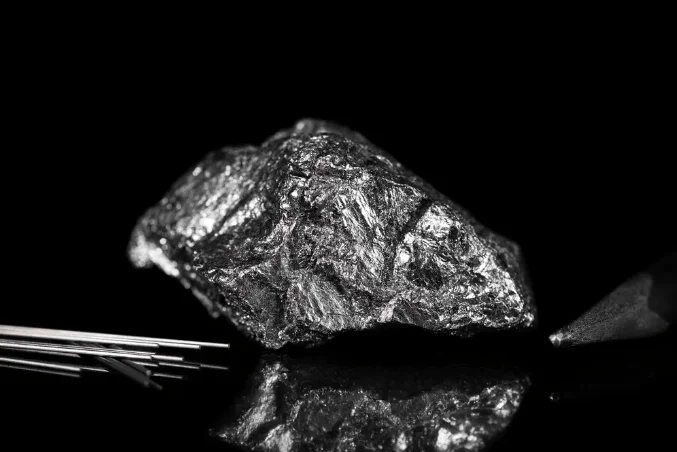
High-Temperature Electrical Resistivity Testing of Graphite Materials
A practical overview of four-terminal resistivity measurement for graphite, including specimen geometry, atmosphere control, thermal equilibration, and uncertainty sources.